C.P. Intertrade Co., Ltd. and companies within the rice, transportation and services business group. Determines the content and quality of this report based on the organization’s operations and key issues impacting the economy, society, and environment, from the perspective of both internal and external stakeholders. This serves as a channel to communicate to stakeholders the company’s commitment and performance within the framework of its sustainability strategy. The company uses the GRI Sustainability Reporting Standards, specifically the core option, as a framework for preparing this report. It considers both internal and external factors related to operations to assess key sustainability issues. The assessment process follows ten key principles of the GRI Standards: stakeholder inclusiveness, sustainability context, materiality, completeness, and verification of report quality through accuracy of disclosed information and balance of performance. Both positive and negative aspects (Balance), clarity and ease of understanding of information for all stakeholder groups (Clarity), availability of comparable data to show trends in past operations (Comparability), reliability of data and content (Reliability), and timeliness in reporting to provide information for stakeholder decision-making (Timeliness) are key considerations in evaluating sustainability issues. The process and steps for evaluating these important aspects are as follows:
Identifying key issues.
This report studies, analyzes, compiles, and identifies key sustainability issues relevant to the Group’s businesses, encompassing all operations of C.P. Intertrade Co., Ltd. and companies within the rice, transportation and services business group. sectors, taking into account the diversity of related industries.
The process of identifying key issues includes:
Key issues are derived from sustainability workshops conducted jointly by executives, along with data collected from business partners. A review is conducted annually.
The results of the annual review of significant issues within the Group and its business units are used to compile this report.
Sustainability issues of companies in industries related to Charoen Pokphand Produce Co., Ltd. and companies in the rice, transportation, and services sectors are compared, including Sustainable Development Goals (SDGs), the UN Global Compact, the World Business Council for Sustainable Development (WBCSD), and the Dow Jones Sustainability Index.
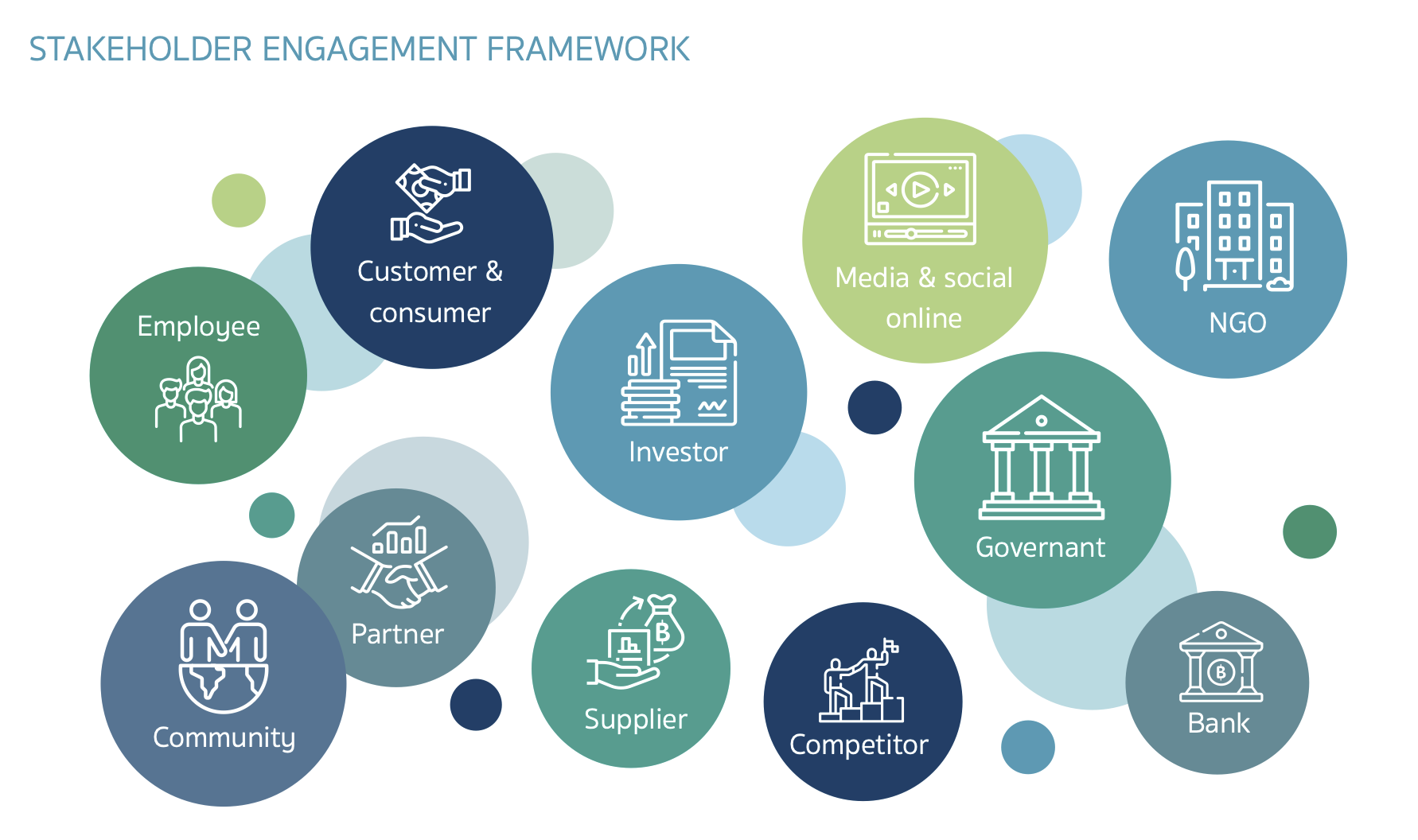
Stakeholder groups are identified from survey data of business partners, the Group’s stakeholder groups, and data from the Corporate Social Responsibility (CSR) system, resulting in a total of 14 stakeholder groups.
Significant issues of the Group’s subsidiaries are then compiled. This includes preparing a sustainability report and holding forums to gather additional feedback from stakeholders based on the survey questionnaires.
Prioritization
The Sustainability Management Committee meeting was held to consider key sustainability issues, categorized by stakeholder groups.
This information was gathered from survey results and significant issues within the Group. An online survey was conducted with representatives from employees, business group executives, and stakeholder representatives.
Significant issues from the meeting and survey were then prioritized based on stakeholder input, following these steps: Determine weighting factors for each business group.
Determine weighting factors for each stakeholder group.
Calculate importance scores for each stakeholder.
Calculate importance scores for business operations.
Develop a Materiality Matrix.
Verification of accuracy and reliability.
Review the sustainability reporting process according to the four key reporting principles of the GRI standard. The verification process for accuracy and reliability includes:
Interviewing external stakeholders regarding key sustainability issues for the Group, including other feedback to improve the sustainability report.
Reviewing and approving significant and priority issues by the management team.
Reviewing and certifying the accuracy of the sustainability reporting process by an independent body.
Development
C.P. Intertrade Co., Ltd. and companies within the rice, transportation and services business group. welcomes your feedback to improve future sustainability reports and better meet stakeholder expectations. Therefore, we have opened various contact channels