Visitor Counter
Website Visitors
0000

call emergency

+88 036 656 99

toward net zero
our Commitment on
toward net zero
toward net zero
our Commitment on
toward net zero
Results of sustainable development efforts.

Charoen Pokphand Produce Co., Ltd. and Crop integration business.

Health Living Well

Crop Integration Business committed to driving society toward sustainability through innovations that help promote good health for consumers. In addition, we implement projects aimed at improving the quality of life and health of people through our shared experiences and knowledge with a focus on comprehensive development in economic, social and environmental aspects.

SUPPORTING THE SDGs

SDG 2 Zero Hunger

2.1   Access to food that is nutritious and safe based on international standards

2.2   End all forms of malnutrition

SDG 3 Health and Well-being

3.4   Reduce mortality from non-communicable diseases and support good well-being

3.B   Support research, development, and access to affordable essential medicines and vaccines

OPPORTUNITIES AND CHALLENGES

Crop Integration Business dedicated to research and develop products to meet agricultural product standards. By controlling and inspecting quality throughout the value chain. along with promoting knowledge and technology to farmers. Along with implementing projects to promote the health and well-being of employees and people in the community.

MANAGEMENT OF HEALTH PRODUCT INNOVATION

The health and well-being of all citizens in each country is an important issue for will help increase the limit capability of that country in the future, as well as reducing the burden of medical expenses at the national level,CPP, as an upstream company of agribusiness, recognizes that it is a part that can help alleviate such problems effectively. by using the potential of presenting products and services that promote quality of life promote the health and well-being of the people

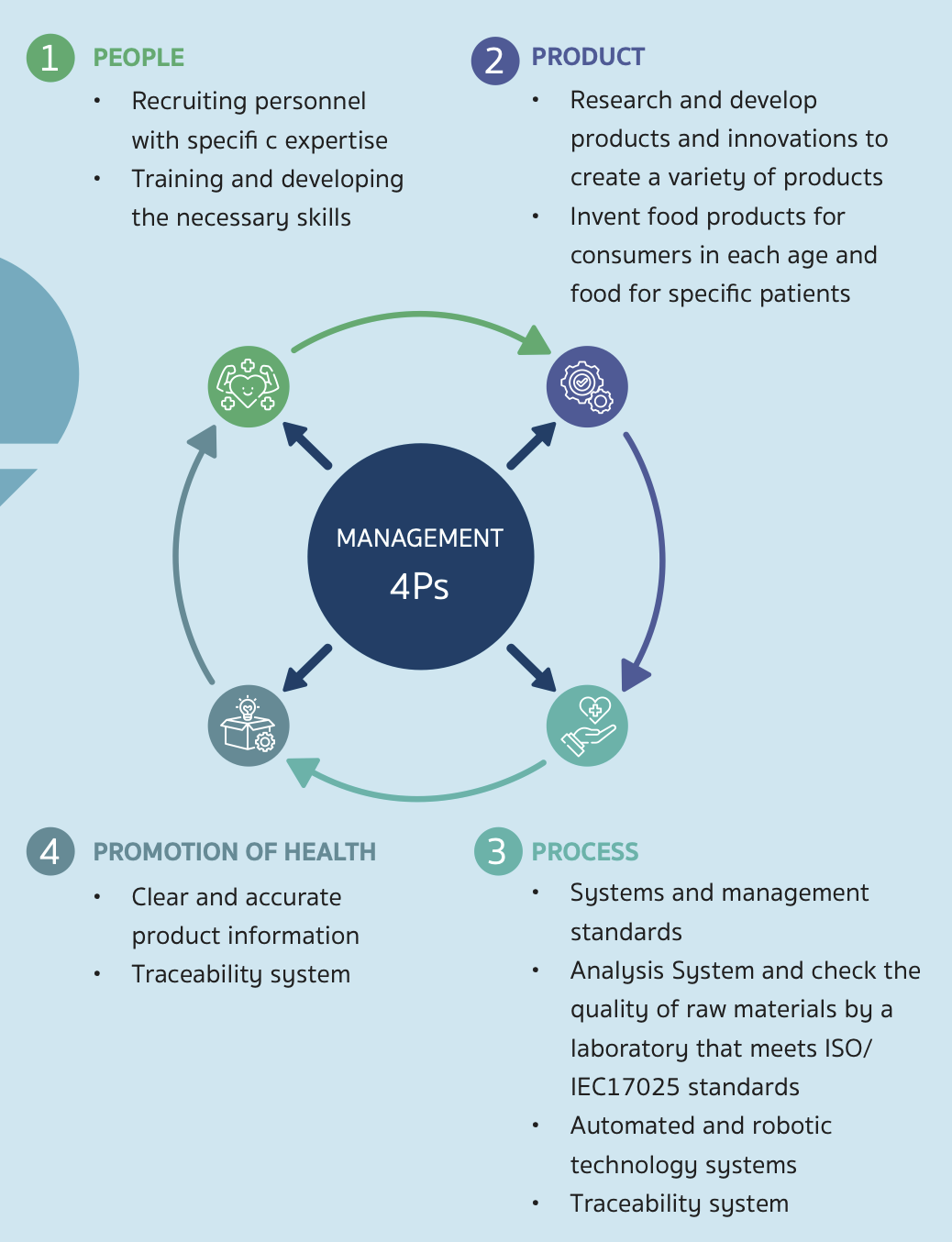
Our company committed to investing in research and development, operating in accordance with international standards and monitoring quality throughout the value chain, and promoting understanding of good nutrition. We focus on development based on the 4Ps management principle to empower our employees (People), develop processes in accordance with international standards (Processes), offer products to promote good health and well-being (Products), and promote understanding of health issues (Health Promotion).

More information about

HEALTH AND WELL-BEING

SUPPORTING THE SDGs

SDG 1 No Poverty

1.2   Reduce poverty by at least 50%

1.4   Equal rights to ownership, basic services, technology, and economic resources

SDG 4 Quality Education

4.4  Increase the number of people with the necessary financial skills

SDG 8 Decent Work and Economic Growth

8.6   Substantially reduce the proportion of youth not in employment, education or training

SDG 10 Reduced Inequalities

10.1   Reduce income inequality

OPPORTUNITIES AND CHALLENGES

Crop Integration Business sees the problem of inequality as one of the causes of discrimination in society. and lack of trust This puts the business at risk for reputation. and more supervision from official agencies as well as may affect the performance of the business in the long run Therefore, the problem of inequality is no longer just a social problem that is nearby. But it can become a business risk.

Our organization integrates stakeholder expectations as part of our corporate goals to connect business and society.

GUIDELINE FOR MANAGEING FARMER SUPPORT

Crop Integration Business aware of and prioritizes business operations that may be affected by economic and social roles. by supporting farmers small entrepreneur and vulnerable groups to be part of the business. Encourage participation and creativity with continuous operation to be able to solve problems and help promote the quality of life for the community as well as vulnerable groups to be able to live sustainably

SUPPORTING THE VULNERABLE GROUP

MANAGEMENT APPROACH

Crop Integration Business committed to conducting business in accordance with the C.P. Excellence approach based on the awareness of social responsibility according to the philosophy of 3 benefits to sustainability of the Charoen Pokphand Group. Ready to drive sustainable development goals Sustainable Development Goals (SDGs) in all 3 areas, consisting of society, economy and environment. to eradicate poverty promote food security build quality of life share educational opportunities gender equality, Sustainable Water Management access to modern renewable energy Support decent work in line with economic growth Develop industry and infrastructure through innovation. Reduce income inequality have a safe settlement of communities and cities Suitable consumption and production plans take care of the climate marine resources and terrestrial ecosystems Fairness and peace, enhancing cooperation towards the Sustainable Development Goals

The Sustainable Development Goals include:

  • Improving education
  • Conserving natural resources and the environment
  • Developing the community economy and society

More information about

SOCIAL IMPACT & ECONOMIC CONTRIBUTION

SUPPORTING THE SDGs

SDG 3 Good Health and Well-Being

3.4 Reduce mortality from non-communicable diseases and support well-being

SDG 8 Decent Work and Economic Growth

8.8 Protect labour rights and promote safe and secure working environments for all workers, including migrant workers

OPPORTUNITIES AND CHALLENGES

Our organization aware of safety, occupational health and the environment no less than the quality of the product. Therefore, we have established a process to identify hazards and assess risks in the work process. In addition, if there are new machines, it is necessary to identify hazards and assess risks before starting work every time in order to be aware of the potential hazards and find ways to improve, correct and prevent those hazards.

OCCUPATIONAL HEALTH, SAFETY AND WORK ENVIRONMENT MANAGEMENT

MANAGEMENT APPROACH

Crop Integration Business focuses on and prioritizes work safety by adhering to the care of employees, contractors, visitors. As well as stakeholders in the business as well as the supply chain, the Company has established a policy of safety, occupational health and work environment as a guideline and enhance the safety operations of the organization with guidelines for do as follows:

  1. Safety, occupational health and working environment It is the duty and responsibility of the executives. and employees at all levels and consider the success of the operation as part of the performance evaluation.

  2. Support the budget. and resources for the development of safety operations to allow all employees to participate in the implementation of the policy. Including communicating to related parties to acknowledge the results of the operation.

  3. Let employees at all levels receive training, knowledge, ability to work. to meet the standards of safety at work To realize the importance of having a good safety system to participate in the efficient use of resources. It is a culture of safety, occupational health and working environment.

  4. Manage safety risks properly according to international standards. And integrate with all activities of business operations at all levels throughout the supply chain. for protection And reduce the impact from harm, reduce injuries, illnesses of employees. and those involved Including damage to reputation and property and does not affect external communities.

  5. Comply with the laws related to safety, occupational health and working environment both nationally and internationally. local level and complies with international standards Requirements of customers and agencies.

  6. Monitor and report effectiveness Management of safety, occupational health and working environment for executives at all levels to be continuously improved in accordance with the reporting format according to international standards

More information about

OCCUPATIONAL HEALTH AND SAFETY

SUPPORTING THE SDGs

SDG 8 Decent Work and Economic Growt

8.2 productivity through diversifi cation and innovation

SDG 9 Industry, Innovation and Infrastructure

9.5 Increase research and technological capabilities of industrial sectors

9.B Support domestic technology development and industrial diversification

SDG 17 Partnership for the Goals

17.17 Support effective partnerships

OPPORTUNITIES AND CHALLENGES

Business challenges in the digital age is a change in technology and innovation happens quickly. Therefore, to keep up with the changing behavior, our organization is innovating by using new technologies and innovations in research and product development, as well as being aware of social and environmental responsibility because we believe that creating new things will help drive the business forward sustainably amidst rapid changes, as well as create value for society and the environment at the same time.

INNOVATION MANAGEMENT

MANAGEMENT APPROACH

Support the changes that will enter the digital age, Crop Integration Business believes that Innovation will be an important tool that will keep us abreast of global changes or Mega Trends. Therefore, we have determined and implemented the company’s innovation management framework, consisting of platform creation, personnel development. and organizational culture (People) process development (Process) including open innovation and management of intellectual property (Pipeline), the basis of which is the use of digital technology to transform the organization. to systematically drive innovation and is constantly evolving Aiming to be an organization-wide innovation organization

CREATING AN INNOVATION ORGANIZATION

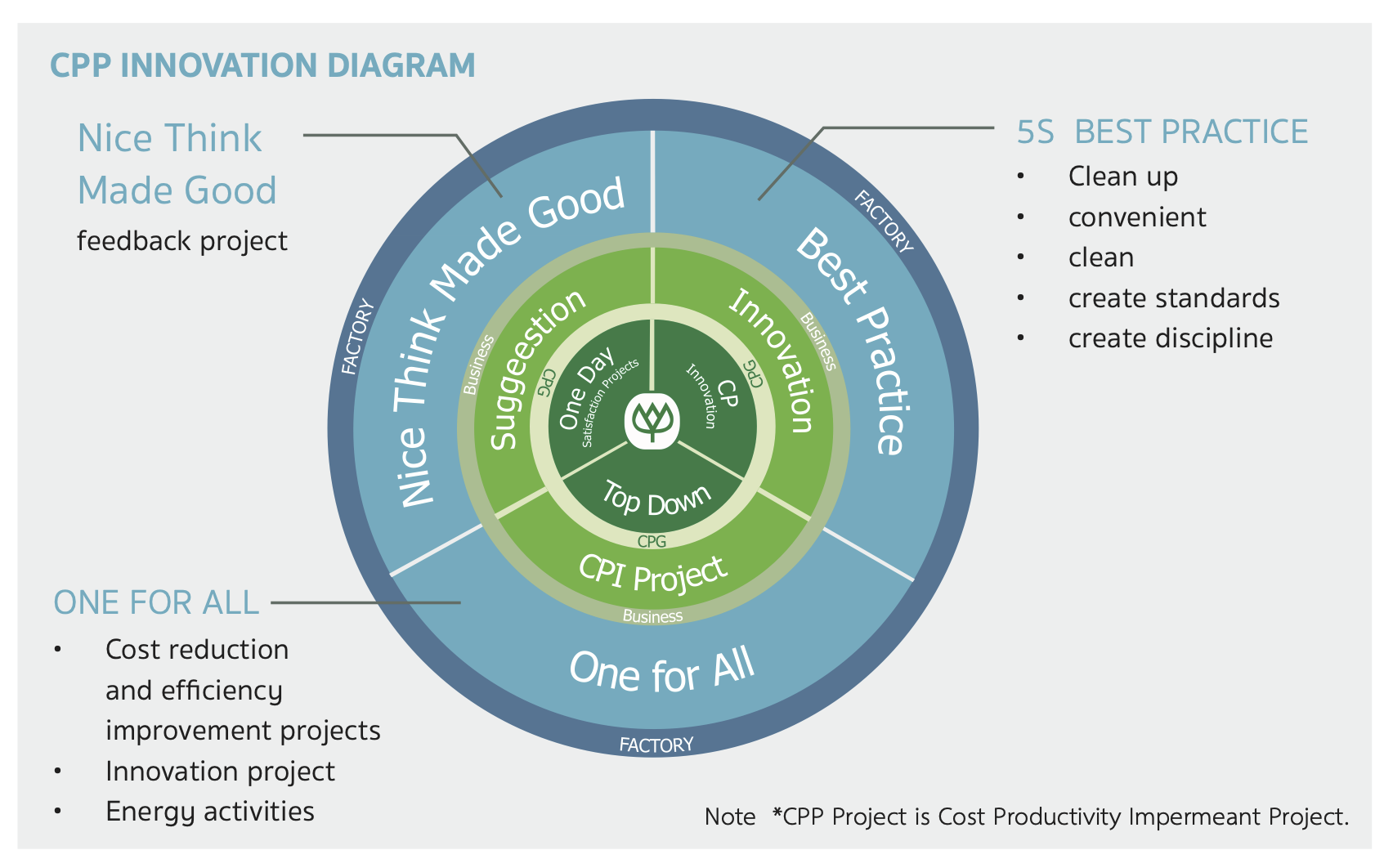
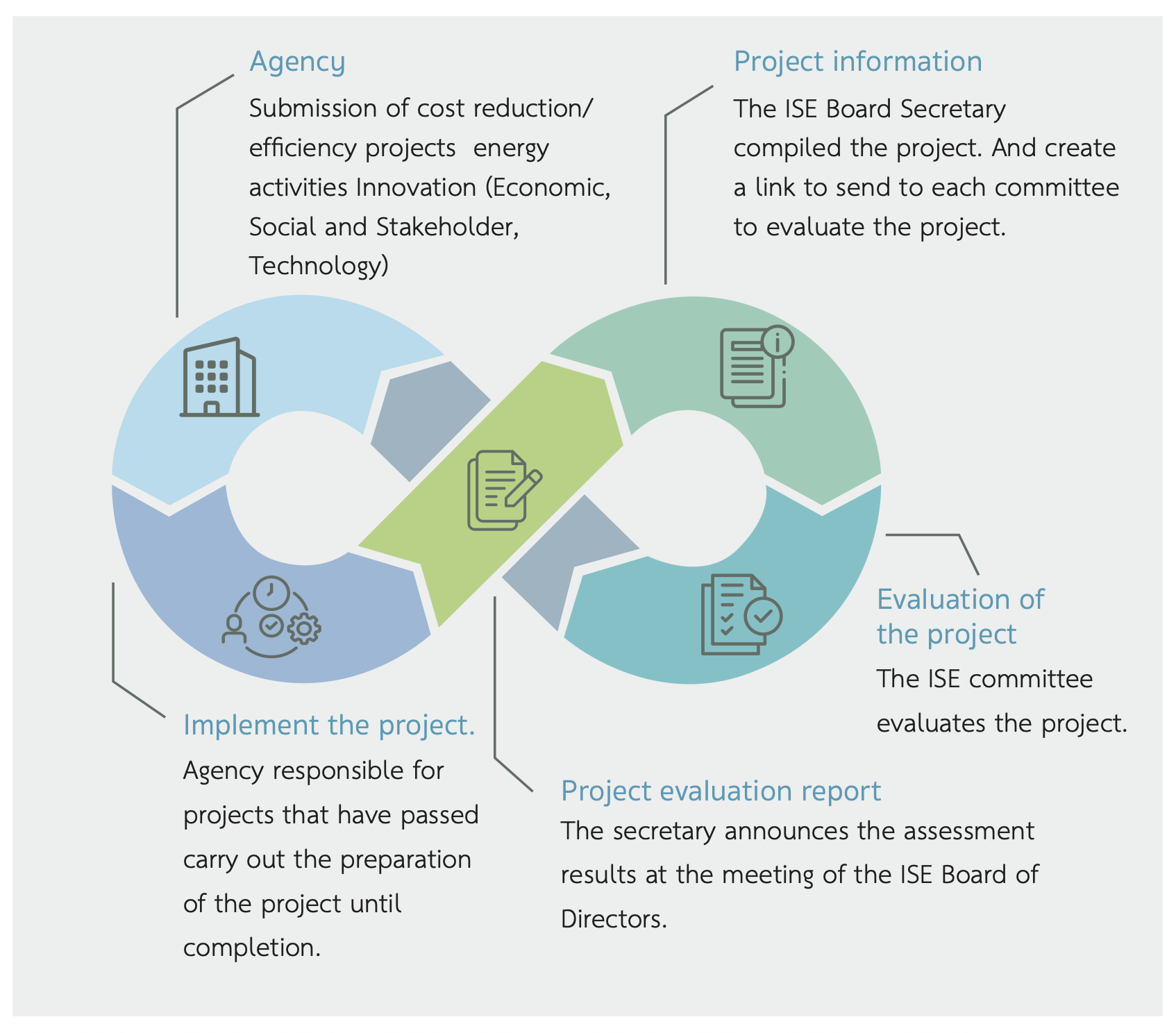
Crop Integration Business importance to the creation of new things. to create opportunities and further innovation covering 3 areas: economy, technology and society. By focusing on employees to solve problems on their own. Therefore, a suggestion system (Suggestion) was created and incentives were created. by creating a platform for employees to present to the executives When employees have developed and become a culture to some extent. Next, the goal is for employees to work together so teamwork is set up. By using the concept of QCC System for employees to group together Solve more difficult problems Decisions are made between teams to achieve common solutions through a “one for all” program that encompasses efficiency, cost reduction and continuous improvement.

Emphasis on cross-functional collaboration, developed into an innovation system process, sent to the Group’s C.P. INNOVATION, at the business group level. Organized a forum for employees to show their potential in the CPP Award work contest with the objective of honoring innovators who invent works. and to share knowledge and exchange experiences of employees Outstanding works will be developed and elevated to the Charoen Pokphand Group Innovation Contest.

More information about

INNOVATION MANAGEMENT

SUPPORTING THE SDGs

SDG 16 Peace, Justice, and Strong Institutions

16.7 Ensure responsive, inclusive, participatory, and representative decision-making at all levels

SDG 17 Partnerships for the Goals

17.6 Enhance the global partnership for sustainable development

17.7  Encourage and promote effective partnerships

OPPORTUNITIES AND CHALLENGES

Crop Integration Business believes that good corporate governance is something that Charoen Pokphand Group places importance on in order to enhance its competitiveness and sustainable development, as well as help increase value for stakeholders in the long term. Because good corporate governance indicates an efficient, transparent and auditable management system, building trust among stakeholders, which requires commitment and cooperation from employees at all levels, with support from the Board of Directors and executives, in order for corporate governance to be tangible.

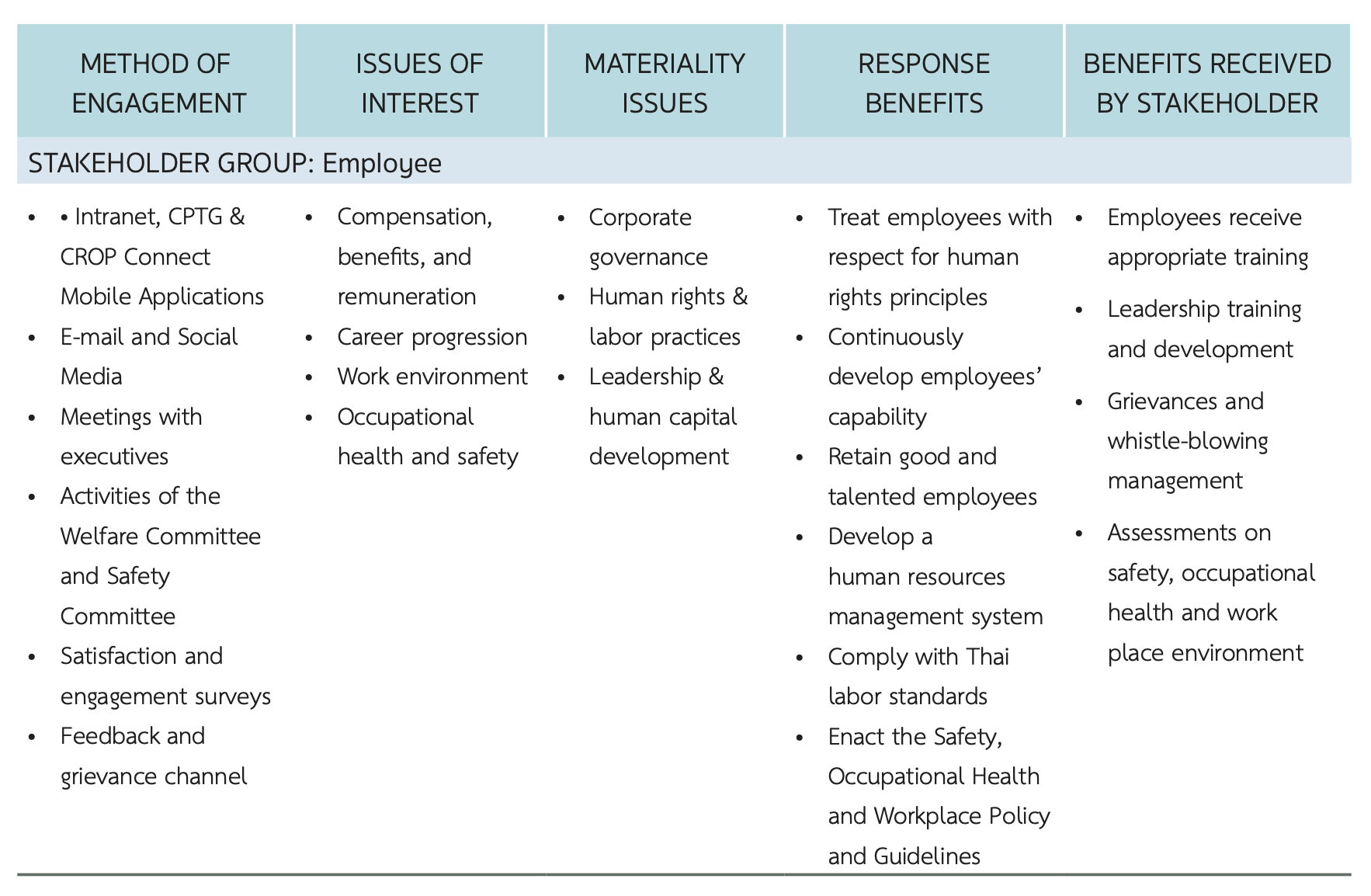
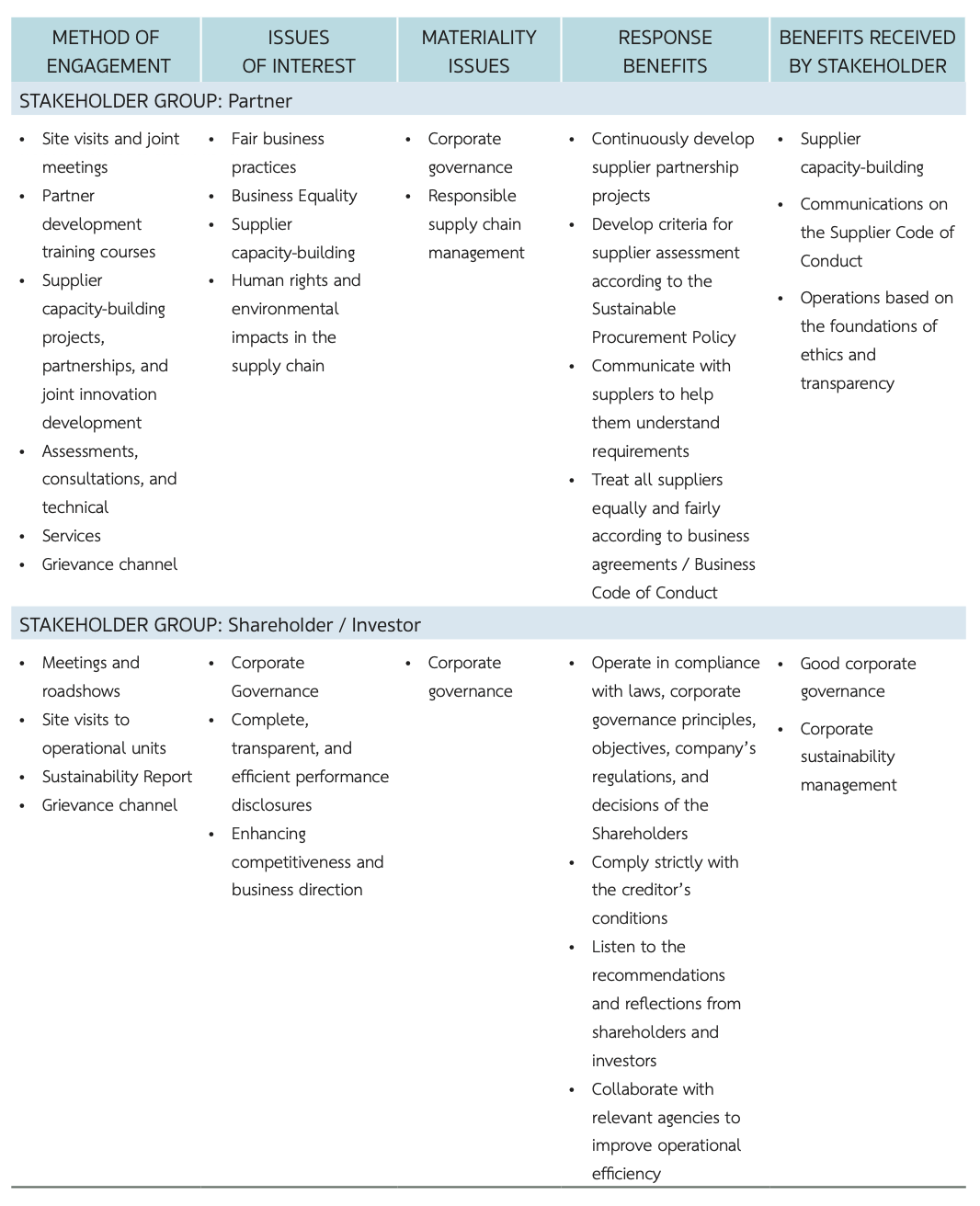
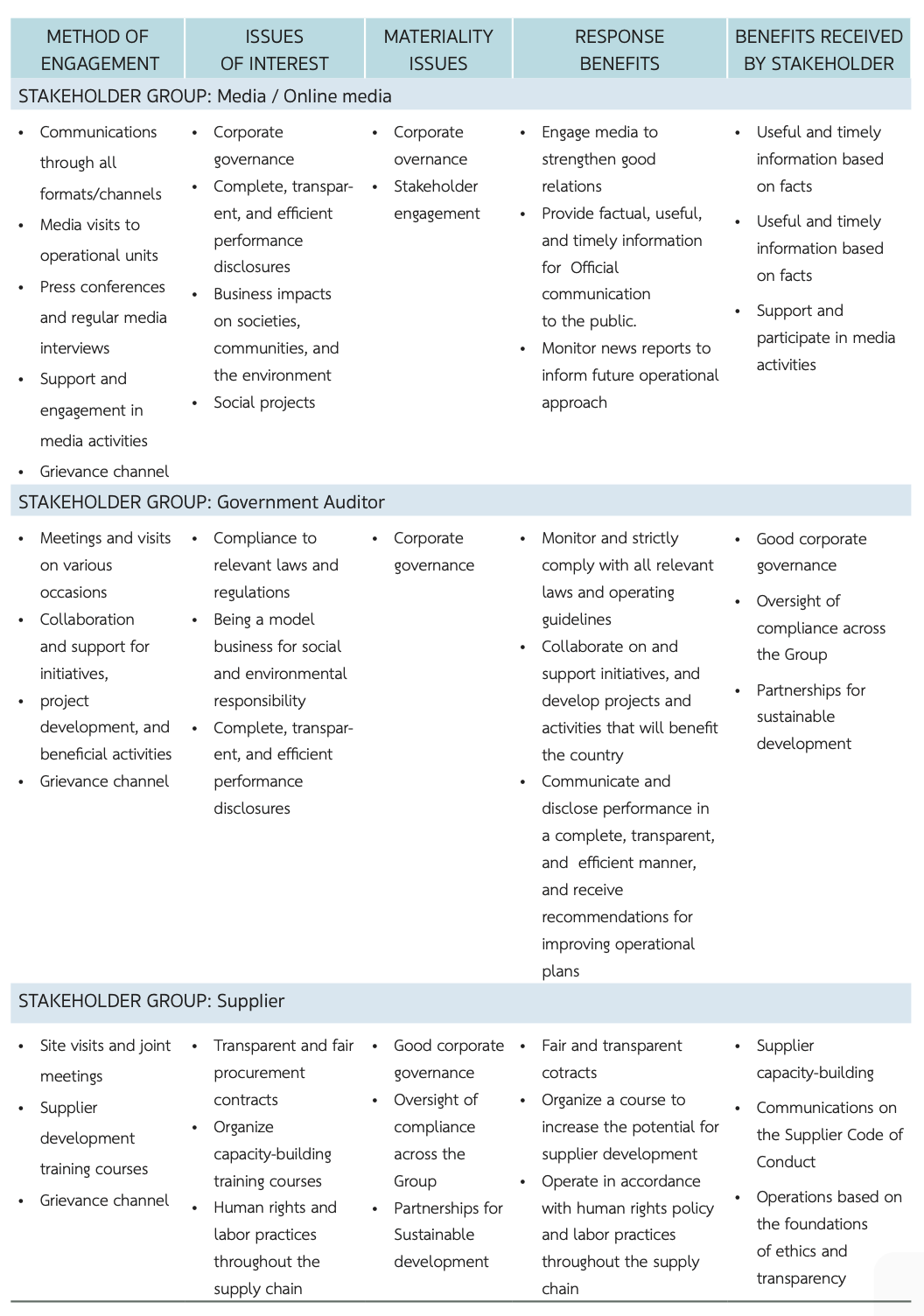
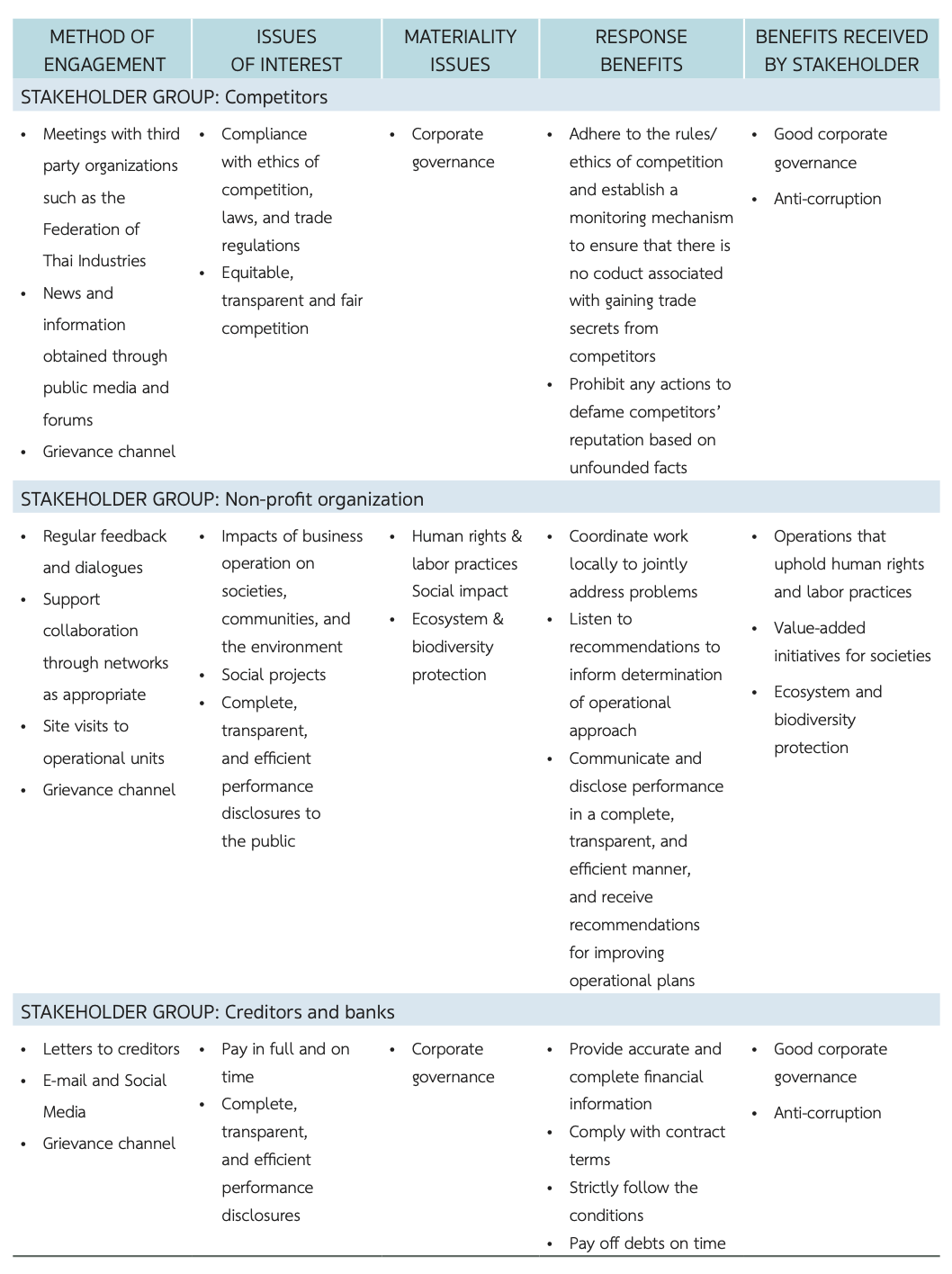
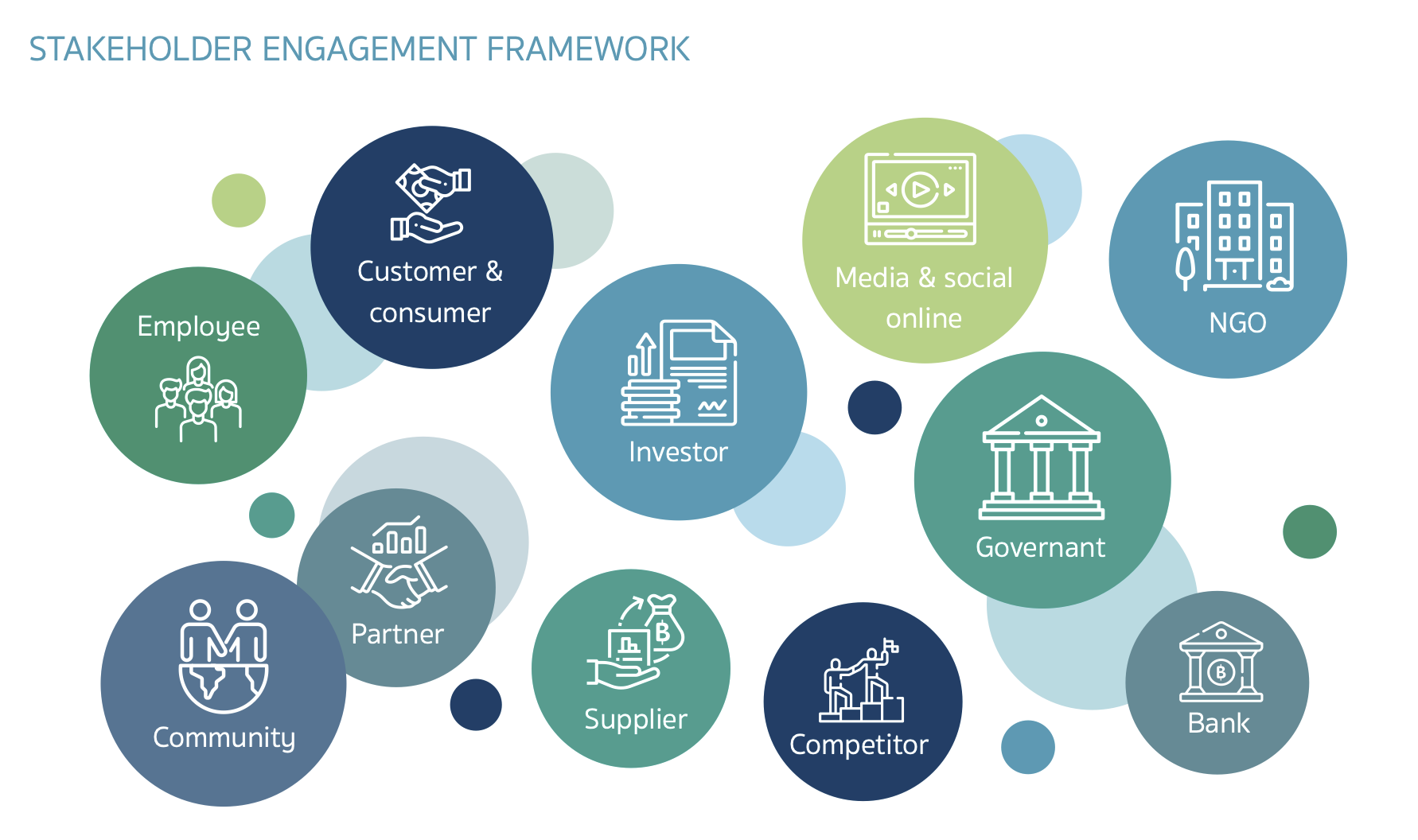
STAKEHOLDER ENGAGEMENT FRAMERWORK

MANAGEMENT APPROACH

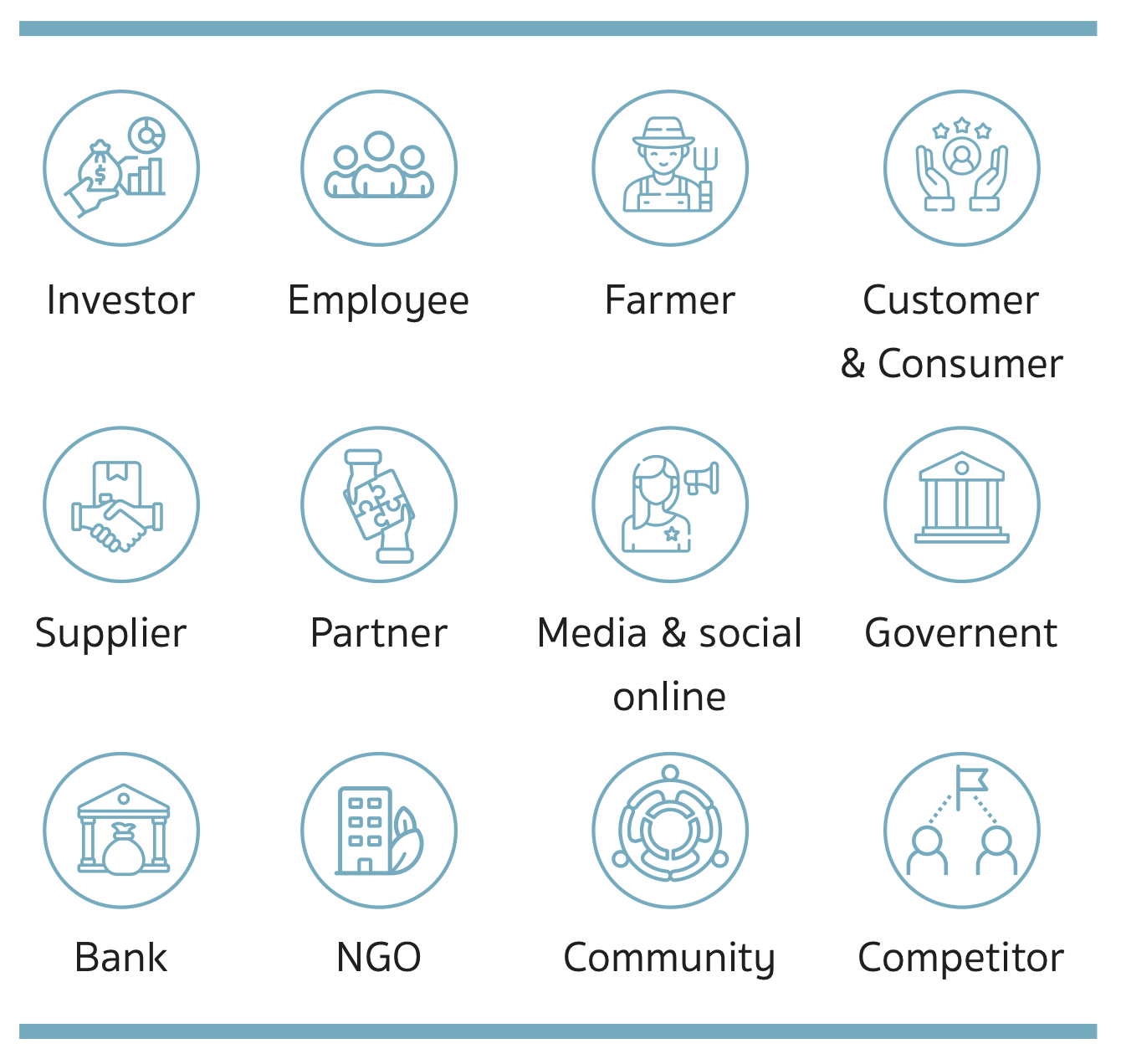
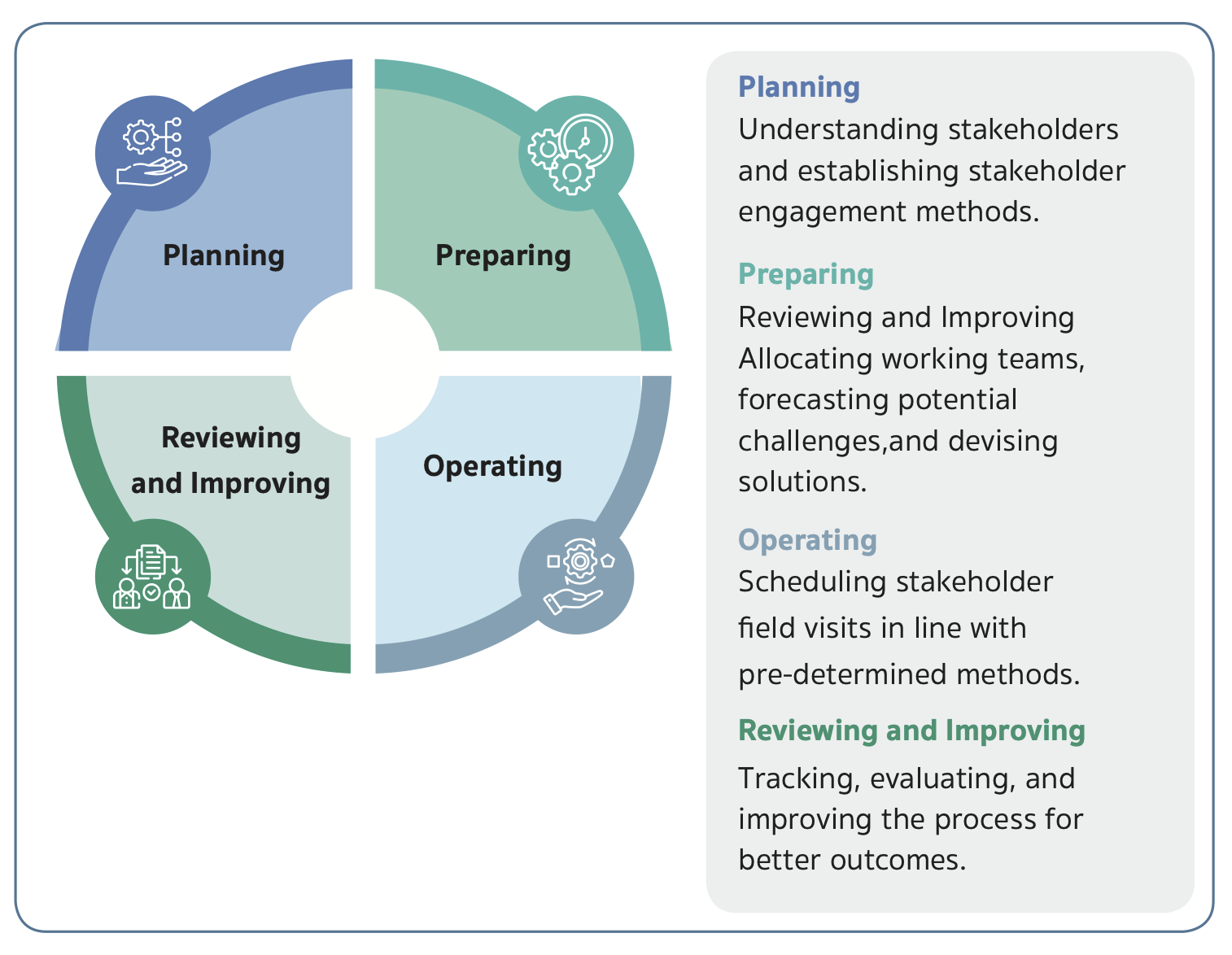
Crop Integration Business has announcing policies and considering stakeholders involved in business operations in the scope of each company. Also analyze the stakeholder relationship of the organization to reflect the business context in a comprehensive manner. CPP identifies that business operations throughout the value chain are involves direct and indirect stakeholders and analyzes issues that stakeholders have an impact and expect the organization, including the issues that the organization has impact and expect to stakeholders who the company has given importance and increasing the positive impact and reducing the negative impact to maintain the competitiveness to develop the growth potential of long term business.

THE VOICE OF STAKEHOLDERS

Crop Integration Business has compiled issues and opinions covering the economic, social and environmental dimensions of stakeholders, as well as prioritizing them. Stakeholders on the sustainable development of the significant issues have been applied in formulating ways to meet stakeholders’ needs and create consistent ties across the organization

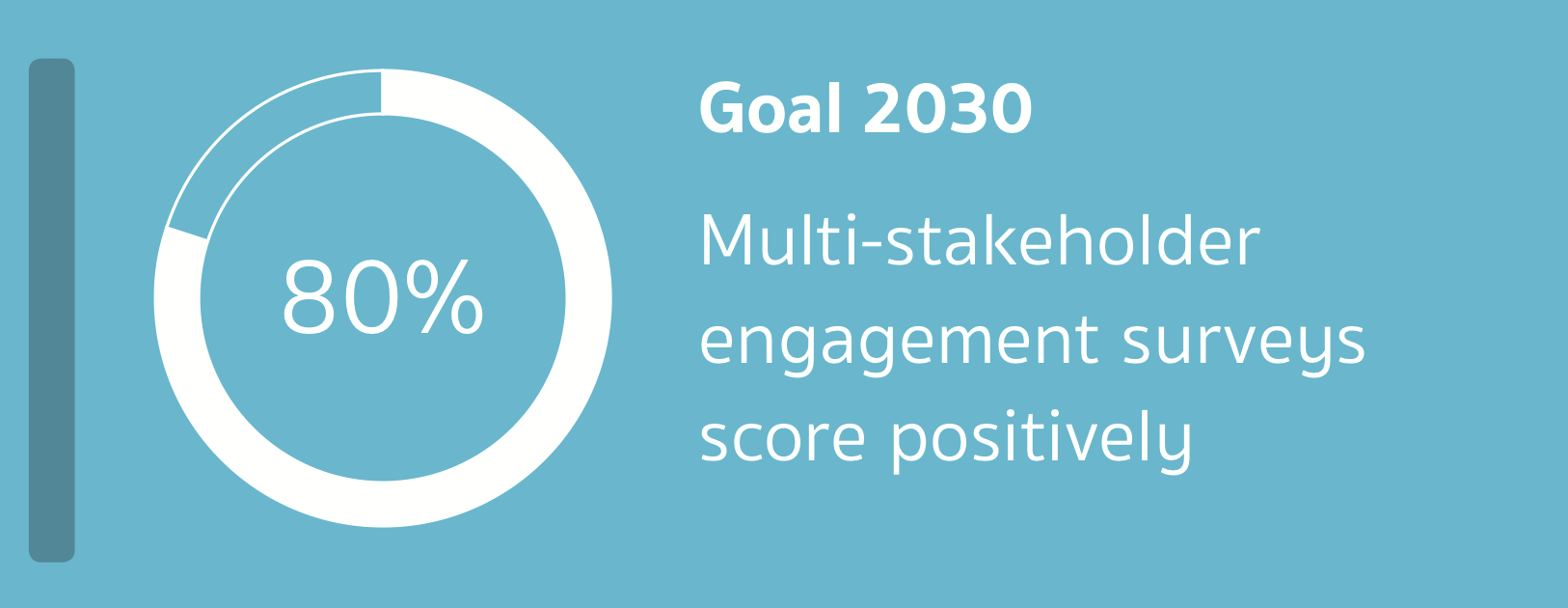
Building engagement with stakeholders in each area is considered the key to building the foundation for a sustainable organization. Stakeholders is a group of people who are positively and negatively affected by their business operations, both inside and outside the organization. CPP listens to stakeholders through a variety of channels that have analyzed those opinions and suggestions to understand expectations and needs before responding in a way that can manage issues that are important to both the business and all stakeholders appropriately.

STAKEHOLDER ENGAGEMENT FRAMEWORK

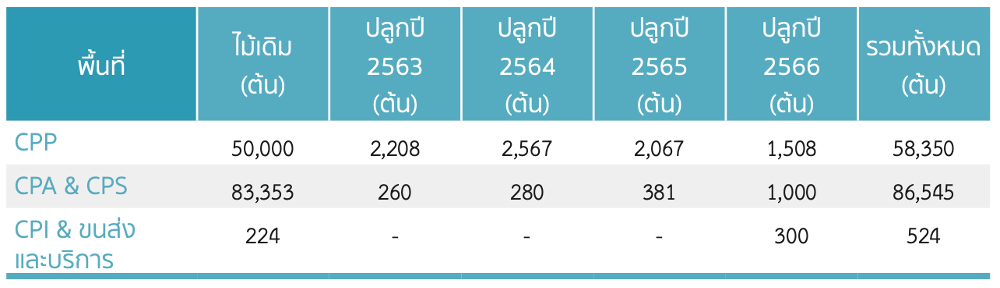
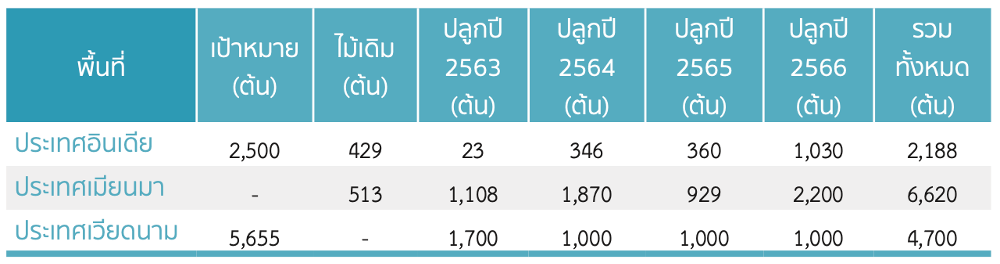
โครงการปลูกป่าในบ้าน ธุรกิจพืชครบวงจร ข้าว ขนส่งและบริการ

ตามที่เครือเจริญโภคภัณฑ์ มีนโยบายการดำเนินธุรกิจอย่างยั่งยืน  และมุ่งมั่นสู่การเป็นองค์กรที่ปลดปล่อยก๊าซคาร์บอนไดออกไซด์เป็นศูนย์ (Carbon Neutral) ภายในปี 2573  และยังตั้งเป้าหมายระยะยาวมุ่งสู่การเป็นองค์กรที่ปล่อยก๊าซคาร์บอนไดออกไซด์สุทธิเป็นศูนย์ ในปี 2593

ธุรกิจพืชครบวงจร จึงได้เริ่มดำเนินการ “โครงการปลูกป่าในบ้าน (Green Home)” ขึ้น เมื่อวันที่ 2 กรกฎาคม 2563 ณ  สถานีวิจัยแสงพัน  อ.วังม่วง  จ.สระบุรี  ซึ่งเป็นความร่วมมือระหว่างผู้บริหาร และพนักงานจิตอาสา ปลูกไม้ยืนต้นชนิดต่างๆอาทิ ต้นพะยุง  แคนา มะฮอกกานี ฯ พร้อมทั้งส่งมอบกล้าไม้ให้กับตัวแทนหน่วยงานต่างๆทั้งในและนอกประเทศ  เพื่อนำไปปลูกเพื่อเพิ่มพื้นที่สีเขียวในพื้นที่ที่มีเอกสารสิทธิ์ขององค์กร 

หลังจากนั้น วันที่ 11 สิงหาคม 2565 ธุรกิจพืชครบวงจร ข้าว ขนส่งและบริการ ได้ประกาศเจตนารมณ์การมุ่งสู่การเป็นองค์กรที่เป็นกลางทางคาร์บอน (Carbon Neutral) ปี 2573 ตามนโยบายของเครือซีพีอีกครั้ง  เพื่อกระตุ้นการมีส่วนของทุกหน่วยในการขับเคลื่อนการปลูกต้นไม้ตามแผนงานและเป้าหมายที่วางไว้ คือ ปลูกไม้ยืนต้นในโครงการปลูกป่าในบ้าน  ควบคู่ไปกับการดูแล และอนุรักษ์ผืนป่าต้นน้ำสำคัญผ่านโครงการธรรมชาติปลอดภัยฯ รวมจำนวนทั้งสิ้น 1.2 ล้านต้นภายในปี 2568 ซึ่งปัจจุบันดำเนินการไปแล้วกว่า 9 แสนต้น

โครงการปลูกป่าในบ้าน (ประเทศไทย)

โครงการปลูกป่าในบ้าน (ต่างประเทศ)

กลุ่มผู้มีส่วนได้เสีย: พนักงาน

ช่องทาง
การมีส่วนร่วม
ประเด็นที่อยู่ในความสนใจ
(ที่สอดคล้อง กับประเด็น
ที่มีนัยสำคัญด้านความยั่งยืน)
ประเด็นที่มีนัยสำคัญ
ด้านความยั่งยืน
การดำเนินงาน
เพื่อตอบสนอง
ประโยชน์ที่
ผู้มีส่วนได้เสียได้รับ
-อินทราเน็ต, CPTG & CROP Connect Mobile Applications

-อีเมล และ สื่อโซเชียล

-พูดคุยและประชุม คณะทำงานต่างๆ

-การดำเนินงานของ คณะกรรมการ สวัสดิการและคณะ กรรมการ ความปลอดภัย (คปอ.)

-การสำรวจความพึง พอใจและความผูกพัน ของพนักงานต่อองค์กร

-เปิดช่องทางรับฟัง ข้อเสนอแนะ และข้อร้องเรียน

-ค่าตอบแทน สิทธิประโยชน์ และสวัสดิการ

-ความก้าวหน้าในอาชีพ

-สภาพแวดล้อมในการ ทำงาน

-ความปลอดภัยและ อาชีวอนามัย
-การกำกับดูแล กิจการ

-สิทธิมนุษยชน และการปฏิบัติ ด้านแรงงาน

-การพัฒนาผู้นำ และ ทรัพยากร บุคคล
-ปฏิบัติต่อพนักงาน ตามหลักสิทธิ มนุษยชน

-พัฒนาศักยภาพ พนักงานอย่างต่อ เนื่อง

-รักษาไว้ซึ่งพนักงาน ที่เก่งและดีพัฒนา ระบบบริหารงาน บุคคล

-ดำเนินงานตาม มาตรฐานแรงงาน ไทย

-กำหนดนโยบาย และแนวปฏิบัติด้าน ความปลอดภัย อาชีวอนามัย และ สภาพแวดล้อม ในการทำงาน
-พนักงานได้รับการ ฝึกอบรมที่เหมาะสม

-การเตรียมความ พร้อมและพัฒนา ผู้นำ

-การดำเนินการกับ ข้อร้องเรียนและ แจ้งเบาะแส

-การตรวจประเมิน การจัดการความ ปลอดภัย อาชีว อนามัย และ สภาพแวดล้อมใน การทำงาน

กลุ่มผู้มีส่วนได้เสีย: ชุมชนและสังคม

ช่องทาง
การมีส่วนร่วม
ประเด็นที่อยู่ในความสนใจ
(ที่สอดคล้อง กับประเด็น
ที่มีนัยสำคัญด้านความยั่งยืน)
ประเด็นที่มีนัยสำคัญ
ด้านความยั่งยืน
การดำเนินงาน
เพื่อตอบสนอง
ประโยชน์ที่
ผู้มีส่วนได้เสียได้รับ
-รายงานความยั่งยืน ประจำปี/ รายงาน CSR

-รับฟังและสำรวจ ความคิดเห็น

-เปิดช่องรับข้อร้องเรียน
-สานเสาวนาชุมชน ลงพื้นที่เยี่ยมชุมชน อย่างสม่ำเสมอ

-จัดกิจกรรมส่งเสริม คุณภาพชีวิต
-ผลกระทบจากการดำเนิน ธุรกิจที่มีผลต่อชุมชน และสิ่งแวดล้อม

-การมีส่วนร่วมในการ ส่งเสริมคุณภาพชีวิตชุมชน

-มีกระบวนการข้อร้องเรียน อย่างเป็นธรรม
-การสื่อสารการดำเนินงาน อย่างรวดเร็วและโปร่งใส

-คุณค่าทางสังคม

-การจัดการการ เปลี่ยนแปลง สภาพภูมิอากาศ

-การดูแลรักษา ทรัพยากรน้ำ

-การปกป้องระบบ นิเวศและความ หลากหลายทาง ชีวภาพ
-ควบคุมดูแล ประสิทธิภาพ ระบบป้องกัน มลพิษ

-สนับสนุนให้เกิด การเพิ่มคุณภาพ ชีวิต และสร้าง รายได้ แก่ชุมชน

-นำขีดความ สามารถของบริษัท มาเป็นเครื่องมือใน การสร้างผล กระทบเชิงบวก และบรรเทา ผลกระทบเชิงลบ
-การดำเนินงานเพื่อ เพิ่มคุณค่าทางสังคม

-การจัดการการ เปลี่ยนแปลง สภาพภูมิอากาศ

-การดูแลรักษา ทรัพยากรน้ำ

-การปกป้องระบบ นิเวศและความ หลากหลายทาง ชีวภาพ

More information about

STAKEHOLDER ENGAGEMENT