











C.P. Intertrade Co., Ltd and companies in the Rice Business Transportation and Service
HOME LIVING TOGETHER
C.P. Intertrade Co., Ltd. and companies in the Rice Business Transportation and Service, Charoen Pokphand Group realizes the importance of environmental sustainability by operating the business under the concept of the use of natural resources for maximum benefit along with the organization’s business principles under The concept of “Green Culture” is instilled in the activities of the people in the organization, conveying the brand and its products. To achieve our vision to be a leading company in integrated rice and industrial Argo business within the framework of this vision.
-
CLIMATE RESILIENCE
-
CIRCULAR ECONOMY
-
WATER STEWARDSHIP
-
ECOSYSTEM & BIODIVERSITY PROTECTION
-
RESPONSIBLE SUPPLY CHAIN MANAGEMENT
SUPPORTING THE SDGs
SDG 7 Affordable and Clean Energy
7.2 Increase substantially the supply of renewable energy in the global energy mix
7.3 Double the global rate of improvement in energy efficiency
SDG 11 Sustainable Cities and Communities
11.6 Reduce the adverse per capita environmental impact of cities
SDG 12Responsible Consumption and Production
12.2 Achieve the sustainable management and efficient use of natural resources
12.3 Halve per capita global food waste
12.5 Substantially reduce waste generation
SDG 13Climate Action
13.3 Improve education, awareness-raising and human and institutional capacity on climate change
OPPORTUNITIES AND CHALLENGES
The challenge of climate change impact, C.P. Intertrade Co., Ltd. and companies in the Rice Business Transportation and Service, Charoen Pokphand Group business has foreseen the opportunity from change to drive and support for all business groups.
A company that is committed to trying to reduce greenhouse gas emissions and continuous monitoring measures. The company is committed to climate change management. and contribute to reducing the impact on the environment. Adhering to the relevant international principles Integrated with business operations principles that focus on the impact of climate change. In addition, there is support for the government’s greenhouse gas reduction mechanism. and a focus on products that have been certified for carbon labels (Carbon footprint). from this commitment, The company aims to reduce the use of plastic for packaging for reuse. Net zero carbon dioxide emissions.
KEY OPERATING RESULTS IN 2023
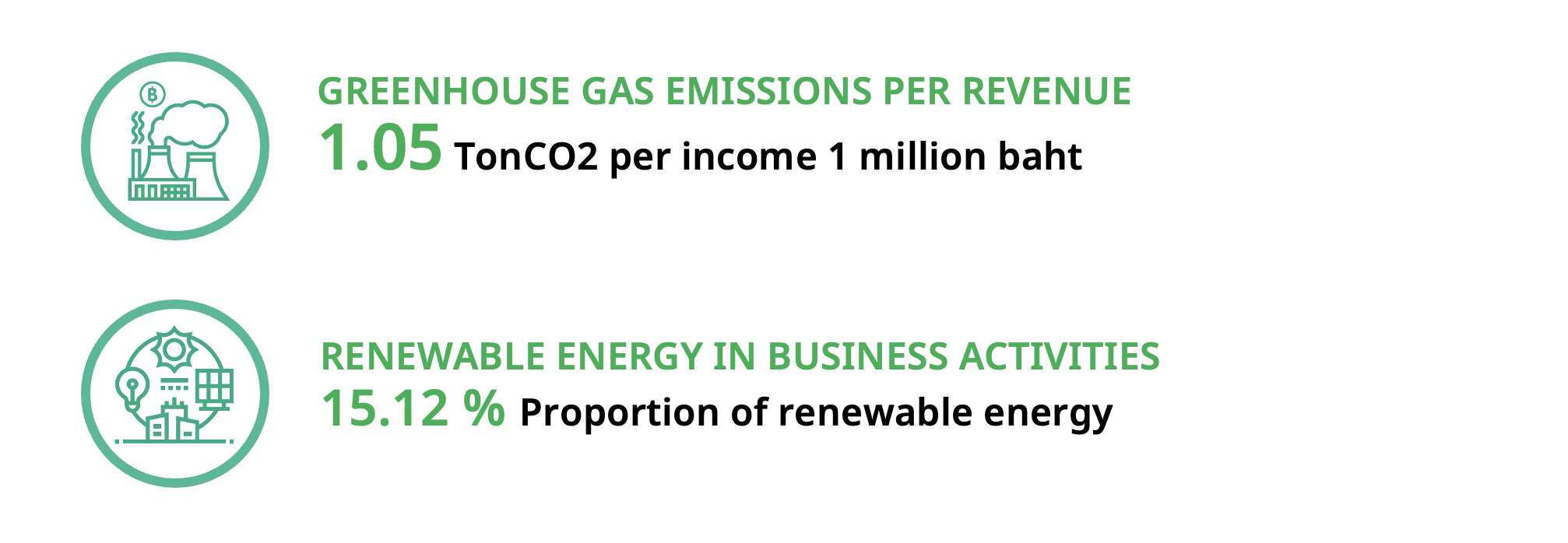
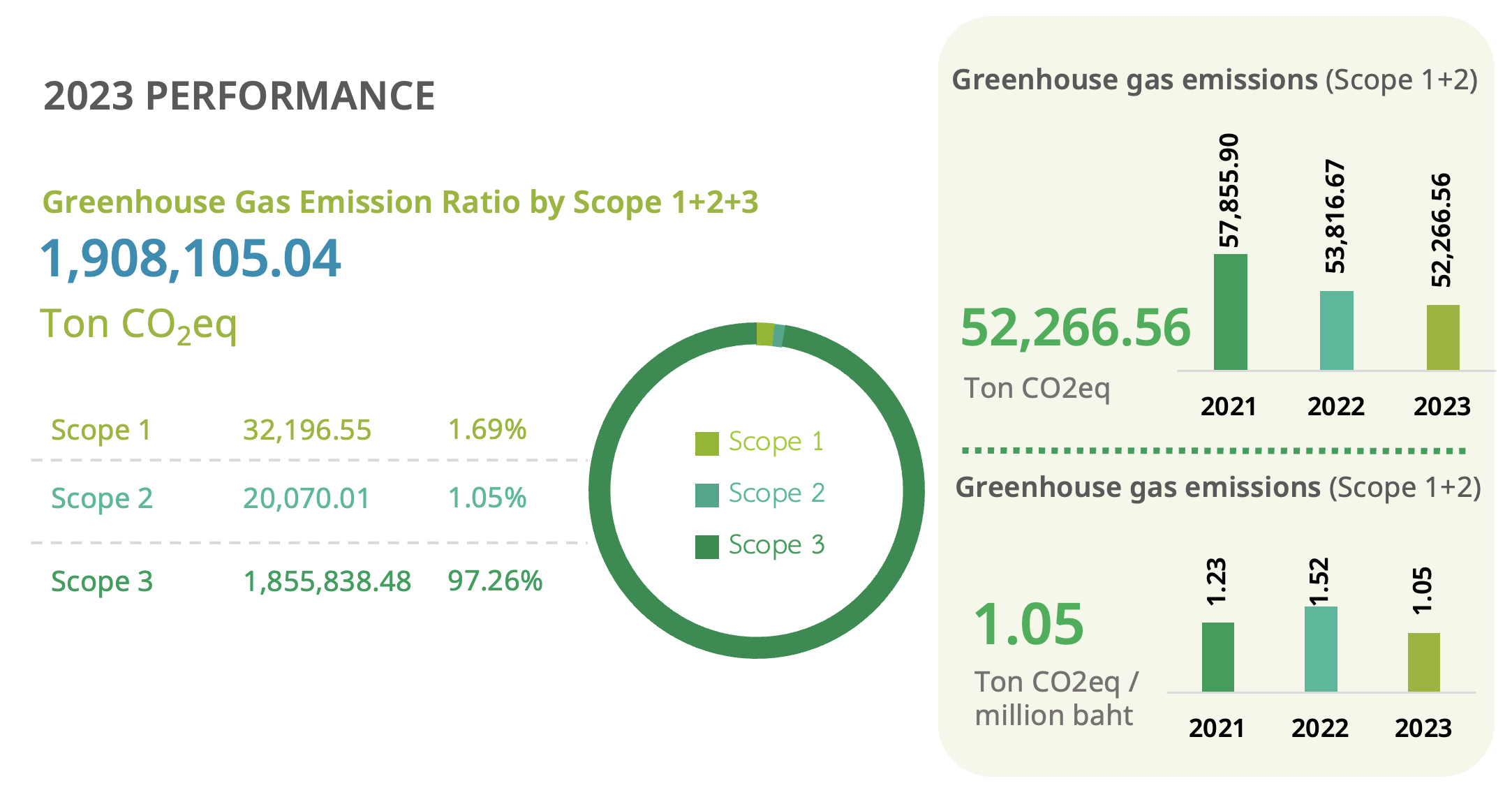
GREENHOUSE GAS EMISSION MANAGEMENT INFORMATION
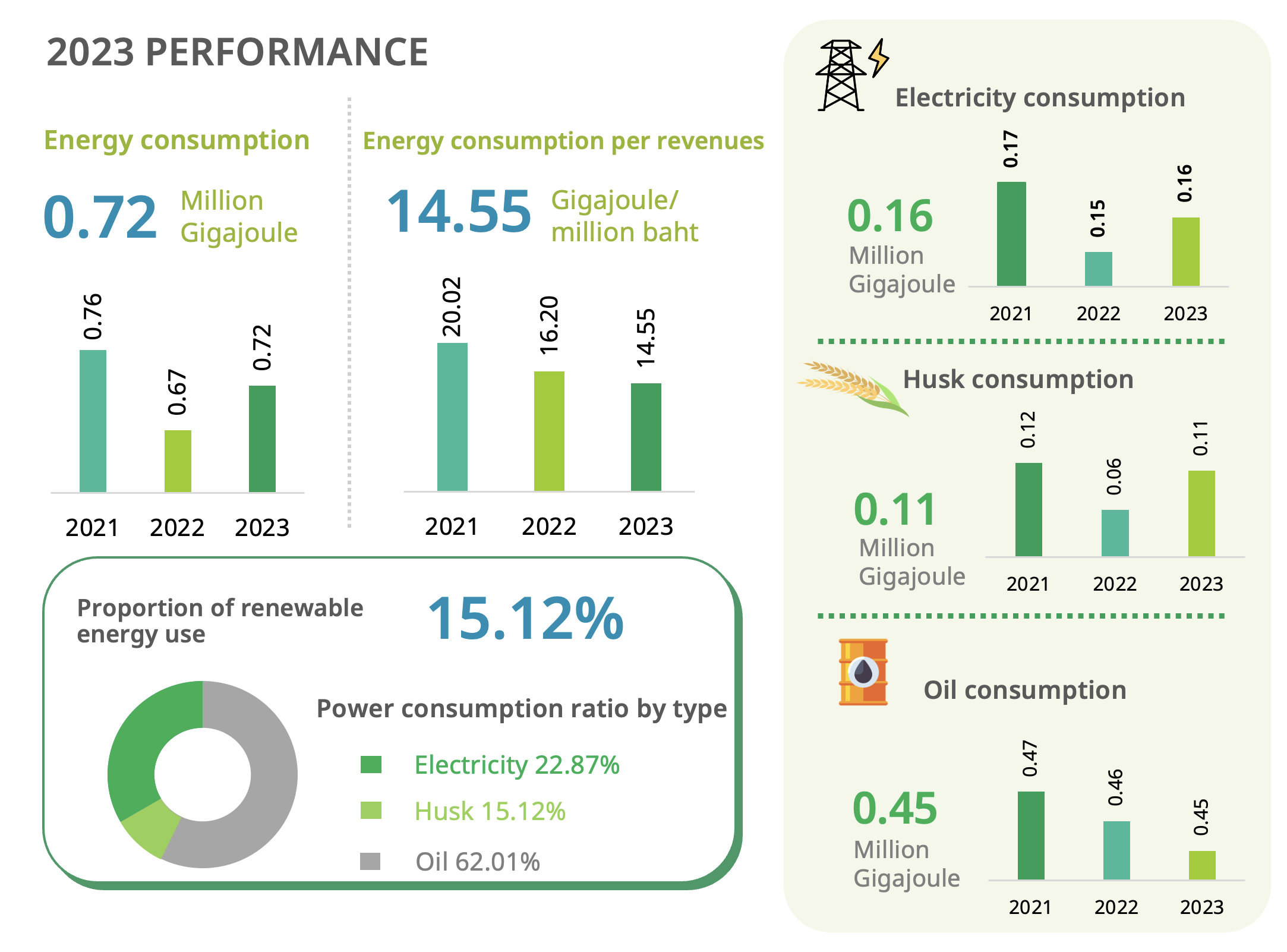
ENERGY MANAGEMENT INFORMATION
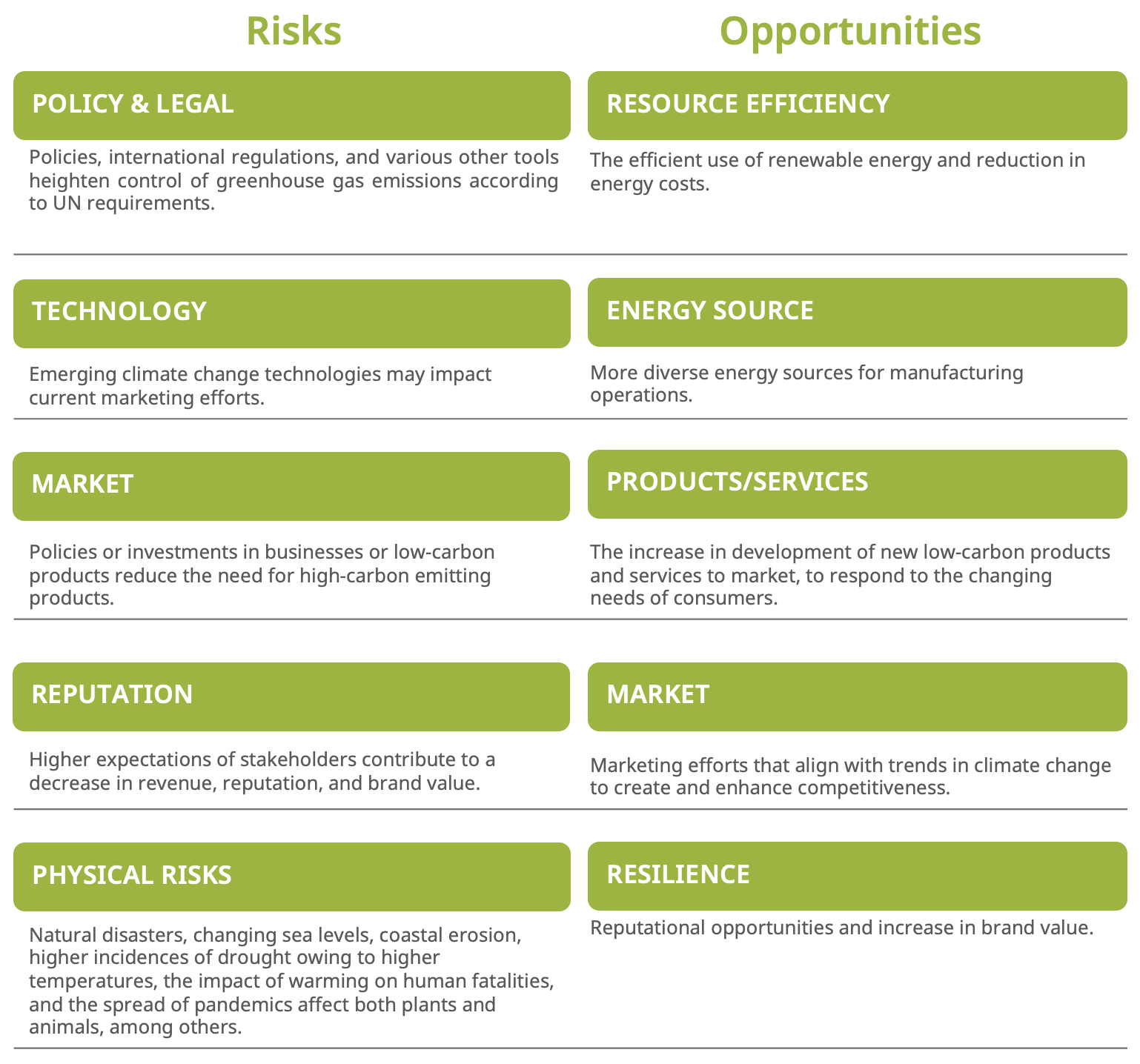
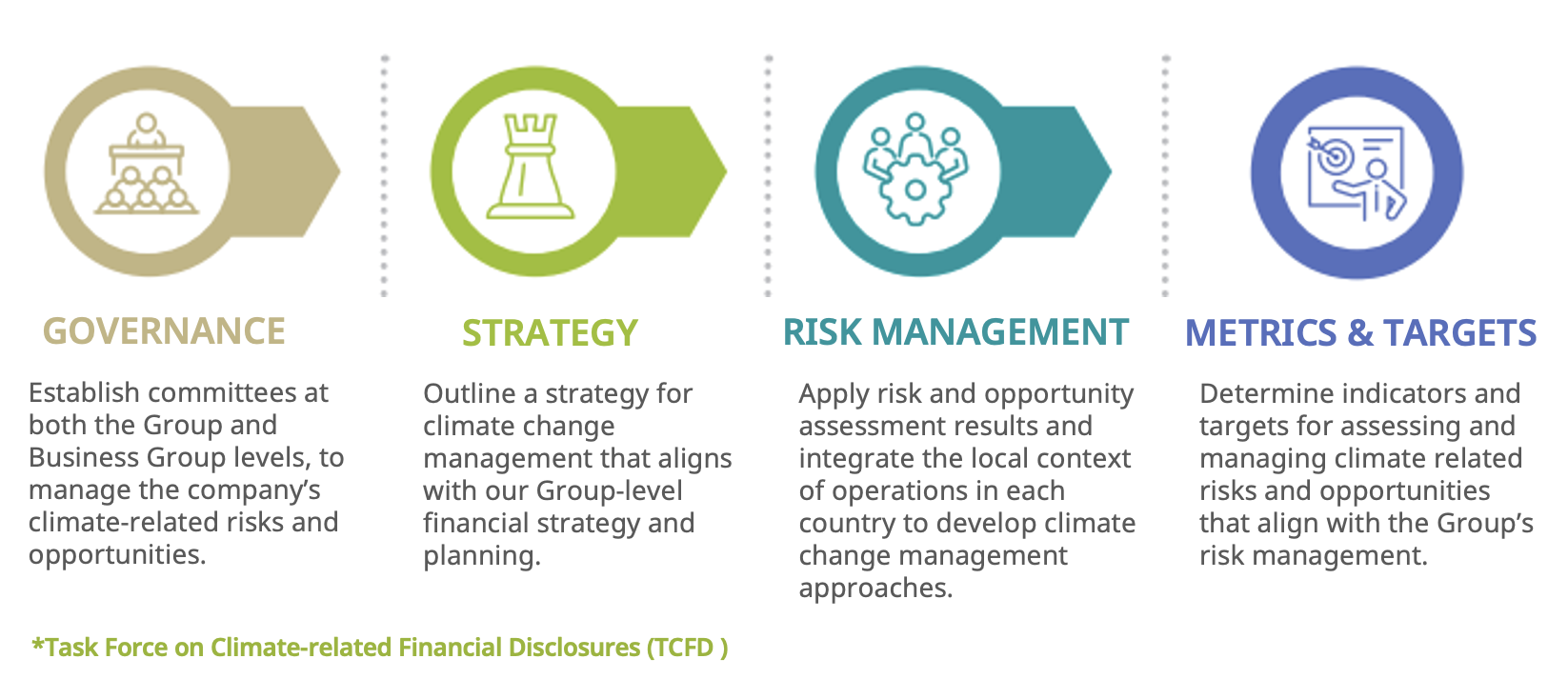
ASSESSMENT OF CLIMATE-RELATED RISKS AND OPPORTUNITIES ACCORDING TO TCFD
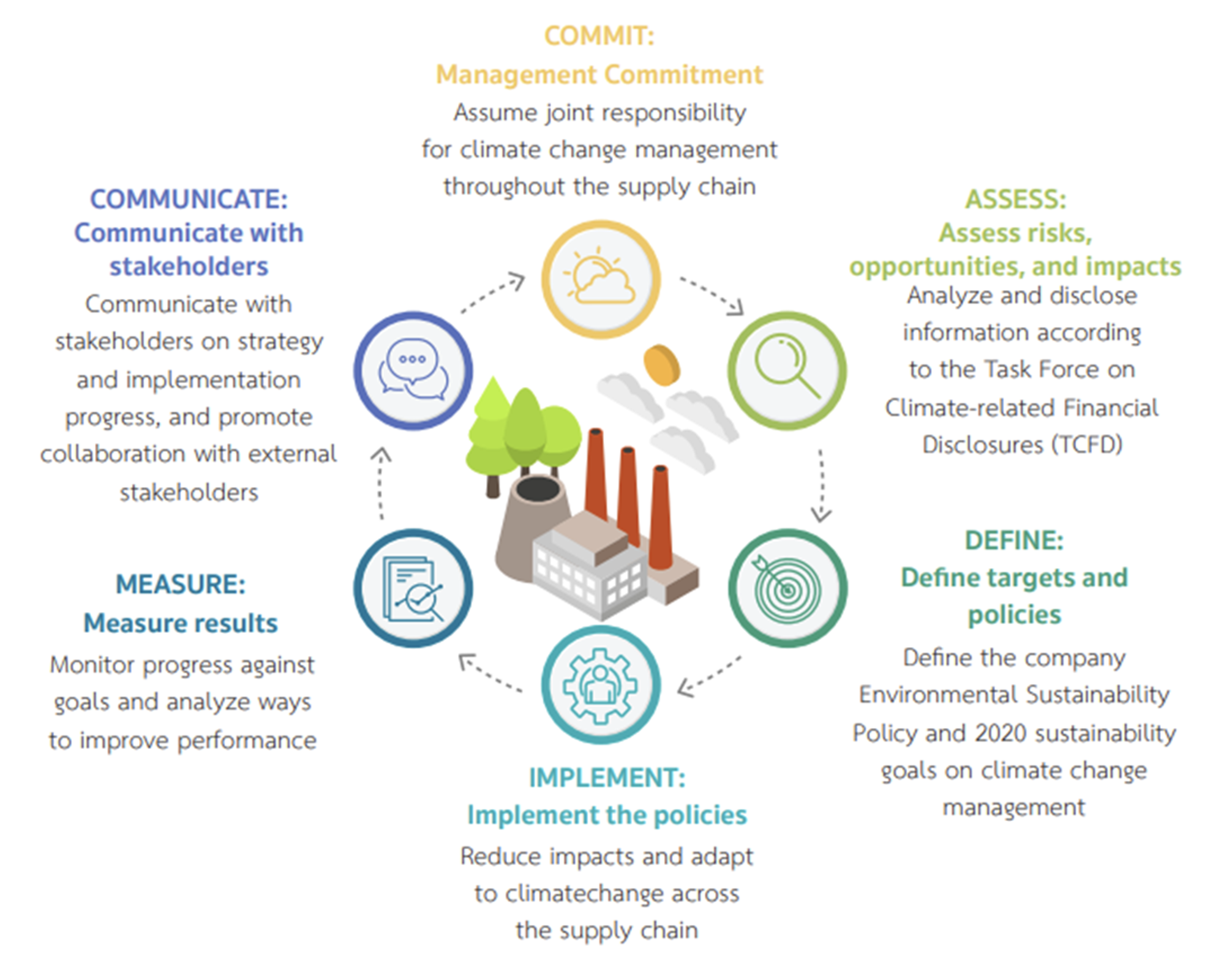
The company has in place a framework for managing climate change that covers our entire supply chain. We determine policies and targets that encompass energy efficiency, renewable energy use, waste management, and reductions in plastic packaging. We further assess climate risk and opportunities, conduct scenario analyses according to the recommendations of the Task Force on Climate-related Financial Disclosures (TCFD), and develop comprehensive risk management plans that include physical,, market, policy and regulatory, and reputational risks. technological
CLIMATE CHANGE MANAGEMENT FRAMEWORK
GUIDELINES FOR MANAGING GREENHOUSE GAS EMISSIONS
PROMOTING EFFICIENT USE OF ENERGY
Promoting efficient use of energy, Charoen Pokphand Group has designed environmental and energy operations to be efficient. By using modern technology Investment in all available machinery and equipment. In addition, the production process has been developed to be more efficient. To reduce energy use as much as possible
Case Study
SOLAR POWER GENERATION SYSTEM
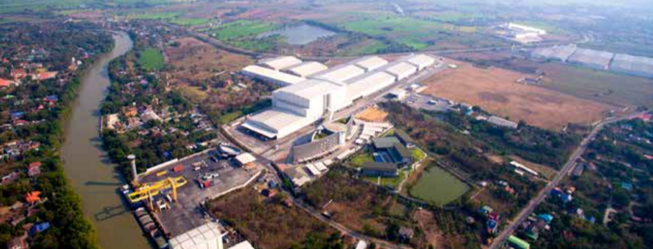
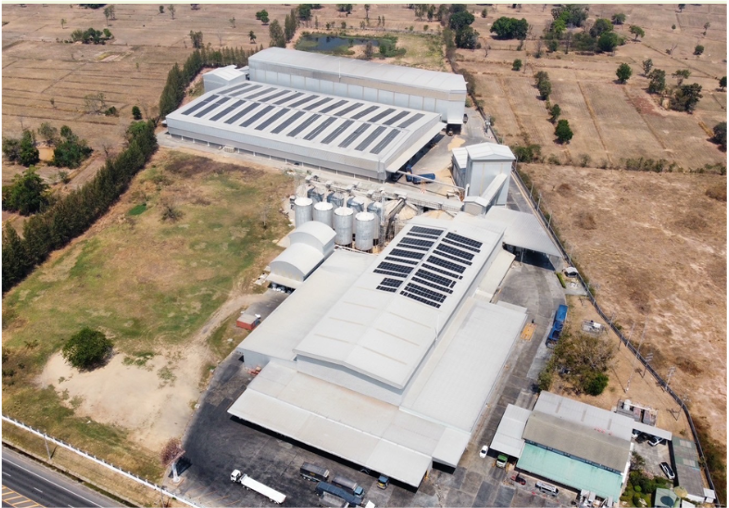
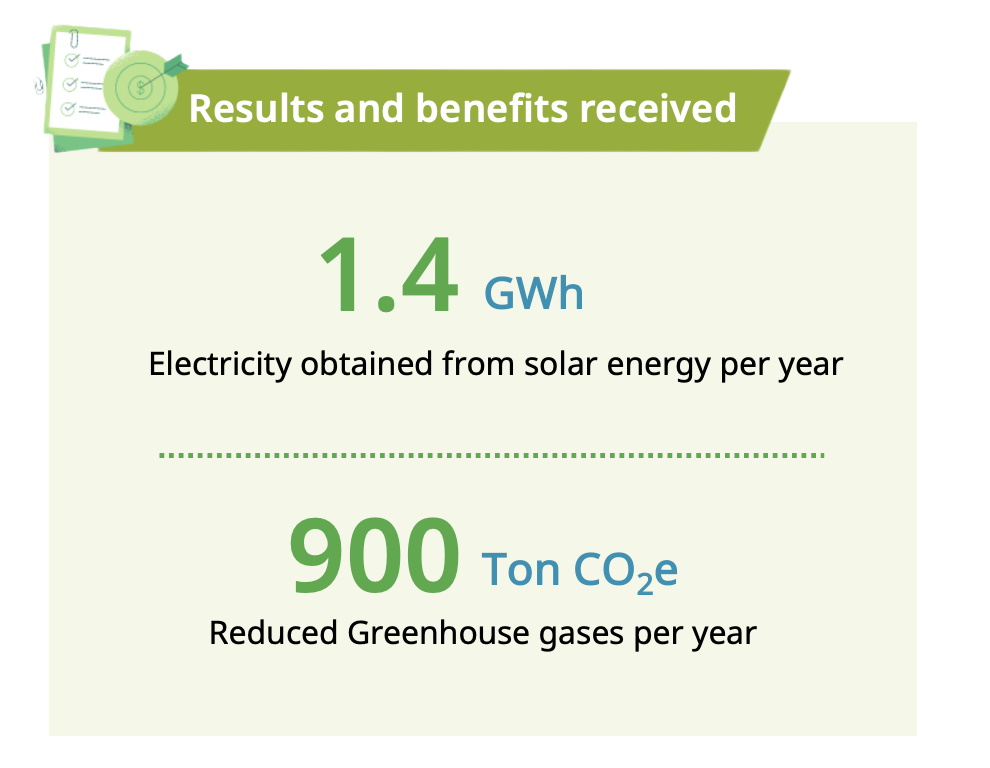
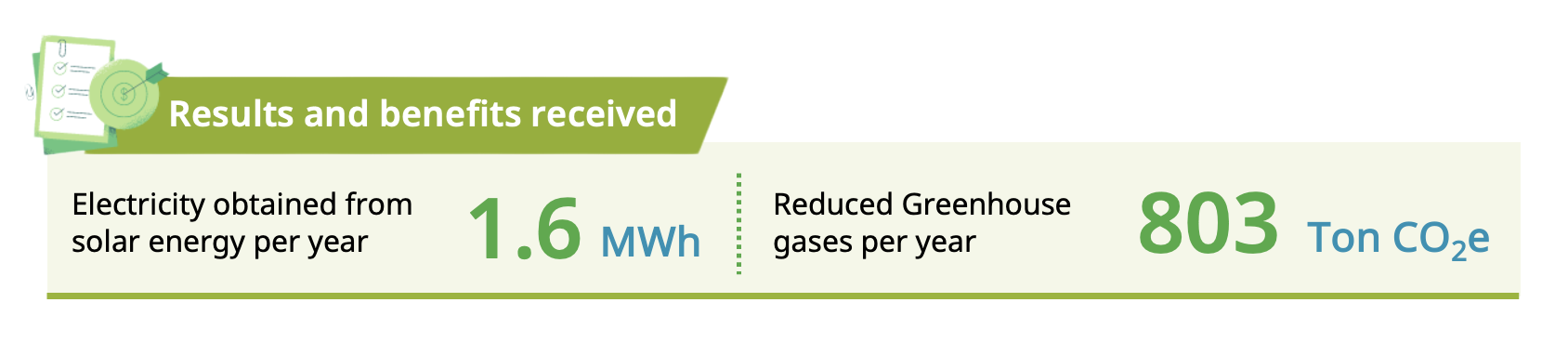
Khao CP Co., Ltd. is committed to conserving energy and giving importance to the circular environment. The company intends to support the production of electricity from solar energy. This is considered clean energy that does not affect the environment. Therefore, an electricity generation system was installed to produce electricity from solar energy on the rooftops (Solar Rooftop) at all 5 factories throughout Thailand. Especially the Nakhon Luang Rice Factory. It is a large factory and uses modern and highly efficient machinery and equipment for production. There is a 7-story production building that was designed to use gravity to transport rice. Moreover, the office part is designed in the shape of a grain of rice. The top of the building is a Green Roof, helping to reduce heat radiating in as well.
USING A HIGH-EFFICIENCY AIR COMPRESSOR
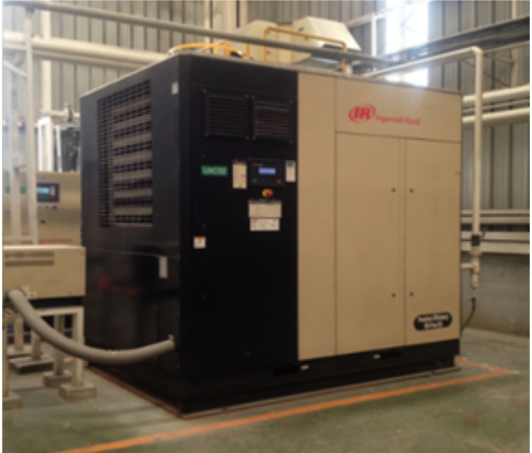
CP Rice Company Limited promotes the appropriate use of energy. By changing to using a high efficiency air compressor. Measures have been put in place to adjust the pressure appropriate to usage so as not to waste energy in vain. Air leak points are also inspected and fixed in the compressed air system on a regular basis.
HIGH-EFFICIENCY REFRIGERATION COMPRESSORS
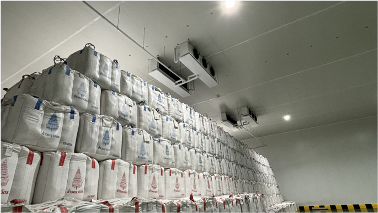
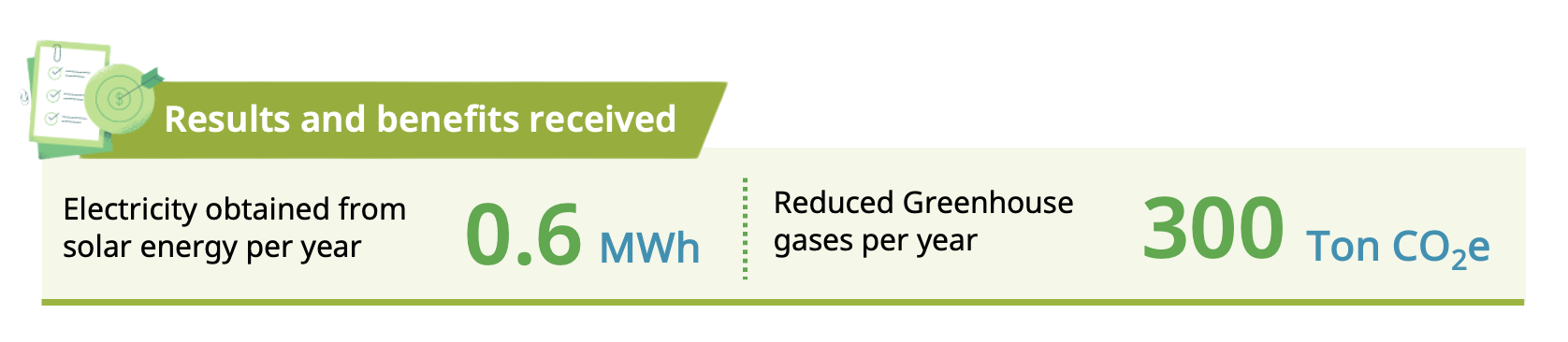
Khao CP Co., Ltd. starts with designing and selecting modern and appropriate technology for the construction of large cold storages. There is management. Maintenance A project has been created to improve efficiency in the cooling system. and measures to promote the use of high-efficiency refrigeration compressors.
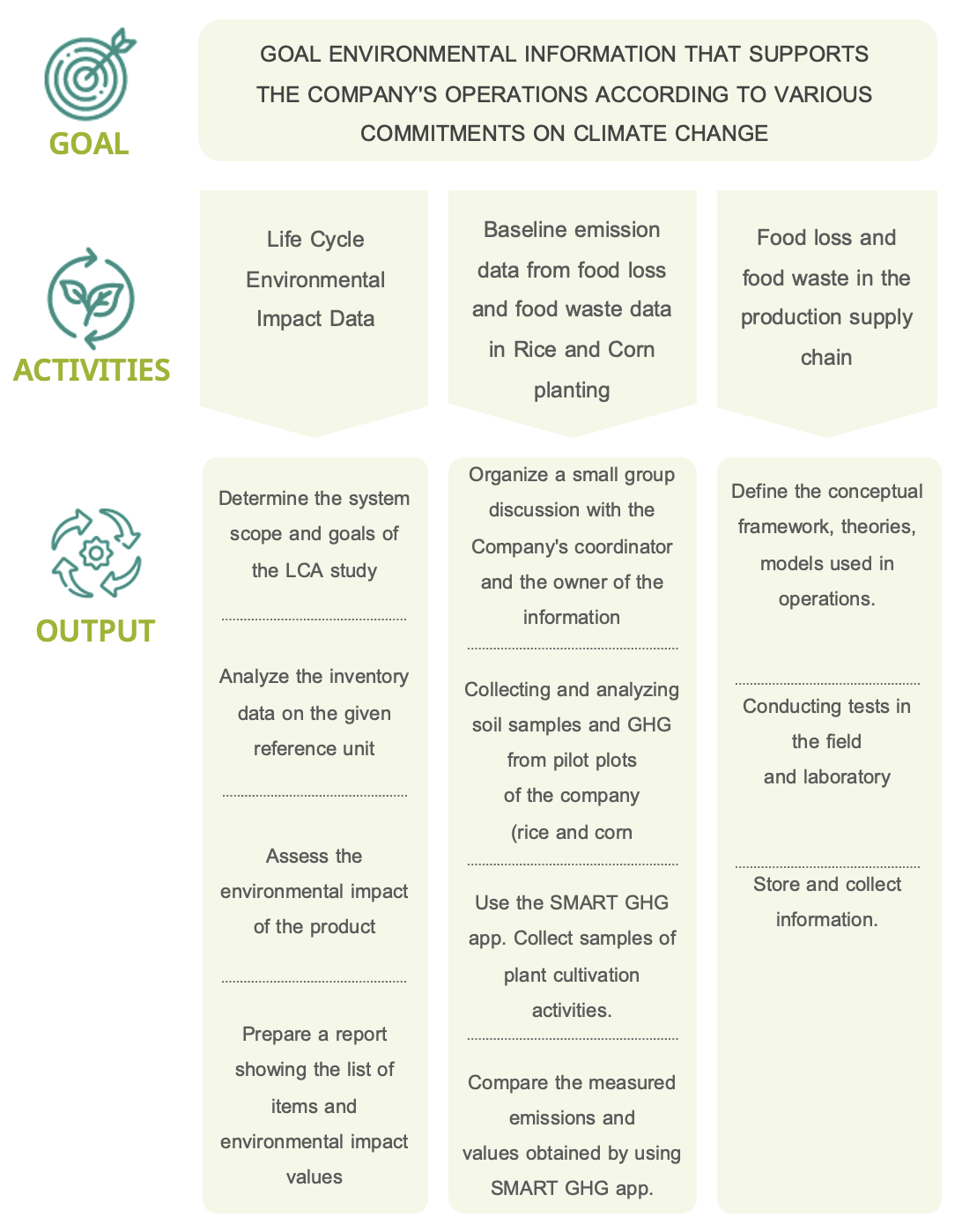
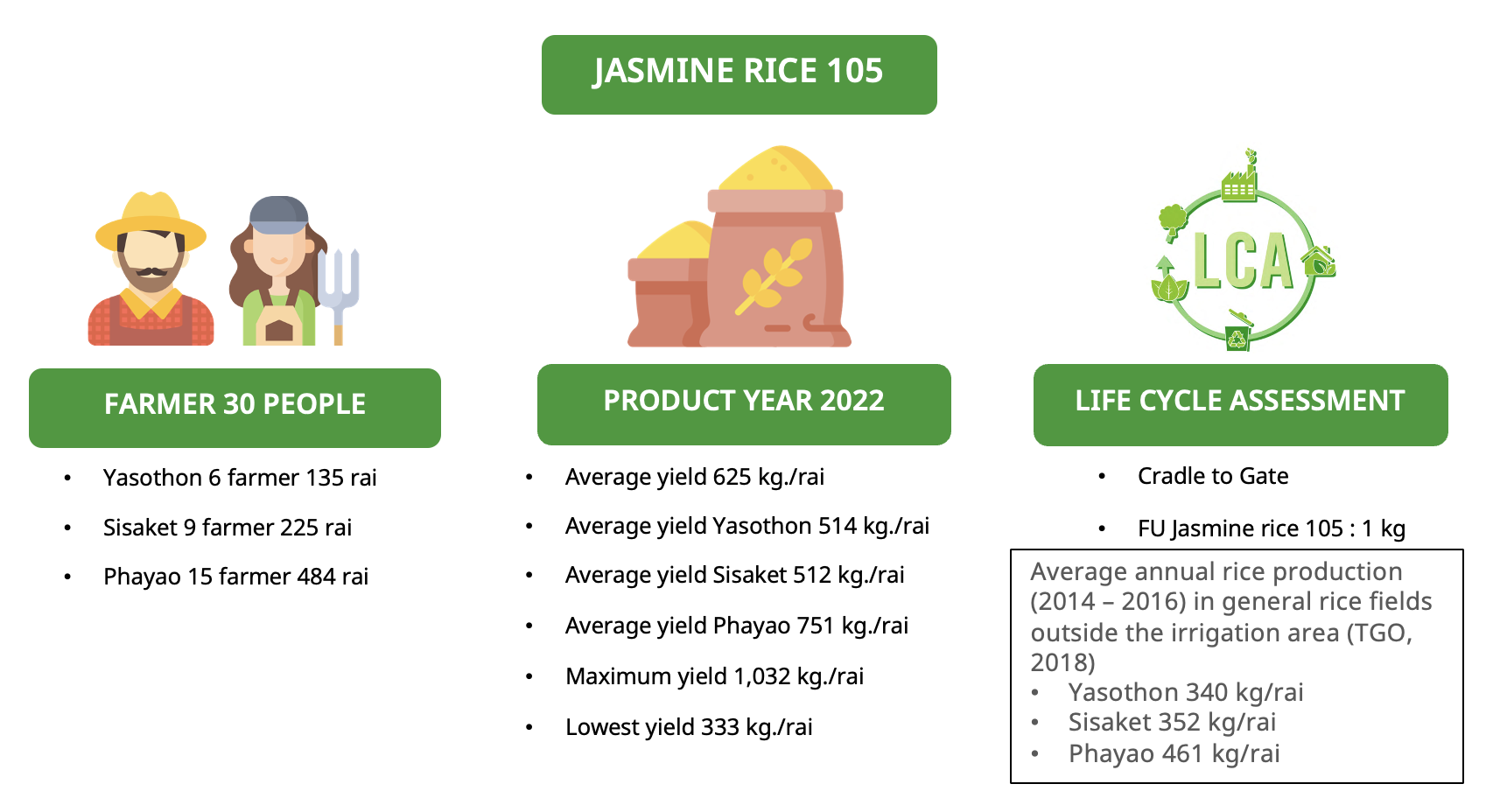
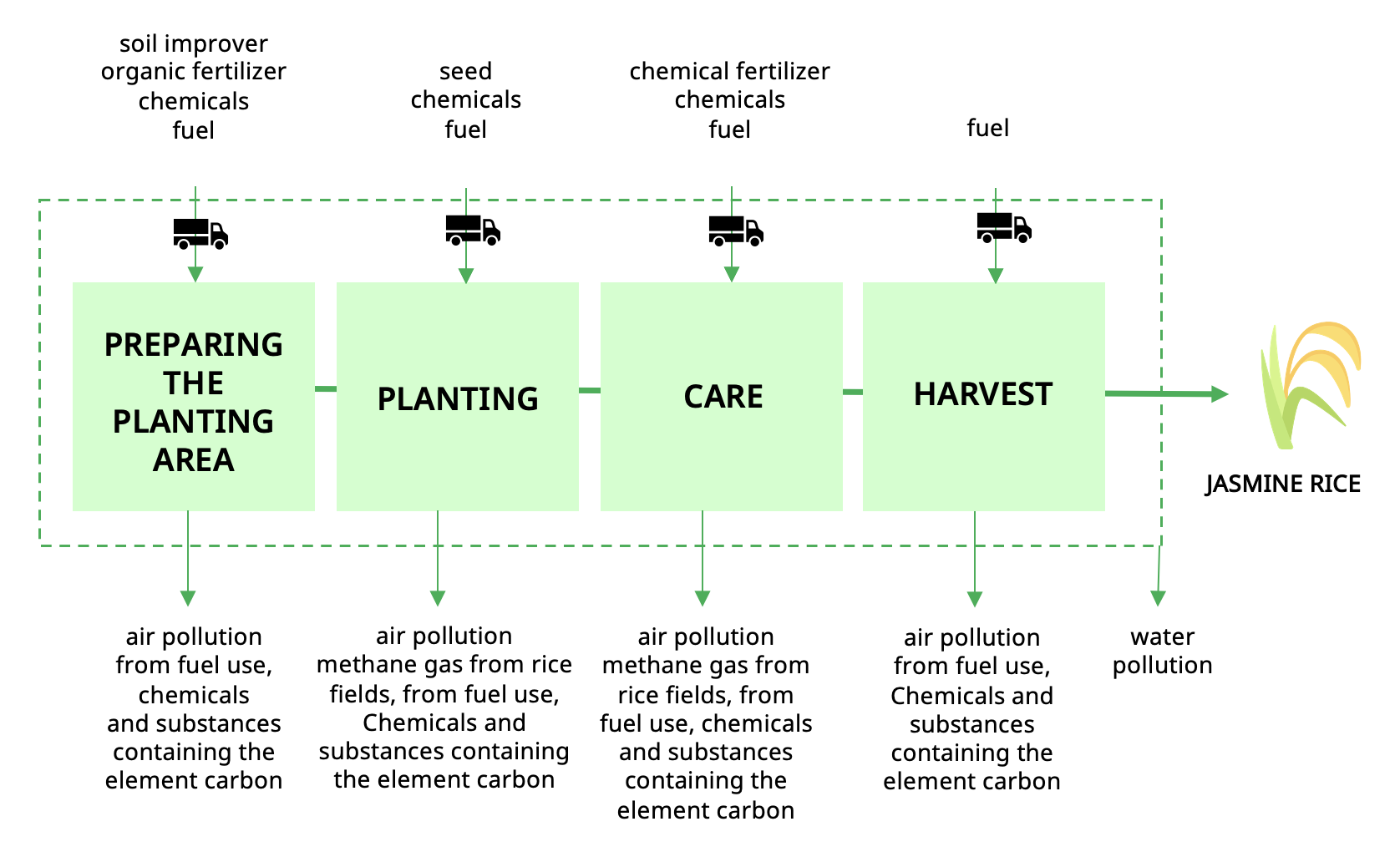
ASSESSING ENVIRONMENTAL IMPACTS THROUGHOUT THE LIFE CYCLE OF RICE CULTIVATION IN PILOT PLOTS
SCOPE OF STUDY
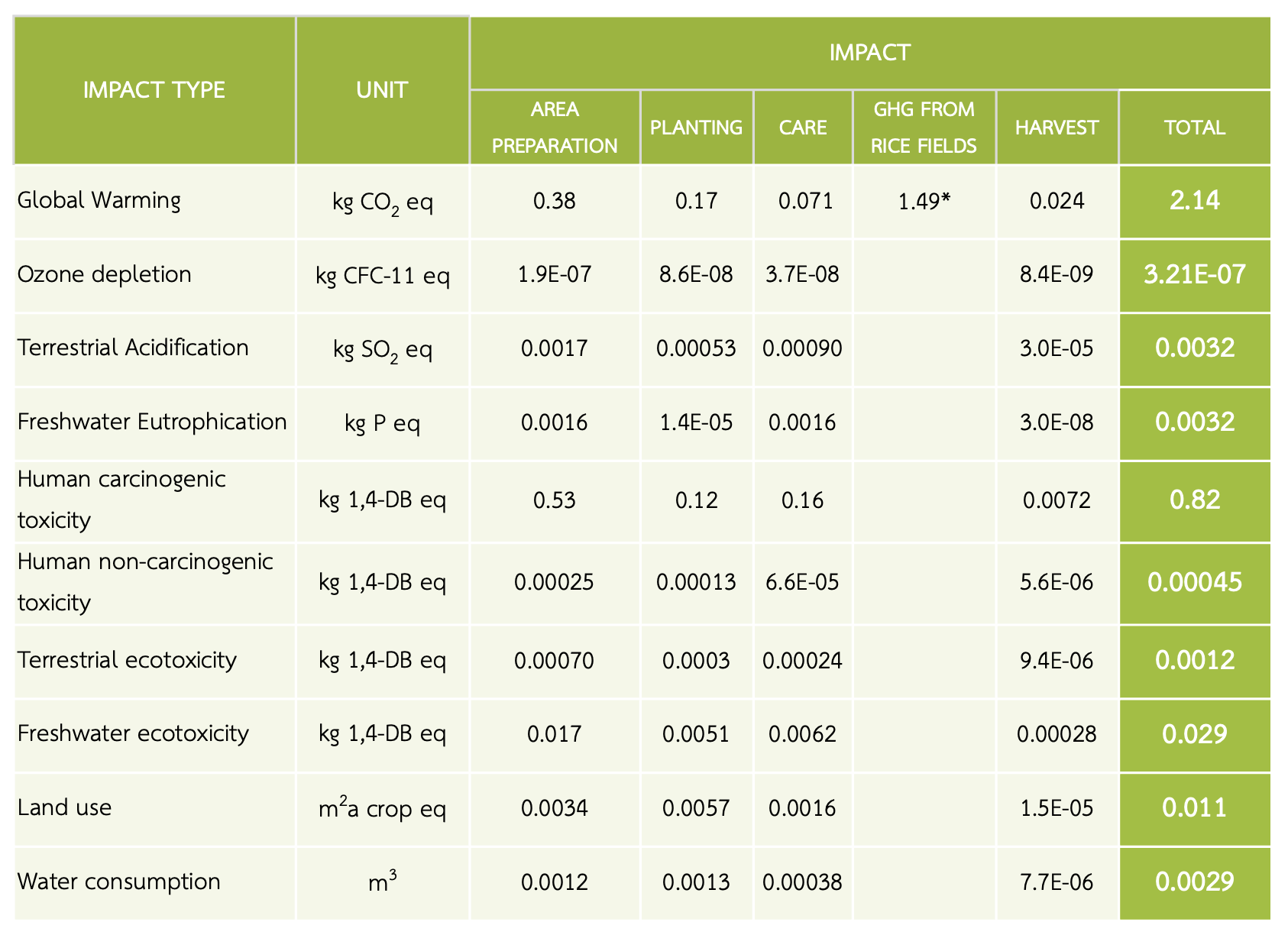
ENVIRONMENTAL IMPACT OF PRODUCING 1 KILOGRAM OF JASMINE RICE.
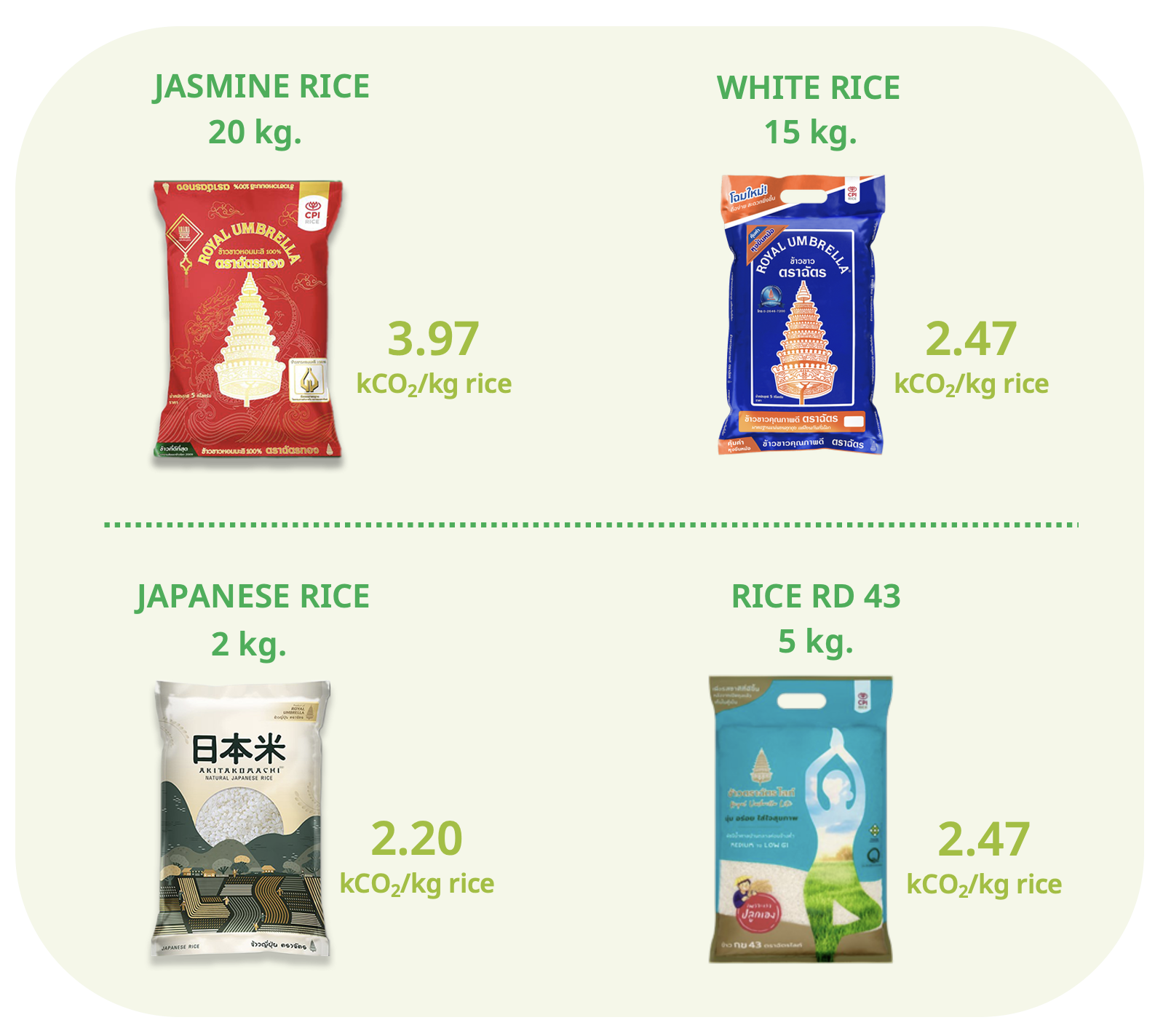
CARBON FOOTPRINT OF PRODUCTS : CFP
A project of analyzing and evaluating the amount of greenhouse gas emissions from its products. throughout a product’s life cycle, beginning with raw material sourcing, and continuing with transportation, assembly, and use, and finally to the end-of-life treatment of the product. It is calculated in the form of carbon dioxide equivalents. This is a comprehensive approach to environmental impact mitigation management. aim to reduce the impact to the point Charoen Pokphand Group has adopted the concept of environmental impact assessment throughout the life cycle in the field of climate change. and apply for the Carbon Footprint of Product label from the Greenhouse Gas Management Organization. (Public Organization), from 2010 until the present. There are 4 products in operation as follows:
More information about
CLIMATE RESILIENCE
SUPPORTING THE SDGs
SDG 11Sustainable Cities and Communities
11.6 Reduce the adverse per capita environmental impact of cities
SDG 12Responsible Consumption and Production
12.2 Achieve the sustainable management and efficient use of natural resources
12.3 Halve per capita global food waste
12.5 Substantially reduce waste generation
OPPORTUNITIES AND CHALLENGES
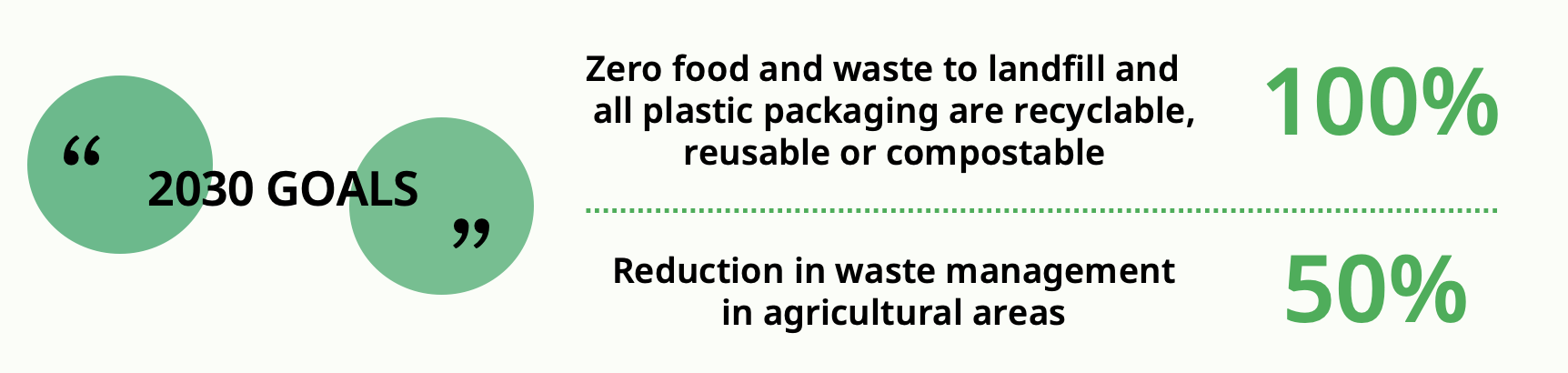
C.P. Intertrade Co., Ltd. and companies in Rice Business Transportation and Service is committed to work that focuses on careful resource management so that no part will be wasted products and materials are stored, reused, remanufactured and recycled as long as those resources are used in the most efficient way to create added value to the waste that occurs do not manage waste by landfill and develop new sustainable packaging design guidelines with the goal of companies in the business group ((1) Reduce the amount of food waste to zero (Zero Food Waste), (2) no general waste disposal by landfill (Zero Waste to Landfill), and (3) all used plastic packaging can be recycled. reusable, reusable or biodegradable.
KEY OPERATING RESULTS IN 2023
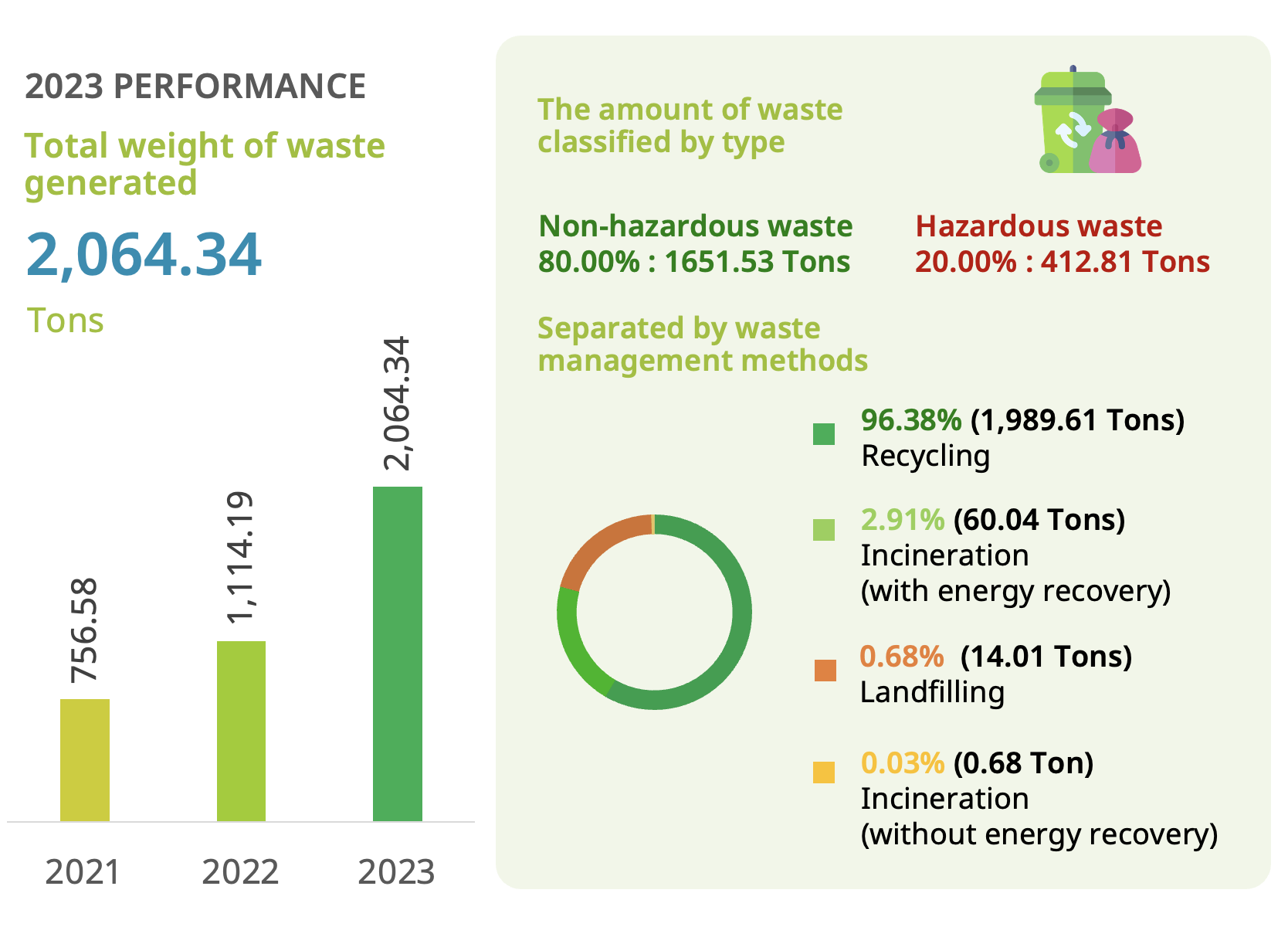
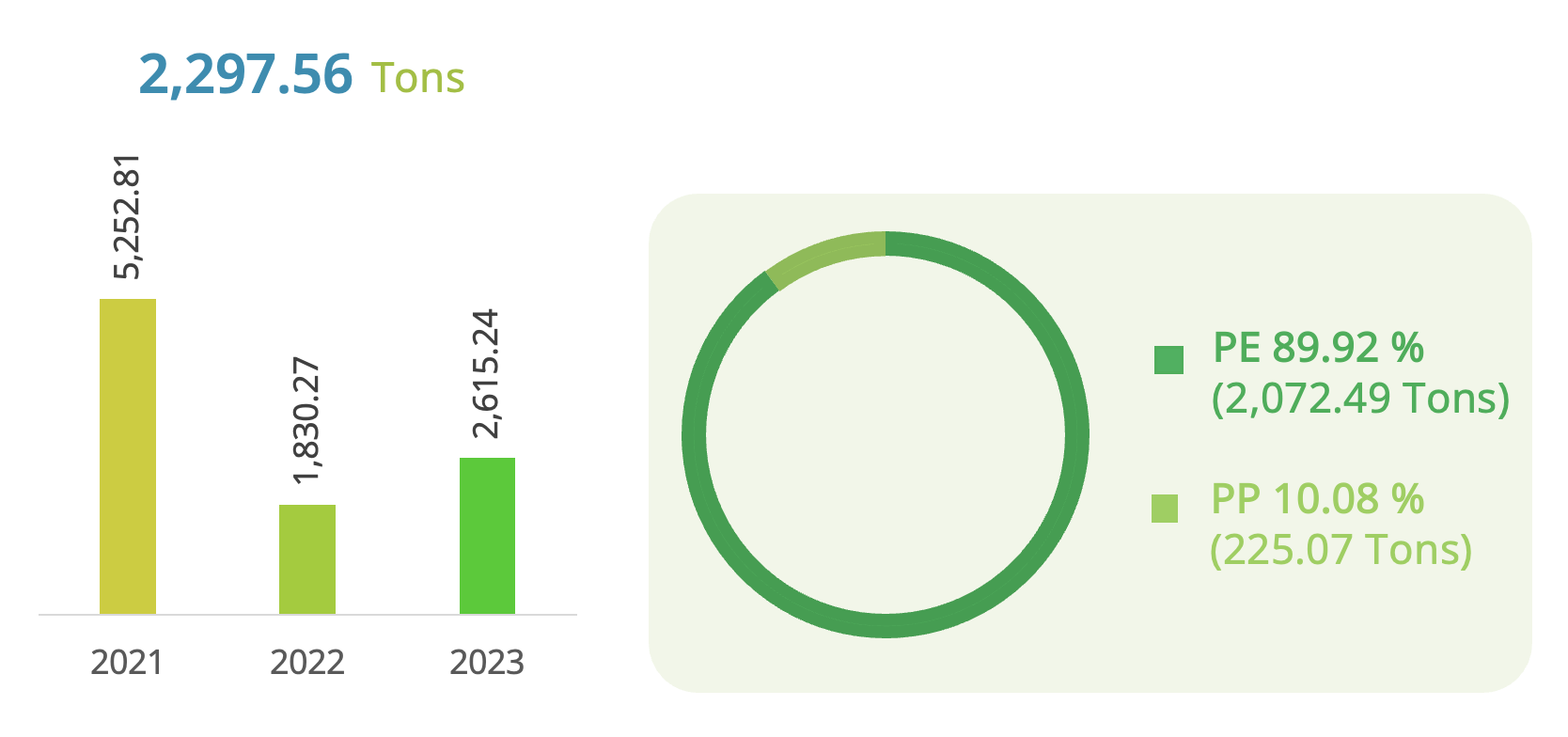
WASTE MANAGEMENT INFORMATION
*Note 1 :
1.All waste is processed offsite.
2.The amount of the company’s waste Ayutthaya Port and ICD operate together with Khao C.P. (Nakhon Luang Rice Factory).
3.The waste management process employs waste disposal contractors licensed by the government, namely, Better World Green Public Company Limited, Professional Waste Technology (1999) Public Company Limited.
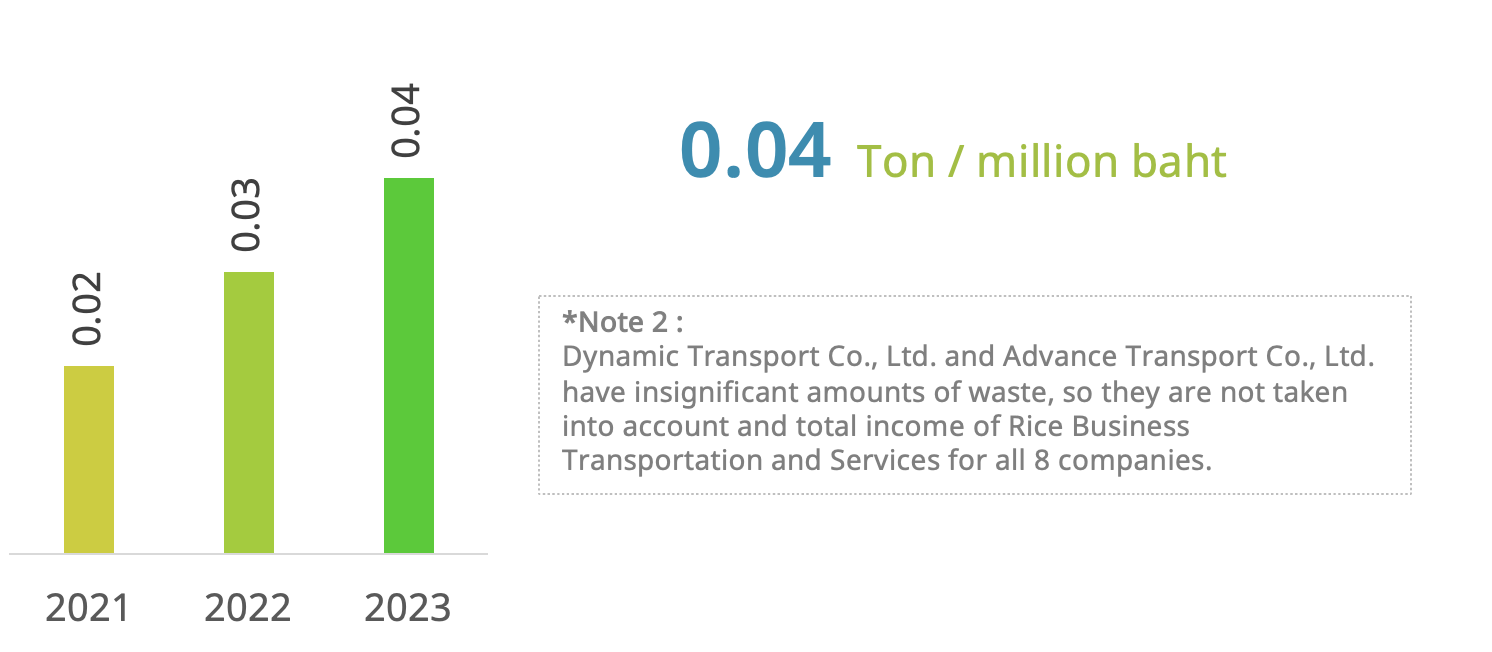
The amount of waste per revenue
SUSTAINABLE PLASTIC PACKAGING INFORMATION
2023 PERFORMANCE
WASTE MANAGEMENT
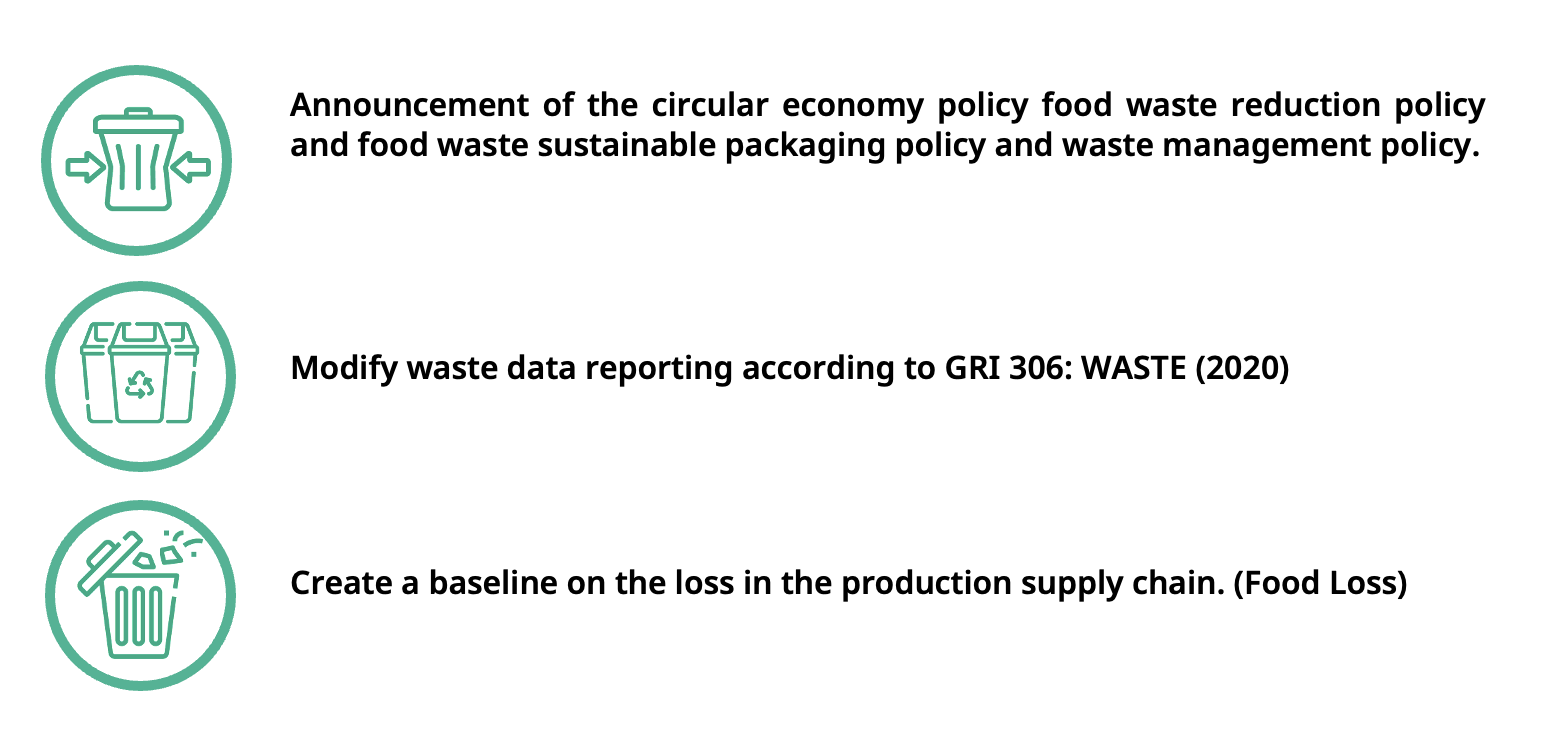
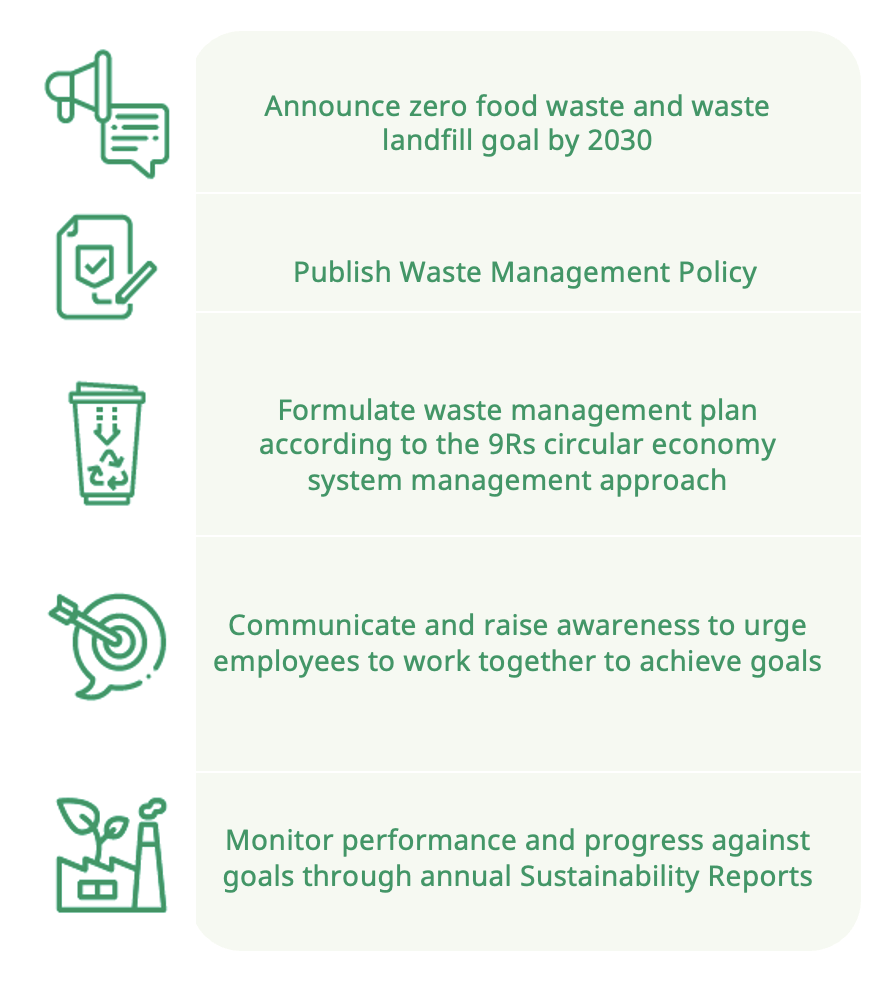
Waste management is an important aspect of all process along C.P. Intertrade Co., Ltd. and companies in the Rice Business Transportation and Service Charoen Pokphand Group’s value chain. In 2022, the Group announced the implementation of the Waste Management Policy, which is part of the Group’s Environmental Policy and Guidelines, providing direction for all business groups to strive towards achieving the zero-food waste and zero waste to landfill goal by 2030. Waste management guidelines have been defined as follows:
FOOD LOSS AND FOOD WASTE MANAGEMENT
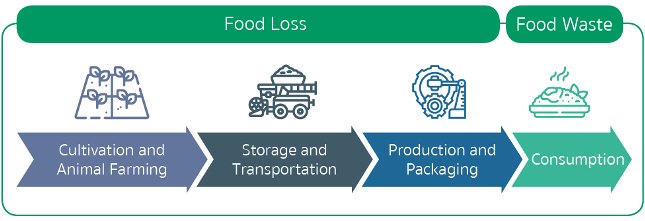
C.P. Intertrade Co., Ltd. and companies in the Rice Business Transportation and Service Charoen Pokphand Group’s core businesses include production and distribution of food and beverages. We take into account food loss and food waste management throughout the supply chain from the process of crop cultivation and animal farming through to customer consumption. The Group is committed to reducing food loss and achieve the goal to eliminate food waste and waste to landfill by 2030.
Project to develop agricultural systems to restore ecosystems
Rice business, transportation and companies, working hand in hand with the Unilever team and Kasetsart University to drive
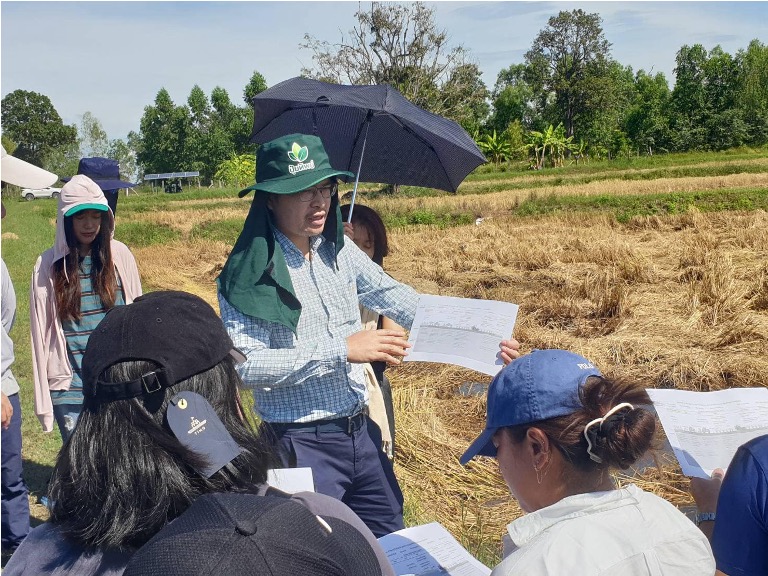
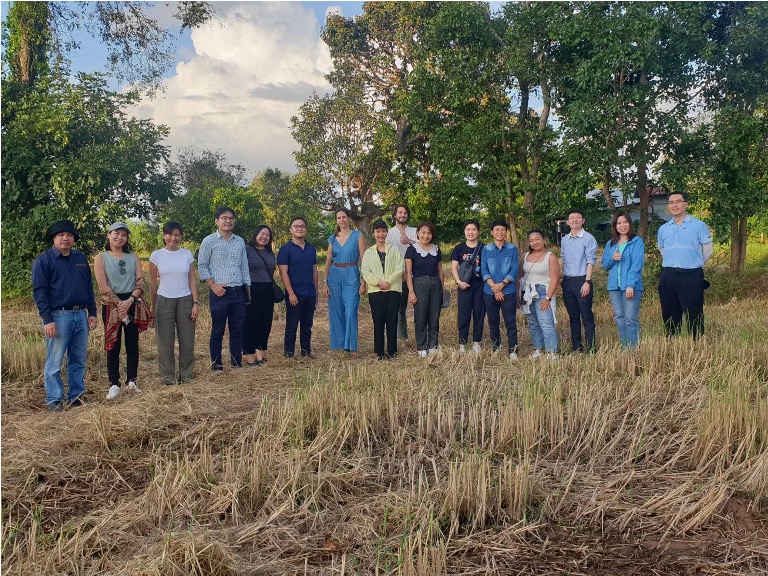
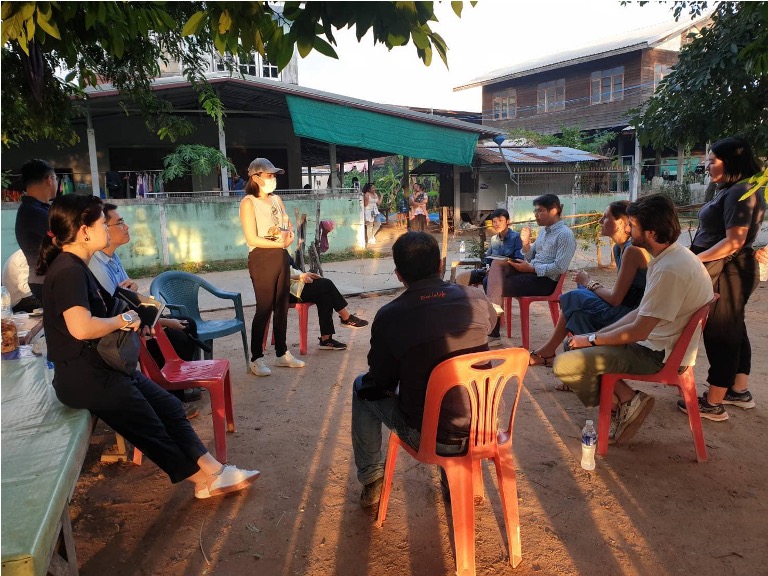
Dr. Sadudee Supanpai, Deputy Managing Director of the Office of Sustainability Management Integrated plant business, rice, transportation and services Along with Ms. Suda Wimonsinsap General Manager of Sales of C.P. Foodstore Company Limited welcomed Ms.Caroline Guillaume, Camille Raivavae Marketing – Regional and the company’s group Unilever visits the area to study the cooperation area for the project to develop agricultural systems and restore ecosystems. (Regenerative Agriculture) for cooperation in reducing greenhouse gas emissions and creating added value in agricultural supply.
The project is a collaboration between integrated plant, rice, transportation and service businesses. Charoen Pokphand Group and partner Unilever through the Livelihood Fund, which has experts from Kasetsart University. Participate in project development in rice growing areas in Buriram and Sisaket provinces
Currently, there are a total of 6 farmers participating in the project, with a total cultivation area of 55 rai. In 2024, the goal is to expand the number of farmers in the project to 500 and have a total cultivation area of 5,000 rai.
More information about
CIRCULAR ECONOMY
SUPPORTING THE SDGs
SDG 6Clean Water and Sanitation
6.3 Improved water quality through safe treatment and recycling
6.4 Increased water use efficiency and ensure sustainable supply
6.5 Implement integrated water resources management
6.B Support the participation of local community in improving water and sanitation management
SDG 12Responsible Consumption and Production
12.2 Achieve the sustainable management and efficient use of natural resources
12.3 Halve per capita global food waste
12.5 Substantially reduce waste generation
SDG 14Life Below Water
14.1 Reduced marine pollution
OPPORTUNITIES AND CHALLENGES
Half of the world’s people will suffer from water scarcity if it also uses abundant water. World Economic Council states that water resources issues. It is one of the most important issues in the year. The security of natural resources, especially clean water, is an issue that the private sector needs to focus on. Factors that are important to running a business. The challenges and importance of maintaining water resources throughout the supply chain by striving to manage water resources throughout the value chain are necessary Continually develop processes, technology, innovation, and infrastructure to respond to this change to drive efficient water management.
KEY OPERATING RESULTS IN 2023
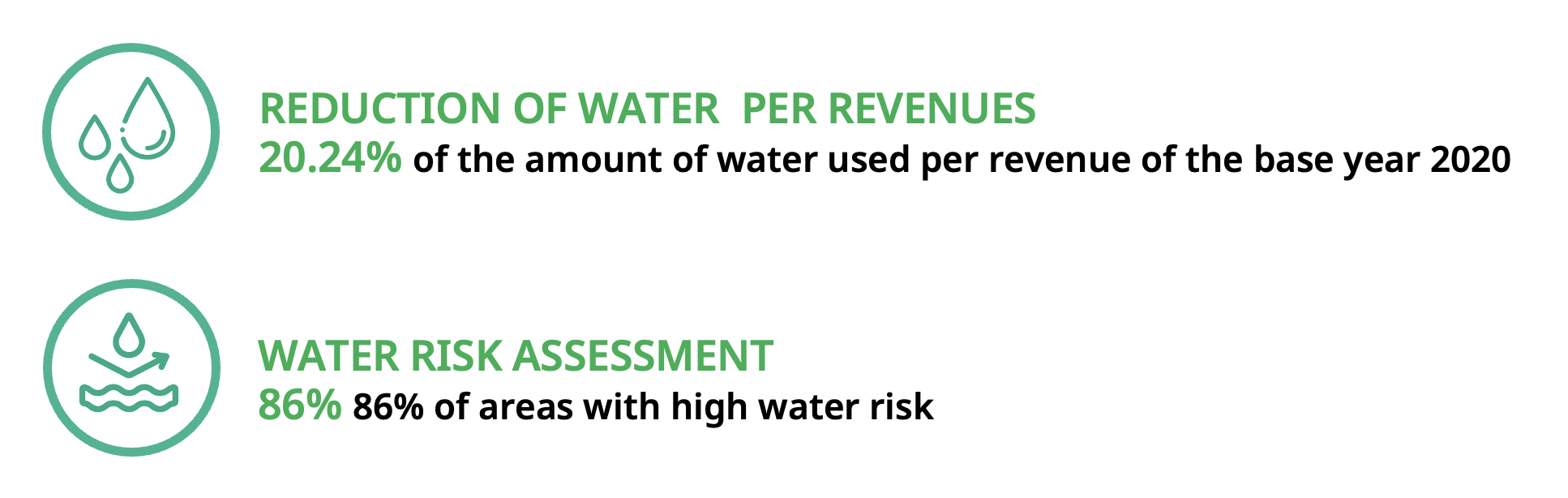
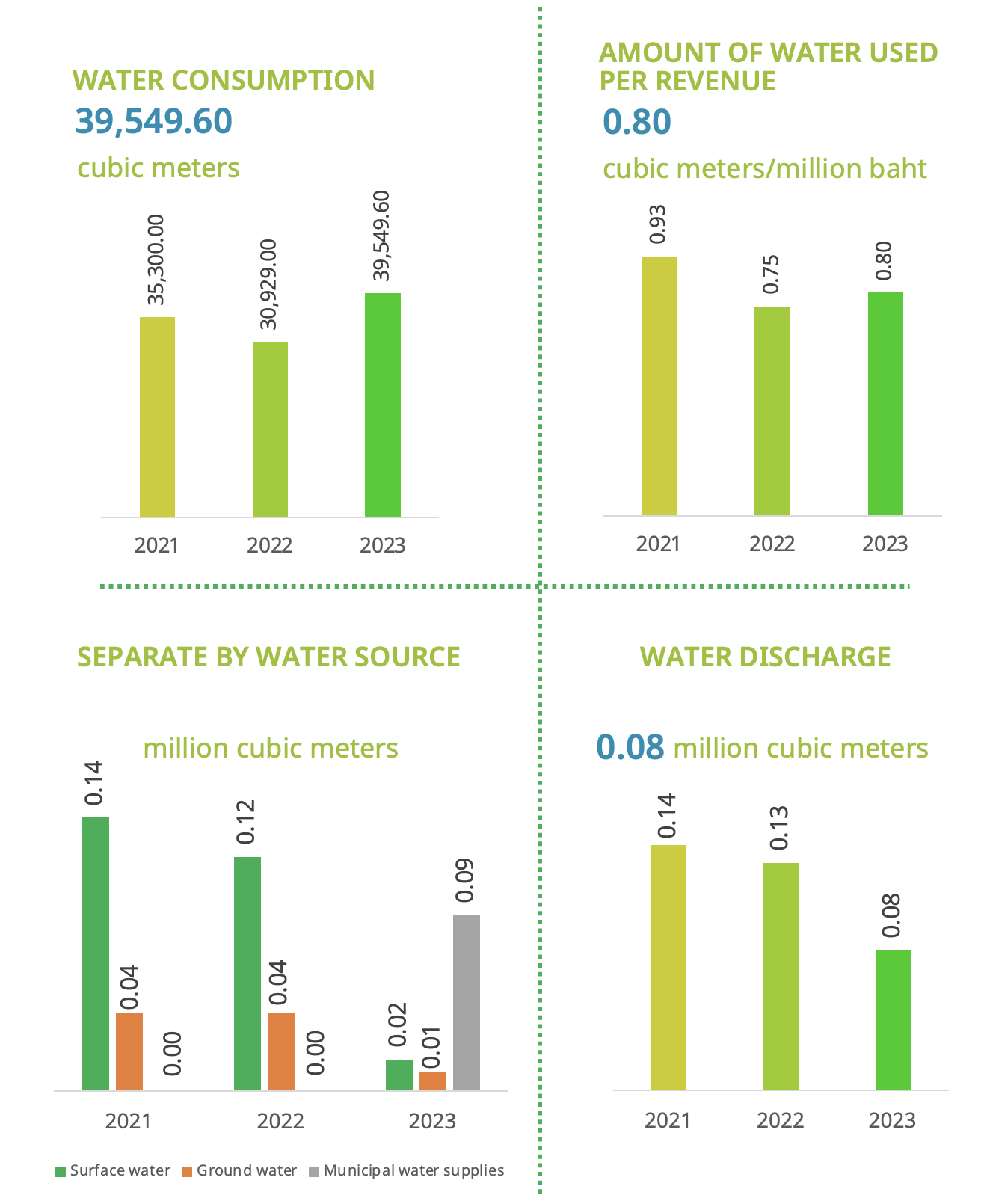
WATER RESOURCE MANAGEMENT INFORMATION
2023 PERFORMANCE
WATER CONSERVATION
MANAGEMENT APPROACH
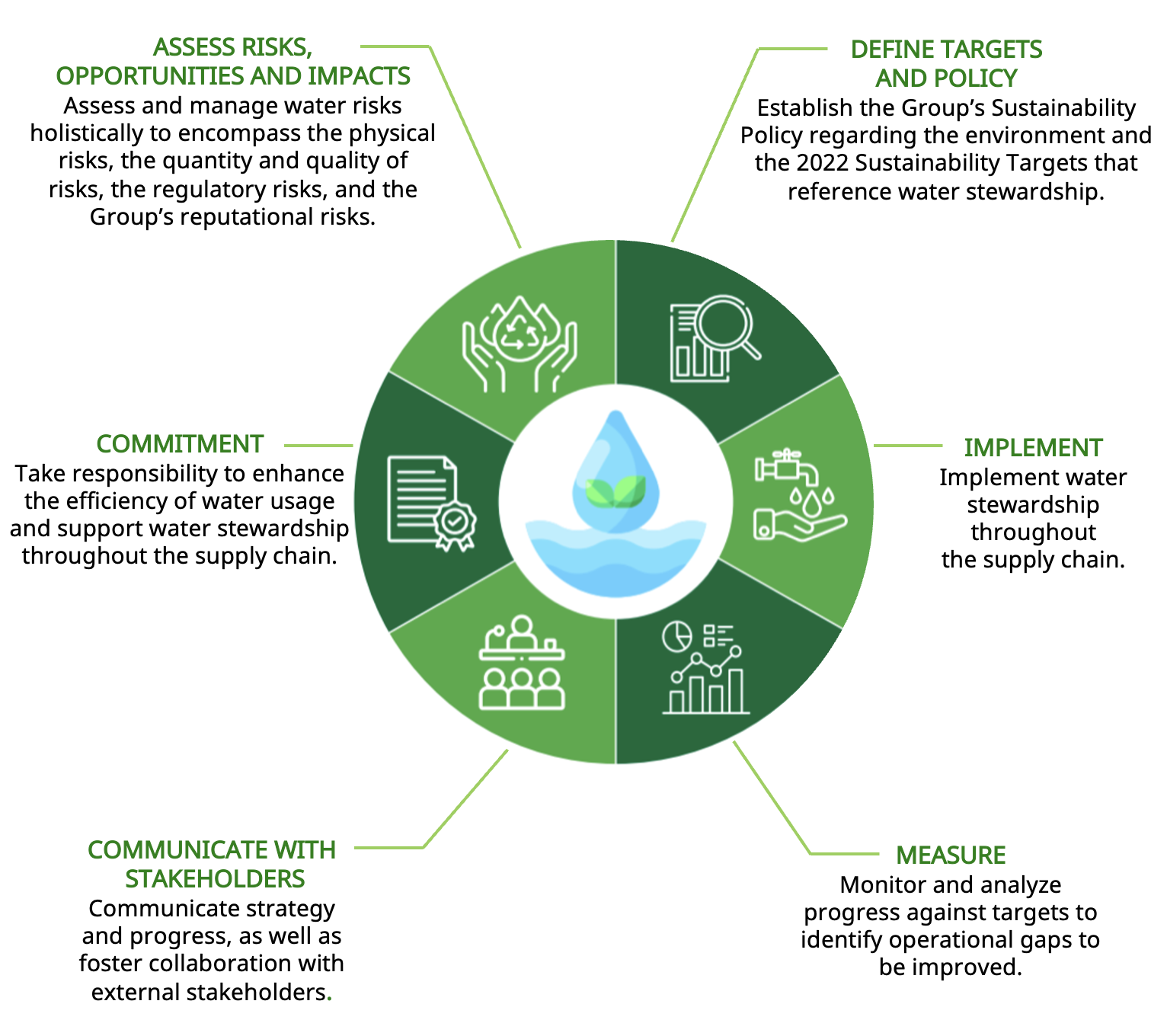
Our business operates on water stewardship under the UN Global Compact and Water Stewardship policy, and the Water Stewardship Framework. These serve as guidelines, facilitating the business to achieve its strategic goal to assess water scarcity risk.
WATER STEWARDSHIP MANAGEMENT FRAMEWORK
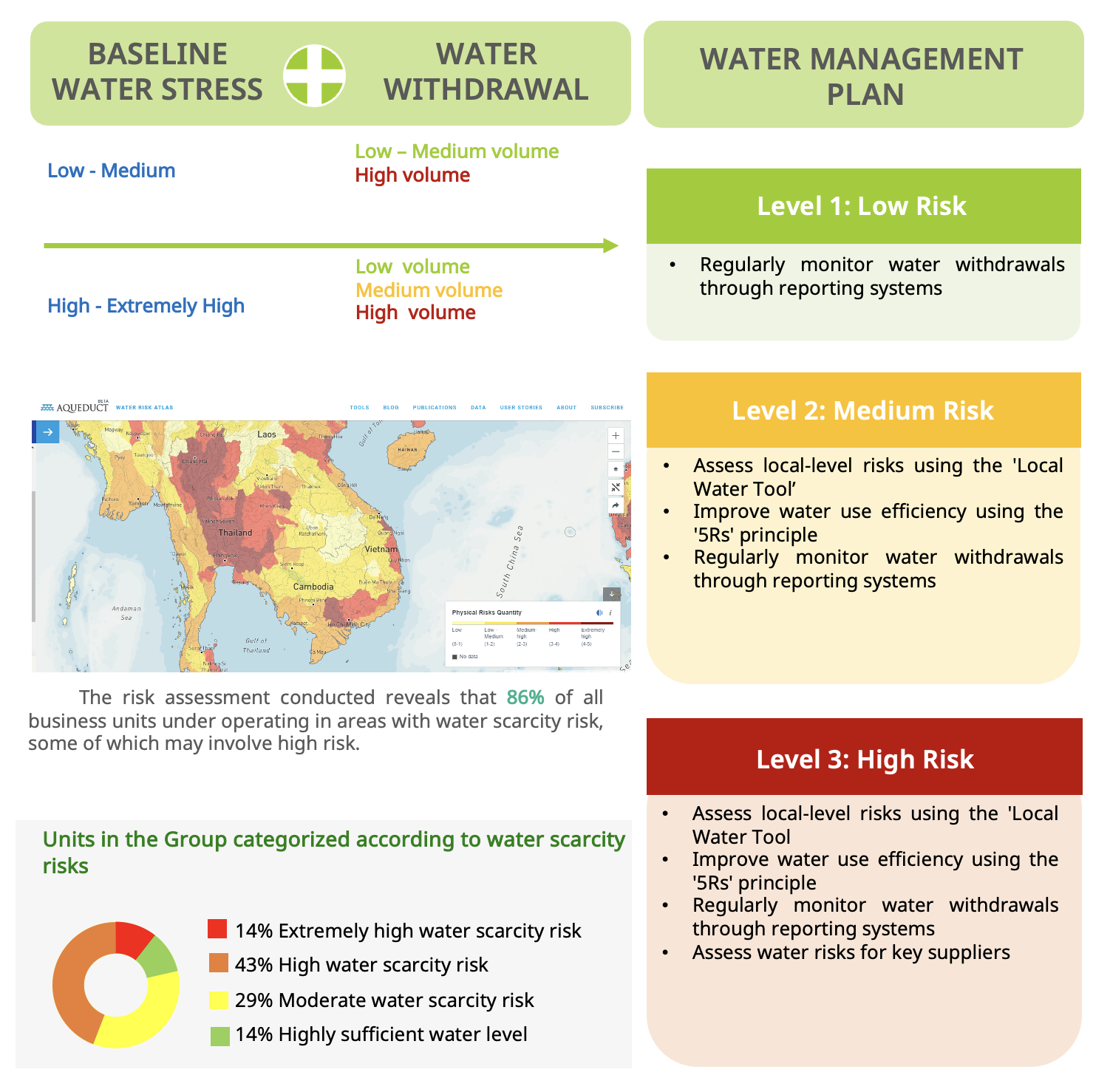
INTEGRATED WATER RISK ASSESSMENT
Enabling a good water management plan throughout the supply chain
Our business has developed a water resources risk assessment framework that is applied across all of its units and Business Groups. The assessment evaluates risk factors in various dimensions, including the volume of water withdrawal by organization, and baseline water stress levels. Our business has adopted the internationally-recognized Aqueduct Water Risk Atlas tool of the World Resources Institute (WRI) for use as our preferred assessment tool. The results of the assessment are ranked according to three levels of water risk and are then used to develop appropriate management plans.
WATER RISK ASSESSMENT FRAMEWORK
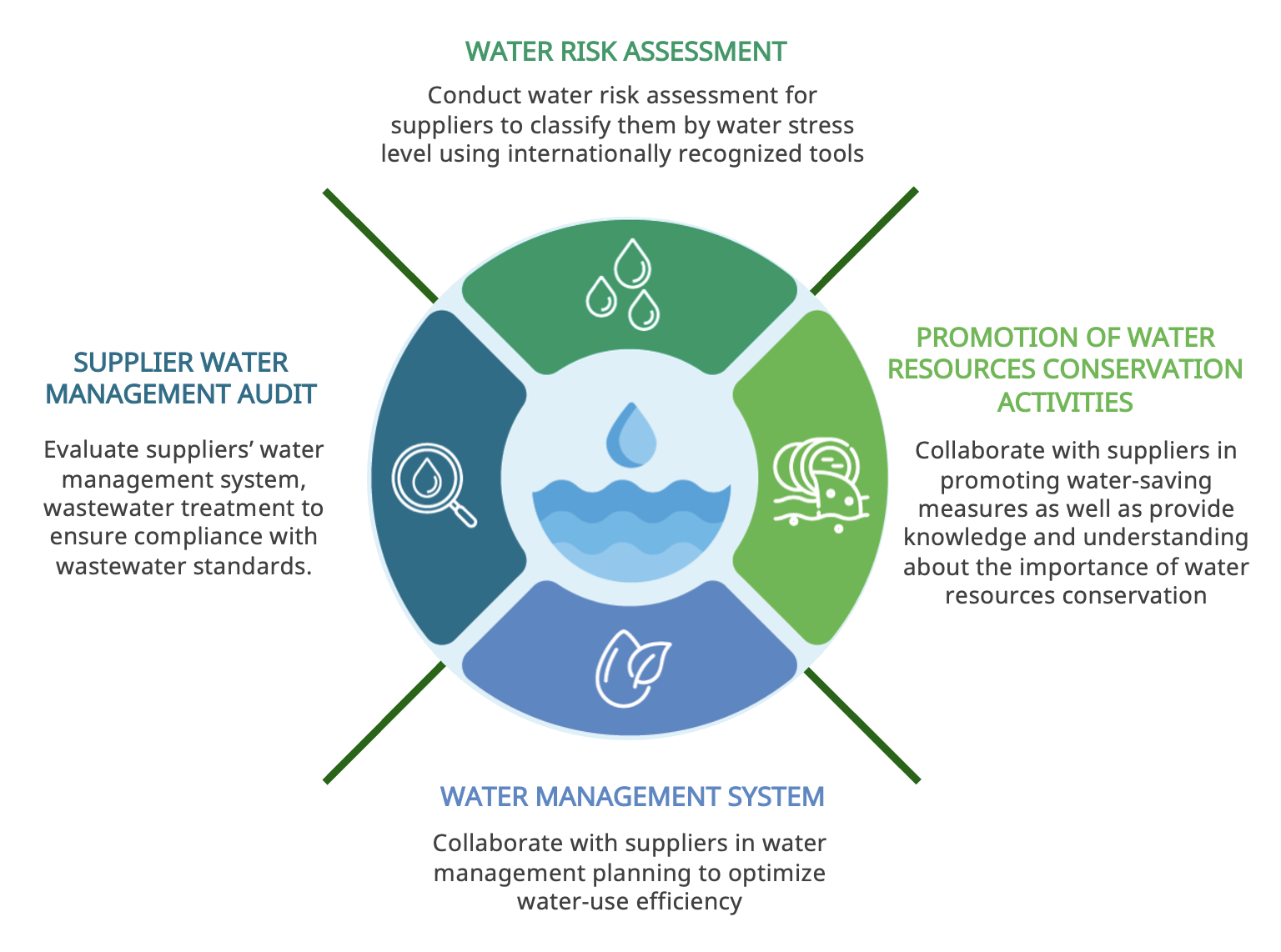
WATER MANAGEMENT FOR SUPPLIERS
Enabling water management planning throughout the supply chain
MANAGEMENT APPROACH
C.P. Intertrade Co., Ltd. and companies in the Rice Business Transportation and Service is committed to using water resources sustainably and implementing effective water management throughout the entire supply chain. In view of this, the Group has developed a management approach for our suppliers who are the key stakeholders to our business with the aim to promote water-use efficiency, reduce water shortage risks, and jointly campaign for the conservation of water resources.
CASE STUDY
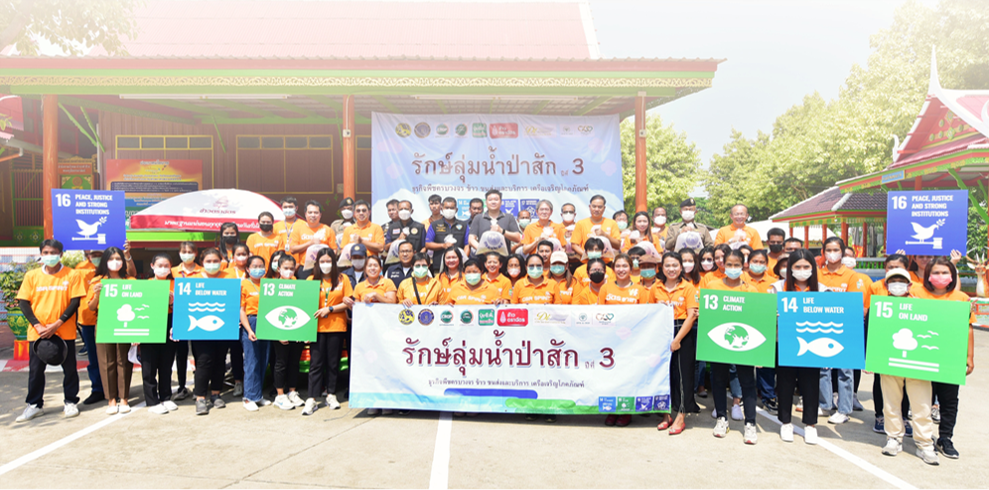
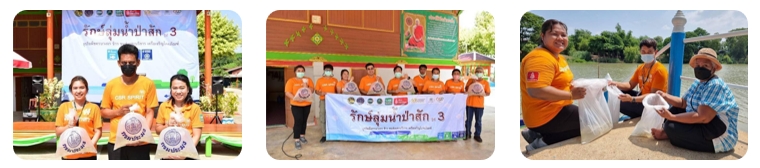
Rak Pa Sak Nam Pasak, Years 3th

Adding diversity to the aquatic ecosystem of the Pa Sak River

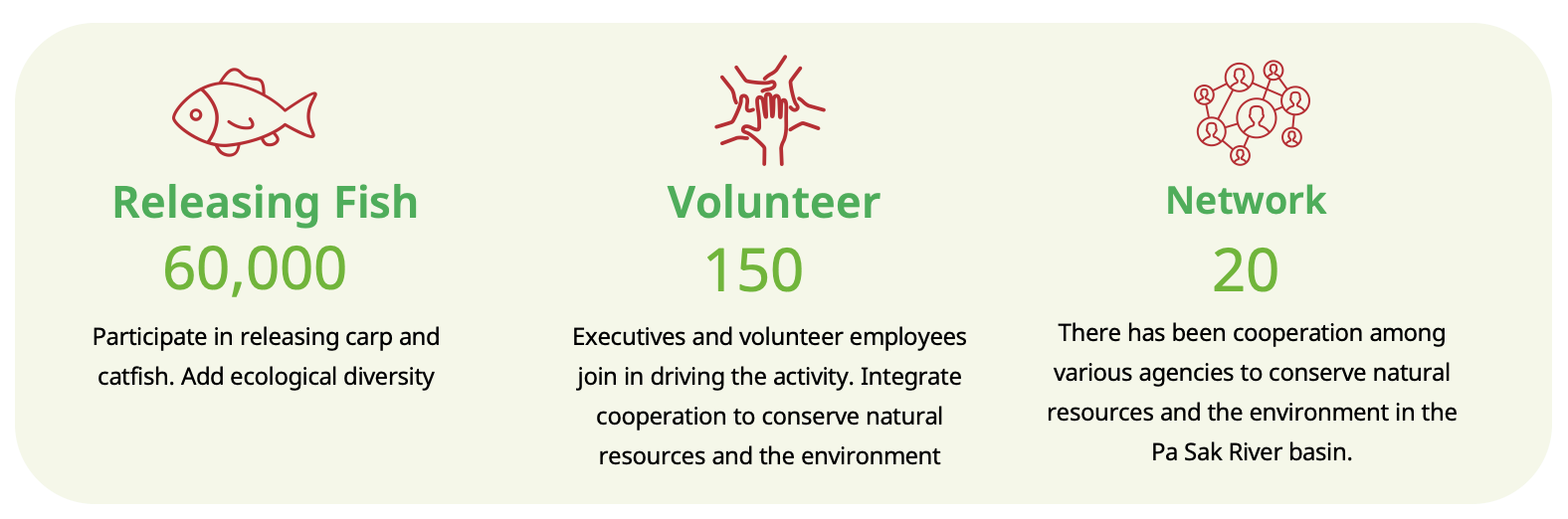
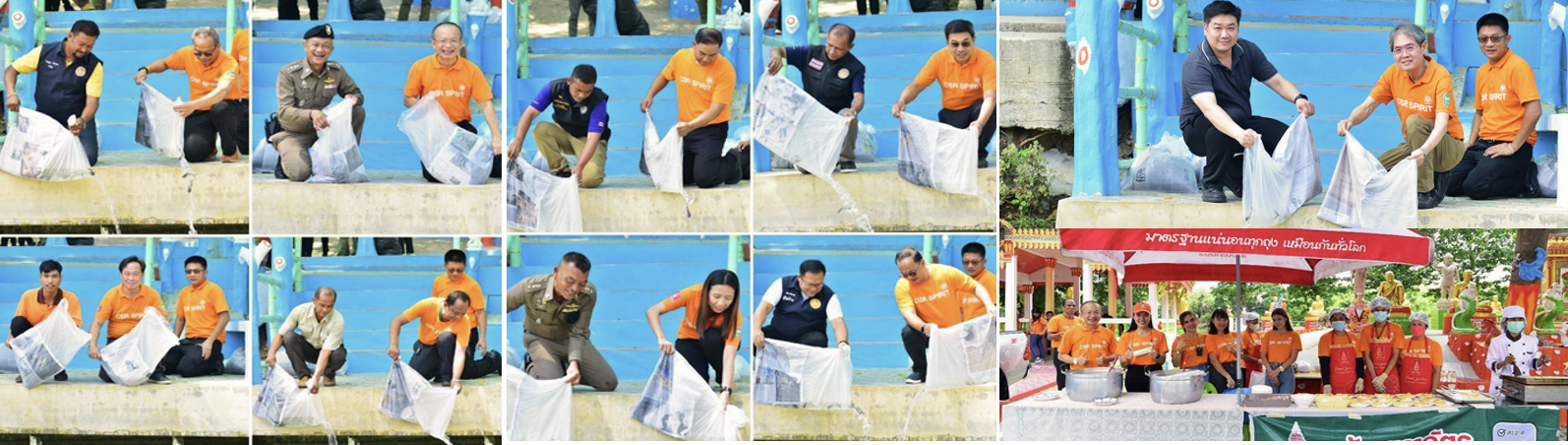
Executives and employees from Nakhon Luang Rice Factory Wang Daeng Rice Factory Suphanburi Rice Mill Ayutthaya Port and ICD Corn seed pretreatment factory seed research Main seed production work Organic and chemical fertilizer production which conducts business with the Pa Sak River We are determined to play our part in reducing the impact and protecting The biodiversity and aquatic ecosystem of the Pa Sak River basin are abundant.
CHAT KASET TO KNOW :
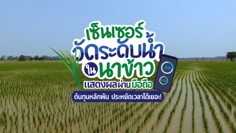
Show ideas to measure water level in modern rice fields!!! FLAT DIN DAENG COMMUNITY
The “water level” in rice fields is important for rice growth as well as beneficial for weed control By providing water that efficiently. The water needs of rice must be taken into account in each growing period, which is divided into 4 stages: seedling stage, tillering stage, and gestational flowering stage milk and cooked rice.
Therefore, the farmer must constantly measure the level of the plot appropriately. The wisdom that has been used since the past is that “water pipes” can be easily made by using a PVC pipe, 30 cm long, 4 inches in diameter, drilled 4-5 rows of holes around the pipe, each hole is 5 cm apart from Then buried 30-40 cm deep into the soil, allowing the mouth of the pipe to emerge 5 cm above the soil surface. (or if the soil is dug before the pipe is buried, the soil is not removed) to allow the water in the field to flow into the drilled hole.
Usually, the peasants you will have to look at the water level in this pipe from time to time. In order to maintain the water level appropriately (so it should be equalized across the plot for water level accuracy) if there is enough time there should be no problem. But if a person has little time, there are many fields, and each plot is far apart will take the same time.
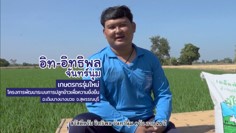
“Mr.Itthipol Channum” is one of the farmers. Generation children-grandchildren which inherited from ancestors with a regular career. Therefore, there is not much time. Let’s come to see the water in the field every day. I can’t do it. Makes you think of solving problems using technology to help try to see that. What technology is that?


More information about
WATER STEWARDSHIP
SUPPORTING THE SDGs
SDG 6Clean Water and Sanitation
6.6 Protect and restore water-related ecosystems
SDG 14Life Below Water
14.2 Reduced marine pollution
14.4 Sustainable fishing
14.5 Conserve coastal and marine areas
SDG 15 Life on Land
15.1 Ensure the conservation, restoration and sustainable use of terrestrial and inland freshwater ecosystems and their services
15.2 Halt deforestation, restore degraded forests
15.4 Ensure the conservation of mountain ecosystems
15.5 Take urgent and significant action to reduce the degradation of natural habitats, halt the loss of biodiversity
OPPORTUNITIES AND CHALLENGES
C.P. Intertrade Co., Ltd. And companies in the Rice Business Transportation and Service Charoen Pokphand Group Recognize the problems that arise and are committed to taking part in reducing impacts and protecting the integrity of biodiversity and ecosystems through the participation of businesses and industries. To take care of and mitigate these impacts, the company Also assessed Continued biodiversity risks. It is committed to conserving and utilizing marine resources responsibly, protecting, restoring and promoting the sustainable use of terrestrial ecosystems, forests and natural diversity.
KEY OPERATING RESULTS IN 2023
ECOSYSTEM & BIODIVERSITY PROTECTION
MANAGEMENT APPROACH
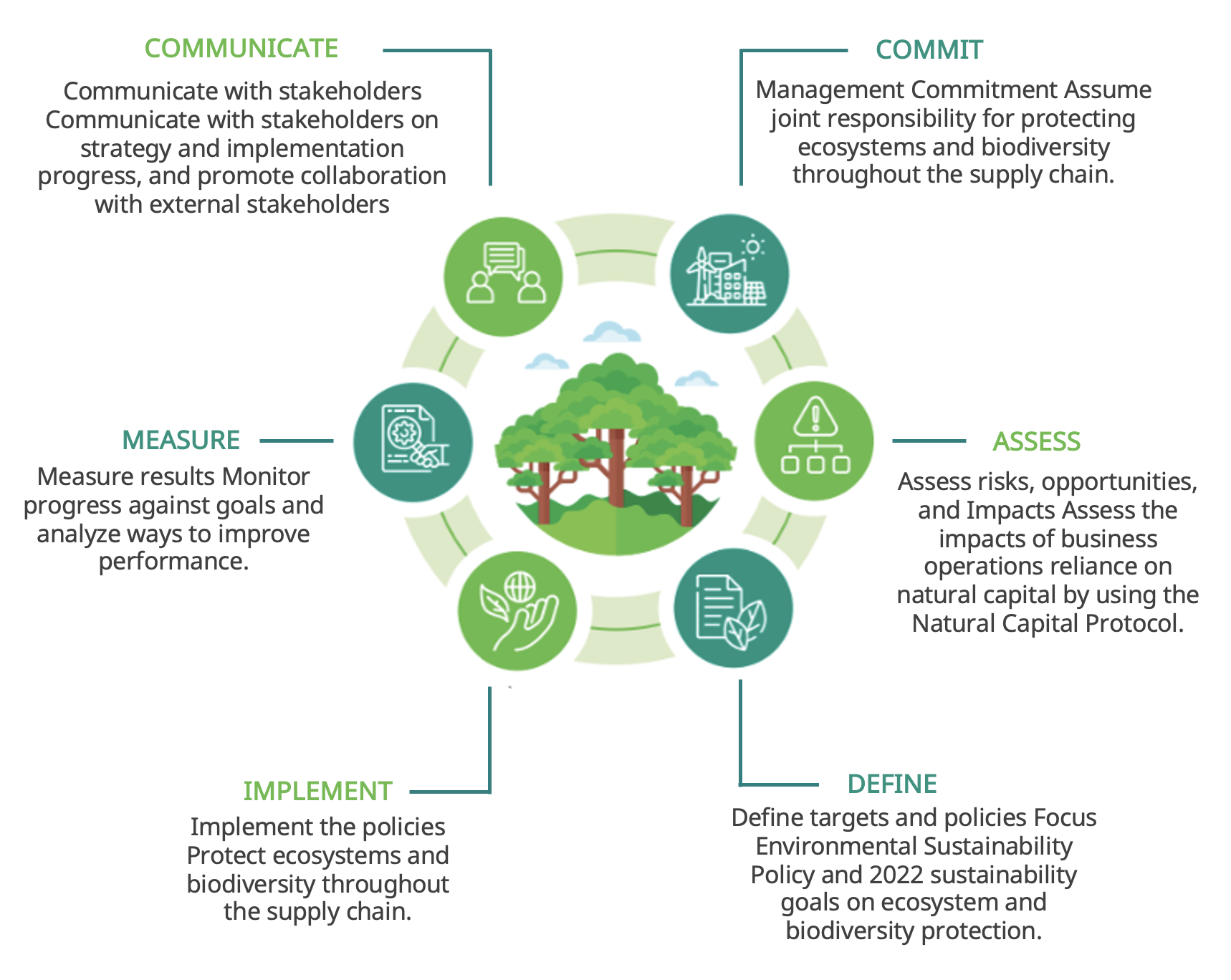
Our business is committed to operating responsibly and conserving the environment to protect biodiversity. We have upheld these principles from the very start, by choosing to operate on sites that are not located within natural resource and environmental conservation areas. We also strictly adhere to rules, regulations, standards, and ministerial regulations; conduct regular impact assessments and implement measures to protect and mitigate the impacts of our business operations. In addition, the Group focuses on agricultural raw material sourcing, making sure that raw materials come from responsible sources that do not encroach upon forest and marine resources. Finally, we encourage the protection and restoration of terrestrial and marine ecosystems to ensure ecosystem balance and biodiversity.
ECOSYSTEM AND BIODIVERSITY PROTECTION FRAMEWORK
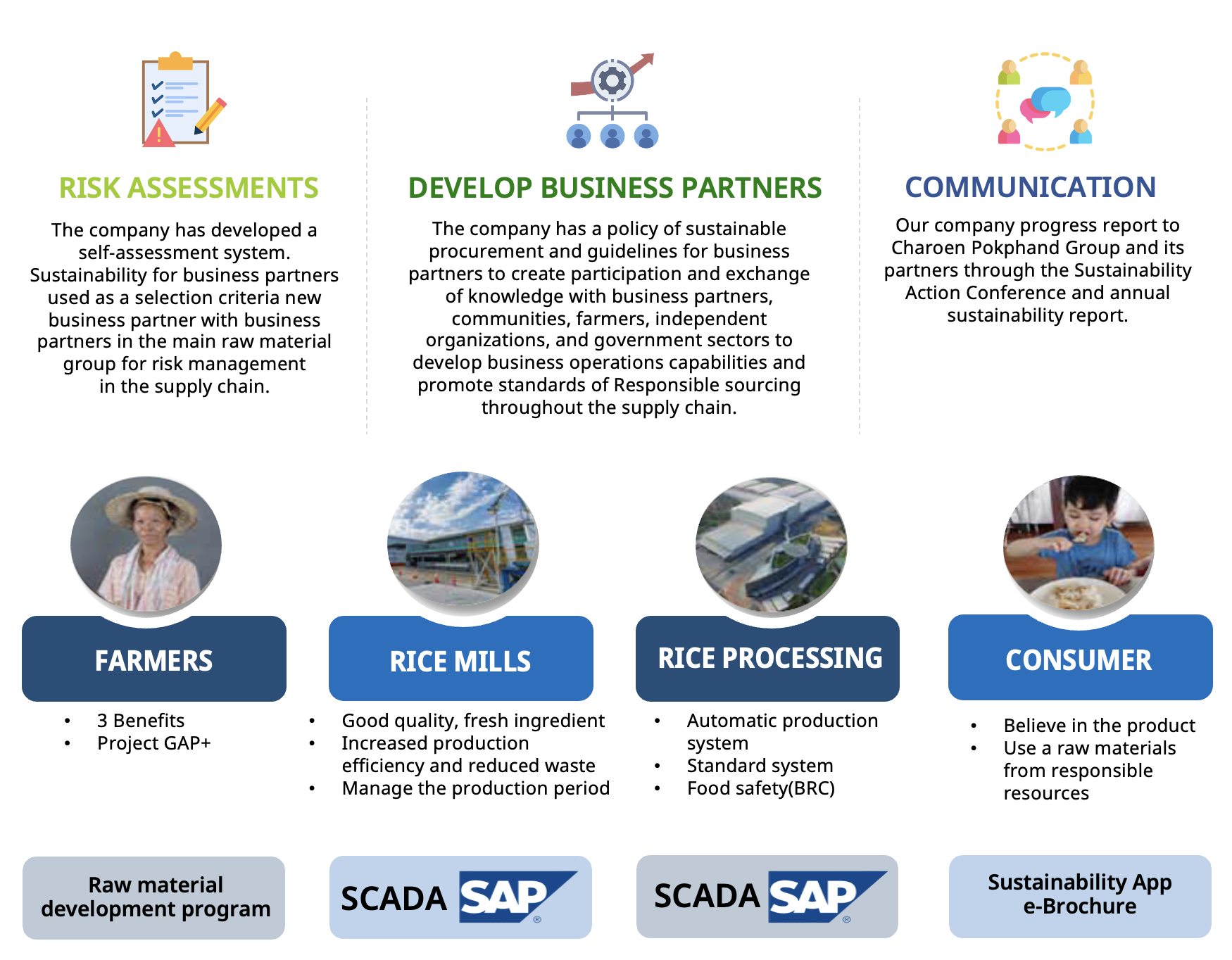
RAW MATERIAL SOURCING AND TRACEABILITY
Building confidence for consumers
Consumers are now more attentive to product information. Information on labels that indicate properties and expiration dates may not be enough for the consumer when they still want to know where the product was made, quality in the manufacturing process, how well it was made. Safe, non-contaminated and other information that will help build confidence in food and merchandise purchases.
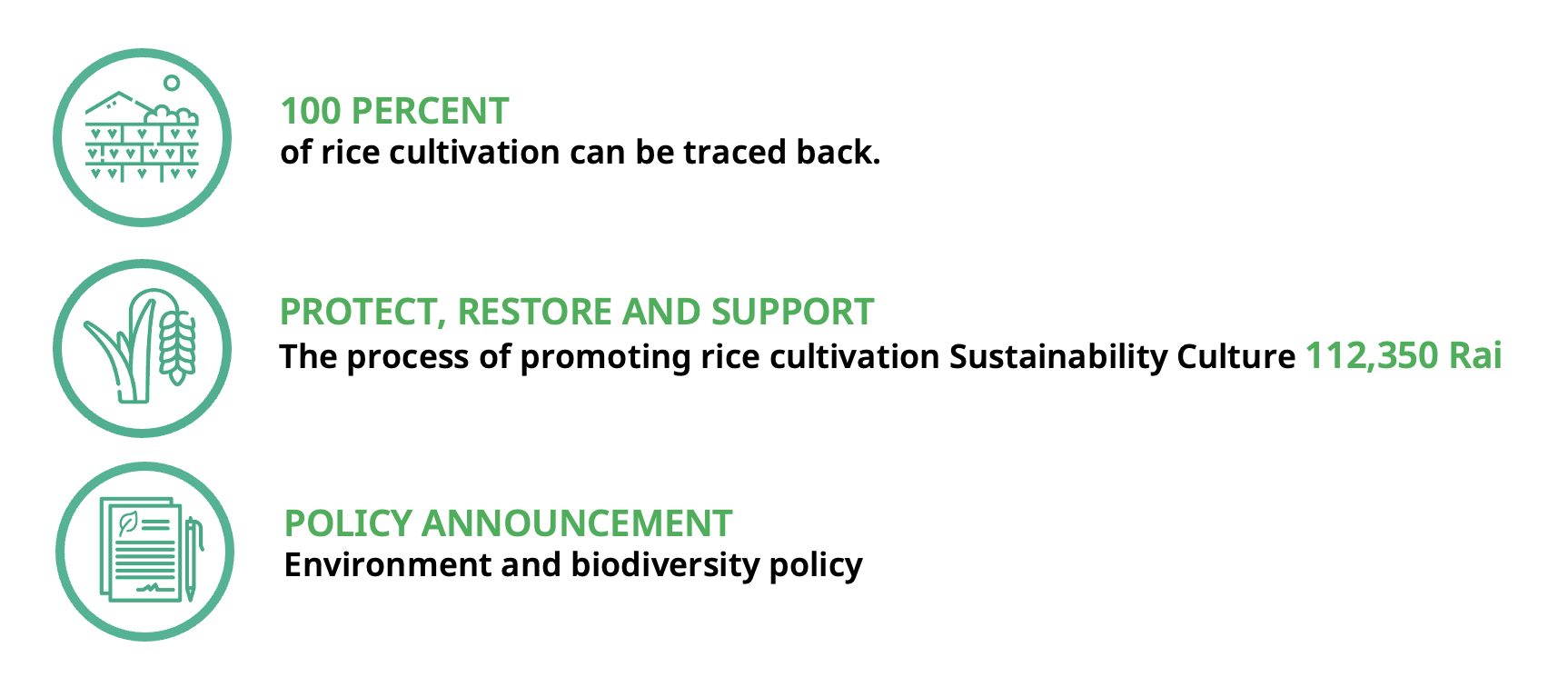
The traceability system has therefore played an increasingly important role in providing food routing information from ingredients, Through the production process until it reaches the consumer. It also helps manufacturers reduce the loss of product recalls, which can be retrieved accurately, precisely and quickly. The company has developed a comprehensive information system and traceability process from farmers to consumers, which can be considered as a model for developing such processes in the rice business supply chain.
CASE STUDY
MEASURING NATURAL CAPITAL TO PROTECT ECOSYSTEMS AND BIODIVERSITY
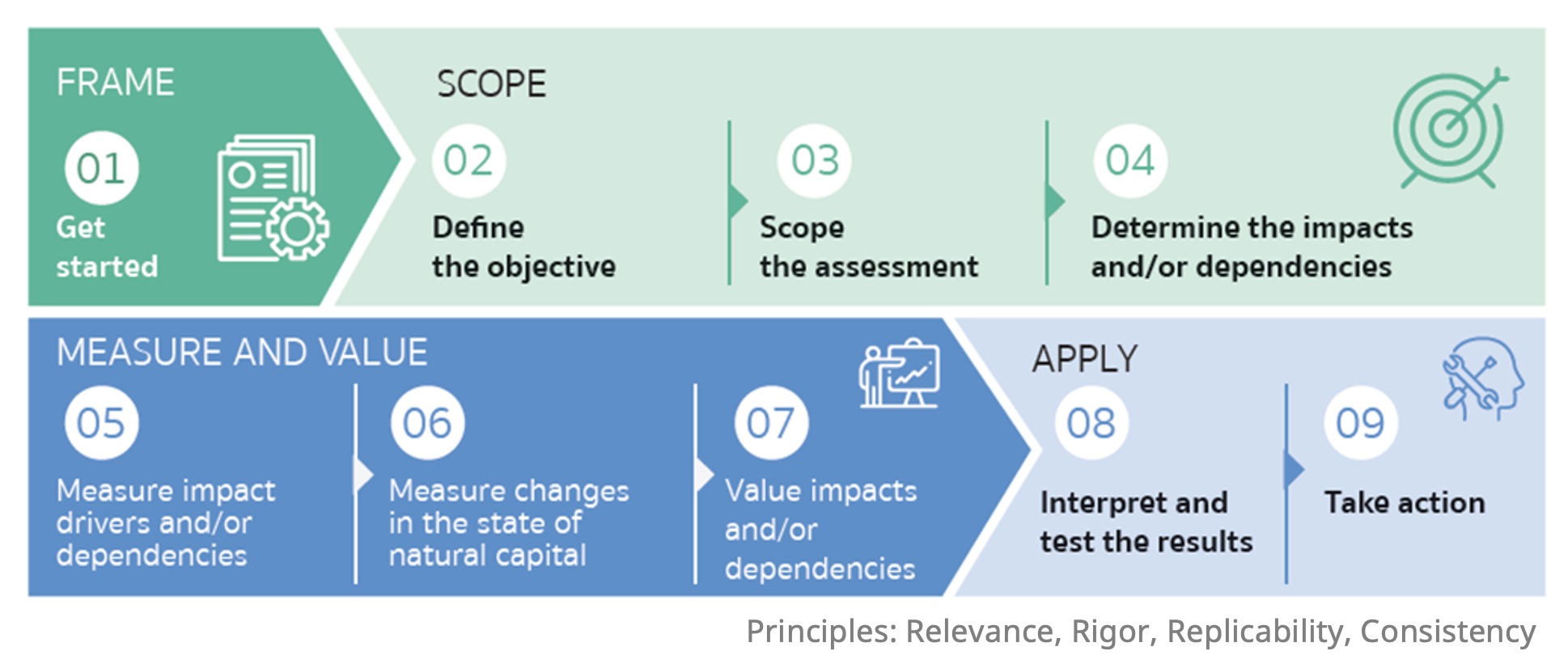
C.P. Intertrade Co., Ltd. has cooperated with Charoen Pokphand Group entry as a member of the World Business Council for Sustainable Development (WBCSD), we brought in the Natural Capital Protocol a natural capital assessment framework developed by WBCSD in collaboration with global organizations including Conservation International, The B Team, PwC, and Sustain Value to use as a framework for measuring the organization’s natural capital.
The Protocol helps us to understand the capacity and degradation of ecosystems and biodiversity, to value them in economic terms, and to apply those valuation results to identify ways of balancing between using and protecting natural resources. Ecosystem and Biodiversity Protection Framework the impacts of our business operations. In addition, the Group focuses on agricultural raw material sourcing, making sure that raw materials come from responsible sources that do not encroach upon forest and marine resources. Finally, we encourage the protection and restoration of terrestrial and marine ecosystems to ensure ecosystem balance and biodiversity. The Group selected the Nakhon Luang Rice Mill, under C.P. Intertrade Company Limited and Khao C.P. Company Limited, as the pilot site for the natural capital assessment. We selected this site because the rice mill is located on the banks of Pa Sak River in Nakhon Luang District, Ayutthaya Province, and uses the river’s waterways to transport goods quickly and efficiently through the Ayutthaya Therefore, the Group was able to realize the importance of determining the ecosystem and biodiversity value of this resource Port and Inland Container Depot (ICD). Given this, the Nakhon Luang Rice Mill directly benefits from these waterways, and it is possible to witness both the impacts from and dependencies on this natural resource. as key natural capital for the rice mill.
NATURAL CAPITAL PROTOCOL FRAMEWORK
CSR Term Break Big semester break for conservationists' hearts
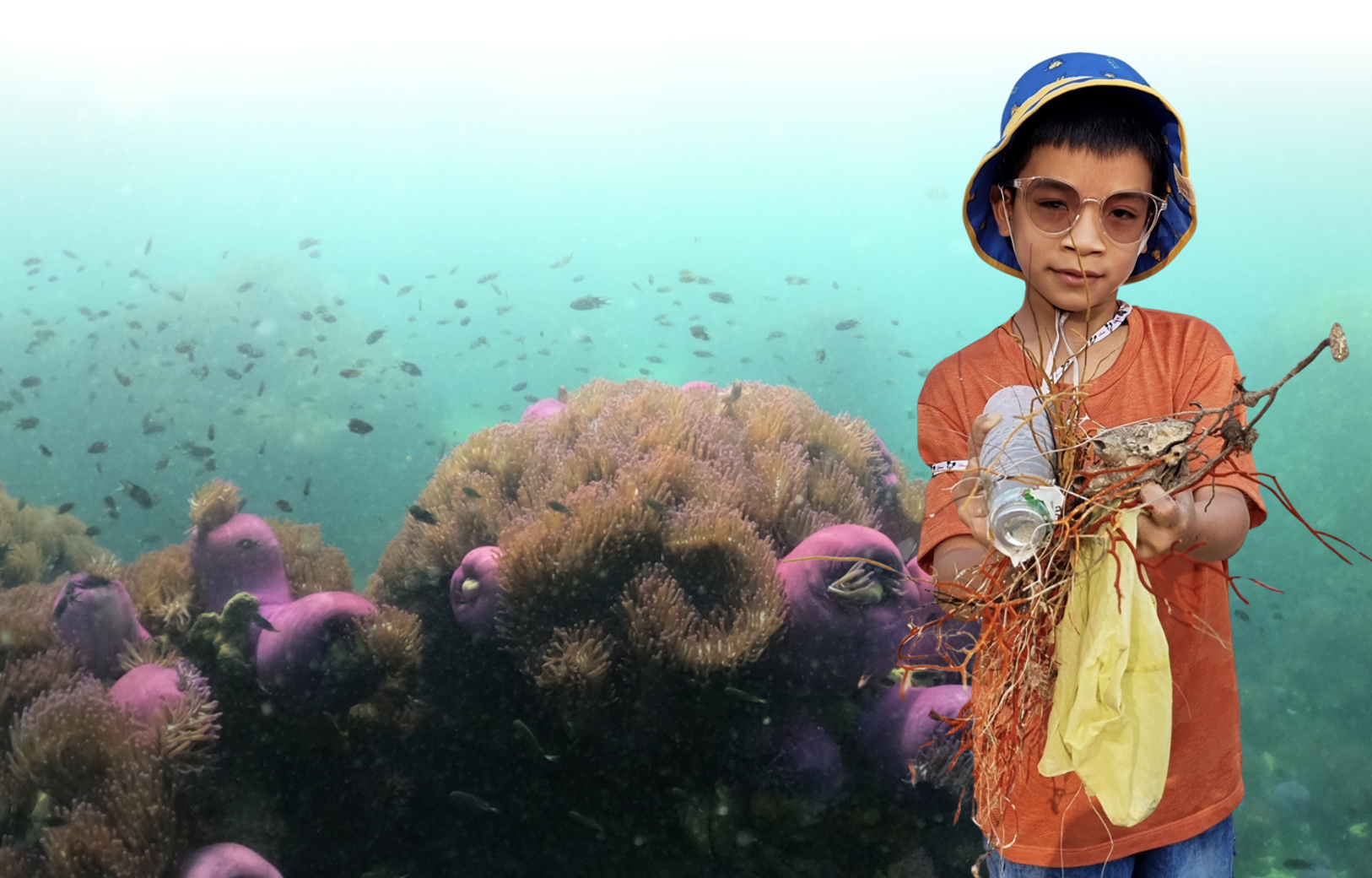
CSR SPIRIT Volunteers lead employees’ families Integrated plant business, rice, transportation and services Charoen Pokphand Group Organize CSR Term Break activities. Two big semester breaks for conservationists’ hearts to raise awareness of conservation of natural resources and the environmen
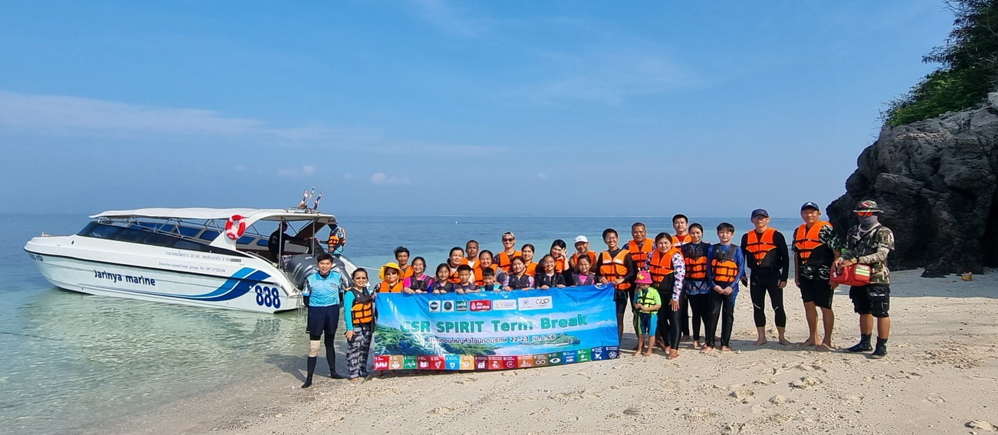
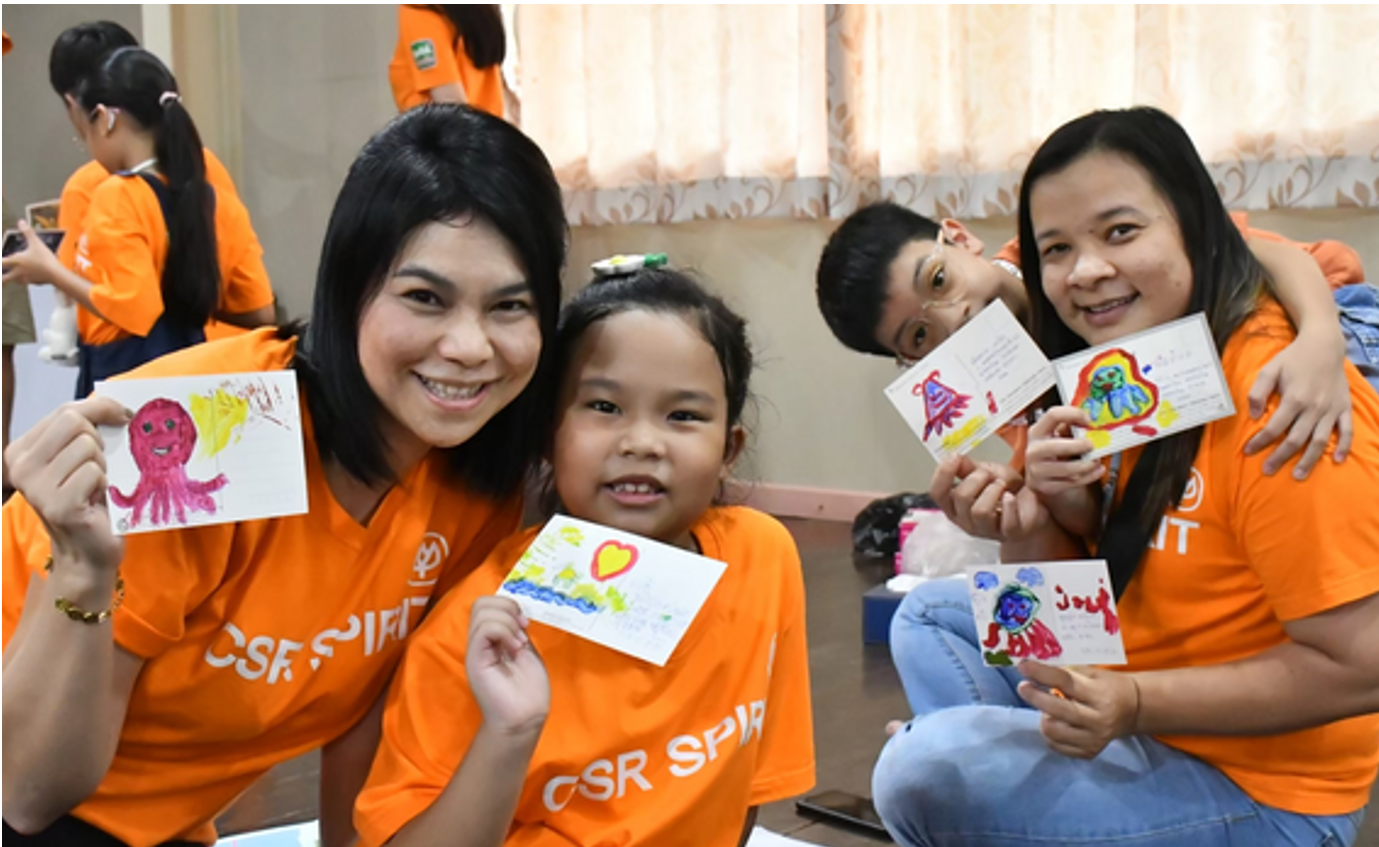
To allow employees and their families to participate in CSR SPIRIT activities, volunteer, share and help society together with the organization. Create love and connection Communicate a good image of the organization to outside society. Department of Wildlife and Plant Conservation Describe the biodiversity of land and sea. Have the team make postcards of leaves telling about their impressions. Dive to explore the health of the coral. Around Koh Chan and Koh Tai Tree Which is beautiful and important as a breeding ground for marine aquatic animals in the Gulf of Thailand.
More information about
ECOSYSTEM & BIODIVERSITY PROTECTION
SUPPORTING THE SDGs
SDG 4Quality Education
4.4 Increase the number of youth and adults who have relevant skills, and promote Entrepreneurship
SDG 8Decent Work and Economic Growth
8.3 Promote development-oriented policies that support decent job creation, entrepreneurship
SDG 9Industry, Innovation, and Infrastructure
9.4 Upgrade infrastructure to make them sustainable, with increased resource-use efficiency and greater adoption of technologies
OPPORTUNITIES AND CHALLENGES
We recognize that the strength of a chain also depends on the least strong chain link. For this reason, the company has taken part in Strengthen the strength of business partners throughout the supply chain to strive for excellence in all dimensions, economic, social and environmental aspects.
The company poses a great challenge in the drive to bring about positive change, such limitations do not stop the company or give up but on the other hand. To develop the potential of our business partners for the better, we will think together to build towards sustainability at the same time. In addition, the company also supports the Sustainable Development Goals to develop the countries in which the Company has operated or Invest in 3 benefits.
KEY OPERATING RESULTS IN 2023
RESPONSIBLE SUPPLY CHAIN MANAGEMENT
MANAGEMENT APPROACH
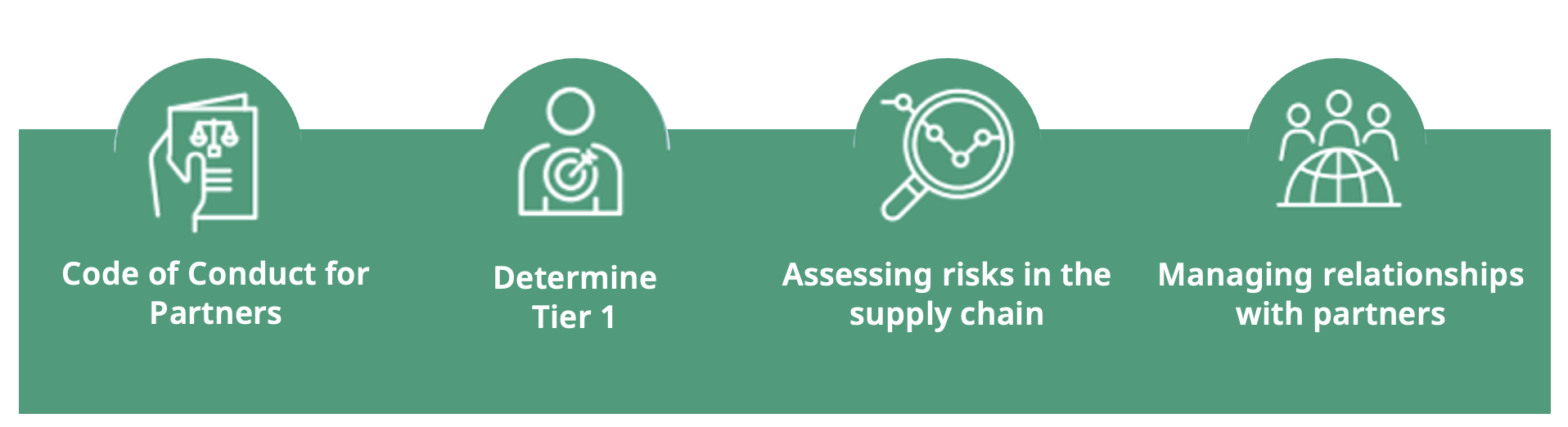
Our business focuses on managing supply chain by defining management procedures as a guideline for all companies in the business group to provide supply chain management go in the same direction In supply chain management, the business group starts from communicating manuals. Code of Conduct for Partners to all business partners for business partners to be aware of the policies and Expectations of the business group and can work together continuously.
RAISING AWARENESS AND RISKS
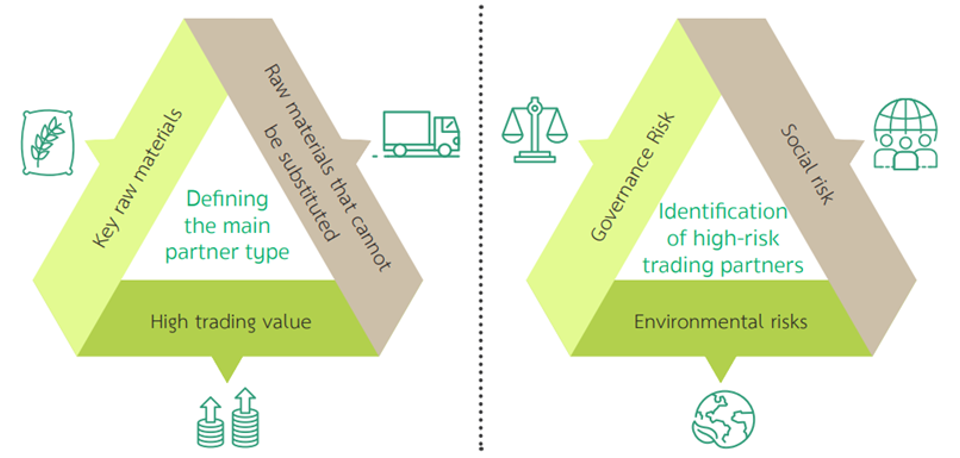
There are many business related business operations. Our business group has received a policy from the Charoen Pokphand Group and is committed to raising awareness of responsible supply chain management. with major business partners first (Critical Suppliers). The principles used to classify the main trading partners are as follows:
- Suppliers of key raw materials.
- Suppliers who are suppliers of key raw materials that cannot be substituted.
- Partners with high trading value.
In addition, it was identified to find business partners who are at risk by assessing sustainability risks throughout the supply chain through two-dimensional assessment criteria, namely the severity of the impact. and the likelihood of risk, which the risk issue used in the assessment is taken from the channel. They are as follows: 1) news, 2) past performance, 3) industry-related risk factors, and 4) trends and potential risks in the future. The risk assessment covers raw materials packaging groups and service providers who are not limited to only the 1st business partner (Tier 1) who directly buy-sell but also include other business partners (Non-Tier 1).
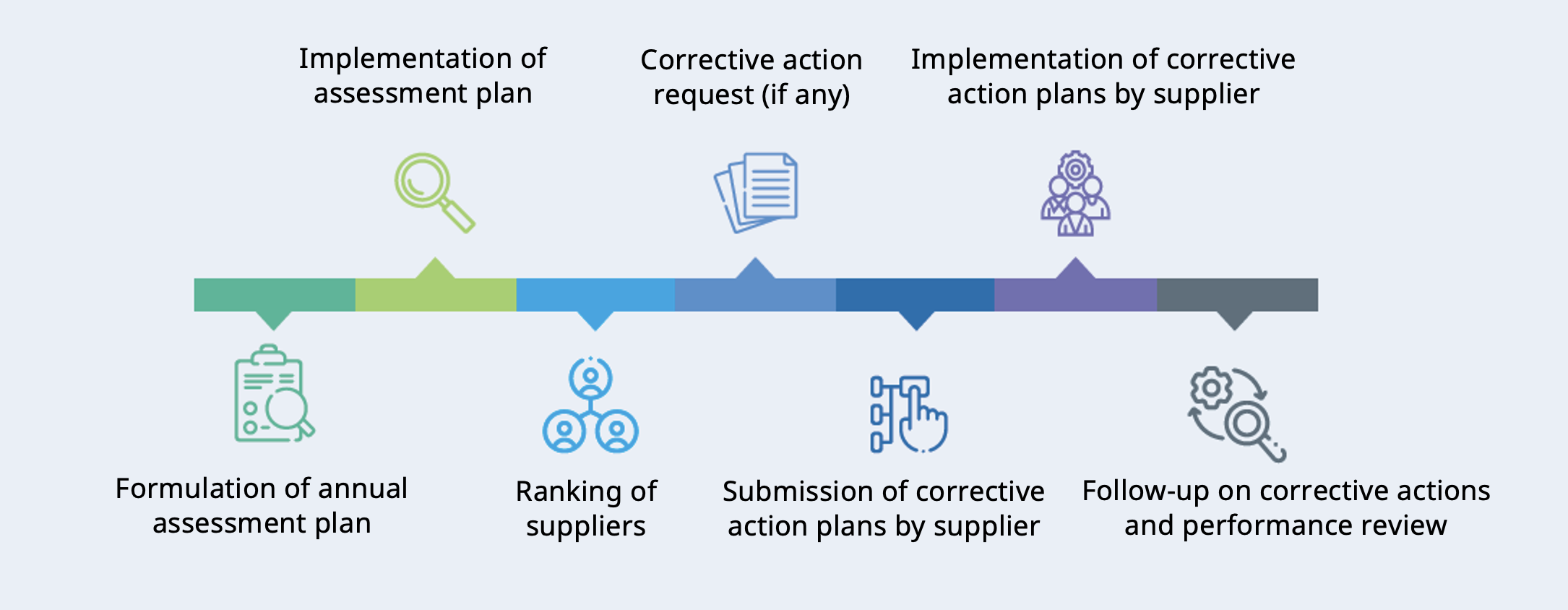
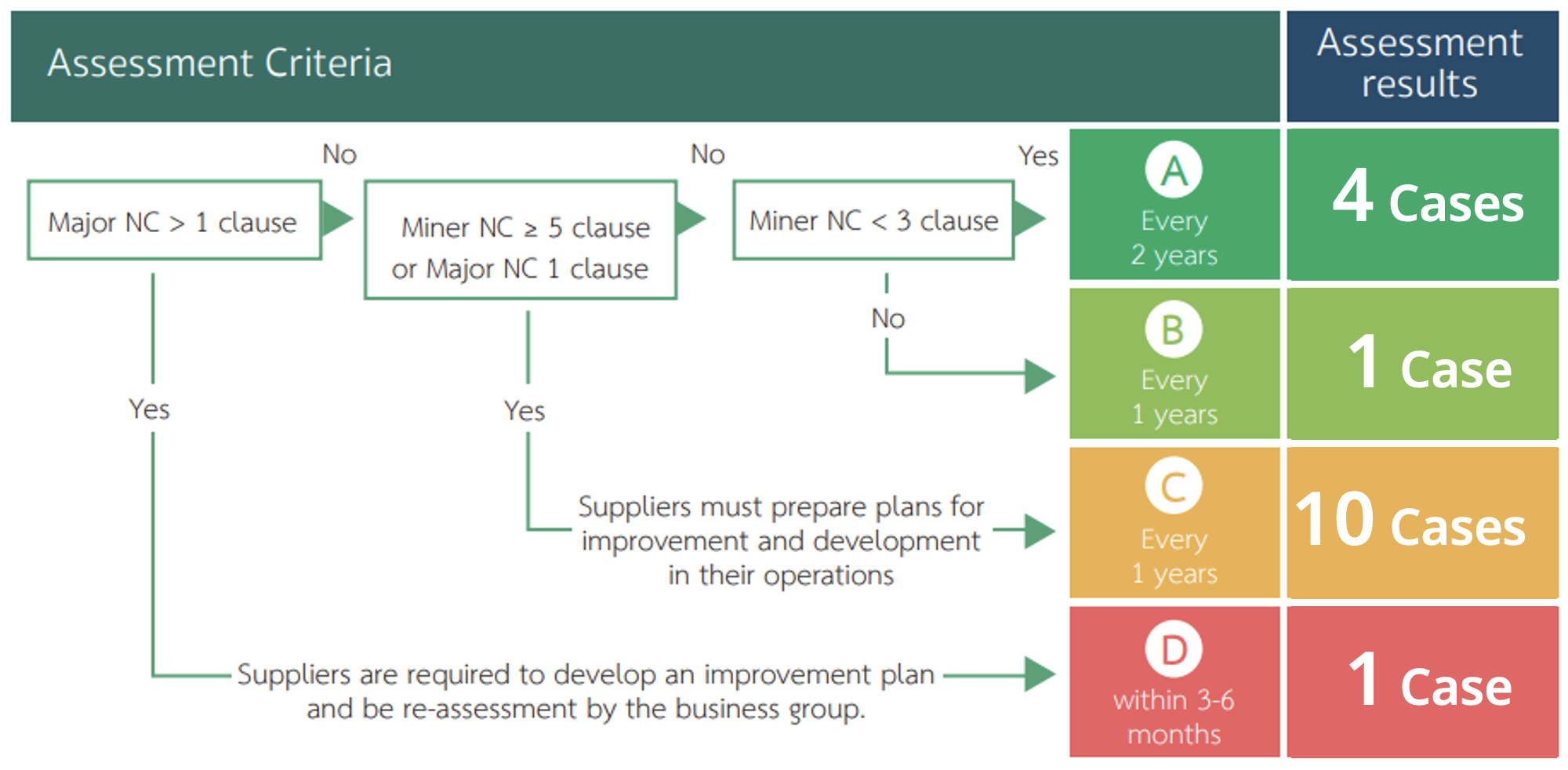
SUPPLIER ASSESSMENT PROCESS
ENHANCING SUPPLIERS’ CAPABILITIES
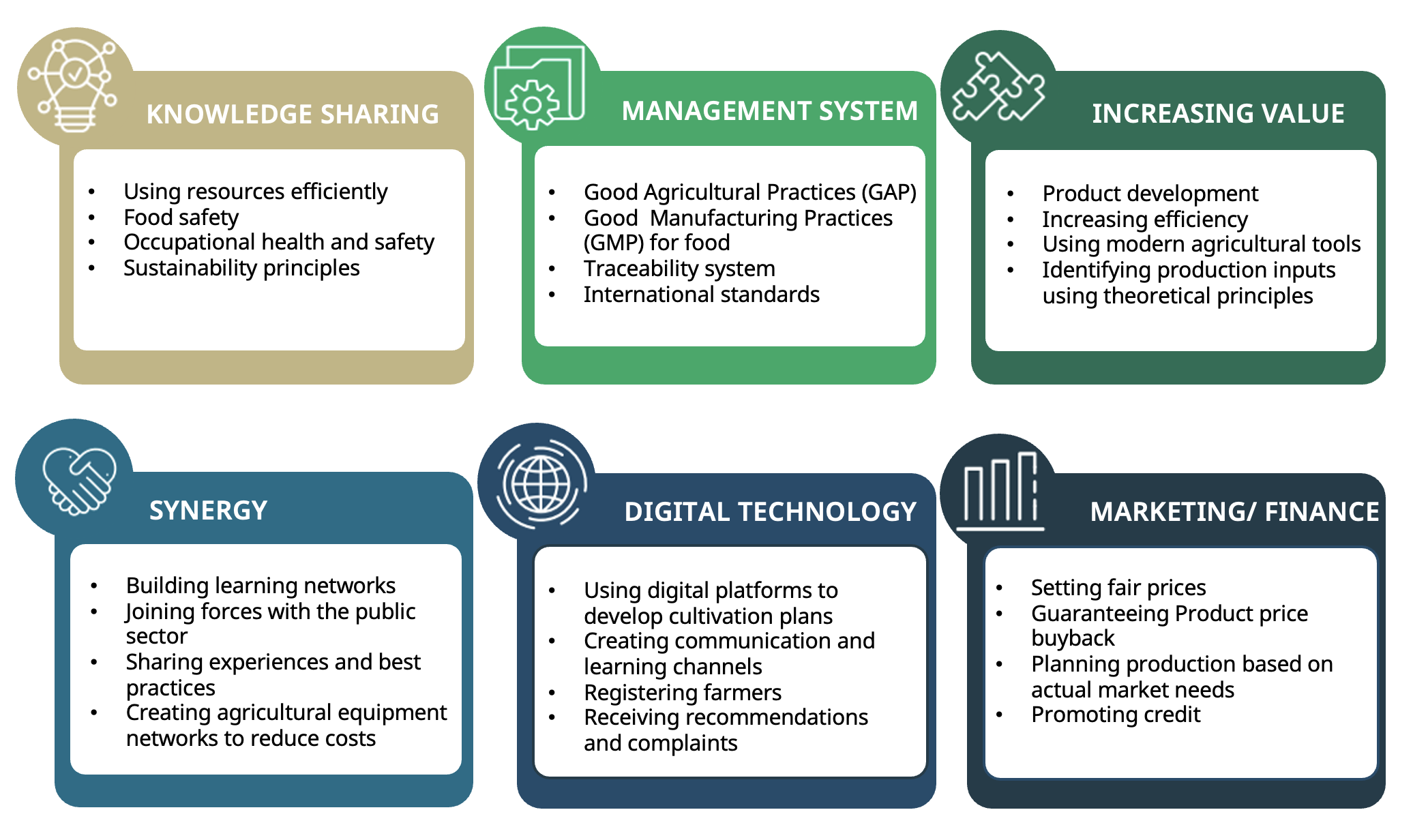
Our business strives to enhance the capabilities of our suppliers in various key areas, including safe and sustainable production practices. This is achieved through a management system that ensures proper planning and continuous improvements, creates learning networks, adopts digital technologies, and supports marketing to enhance the value and capabilities of suppliers to achieve sustainable business operations.
CASE STUDY
ASSESSMENT OF IMPORTANT SUPPLIERS
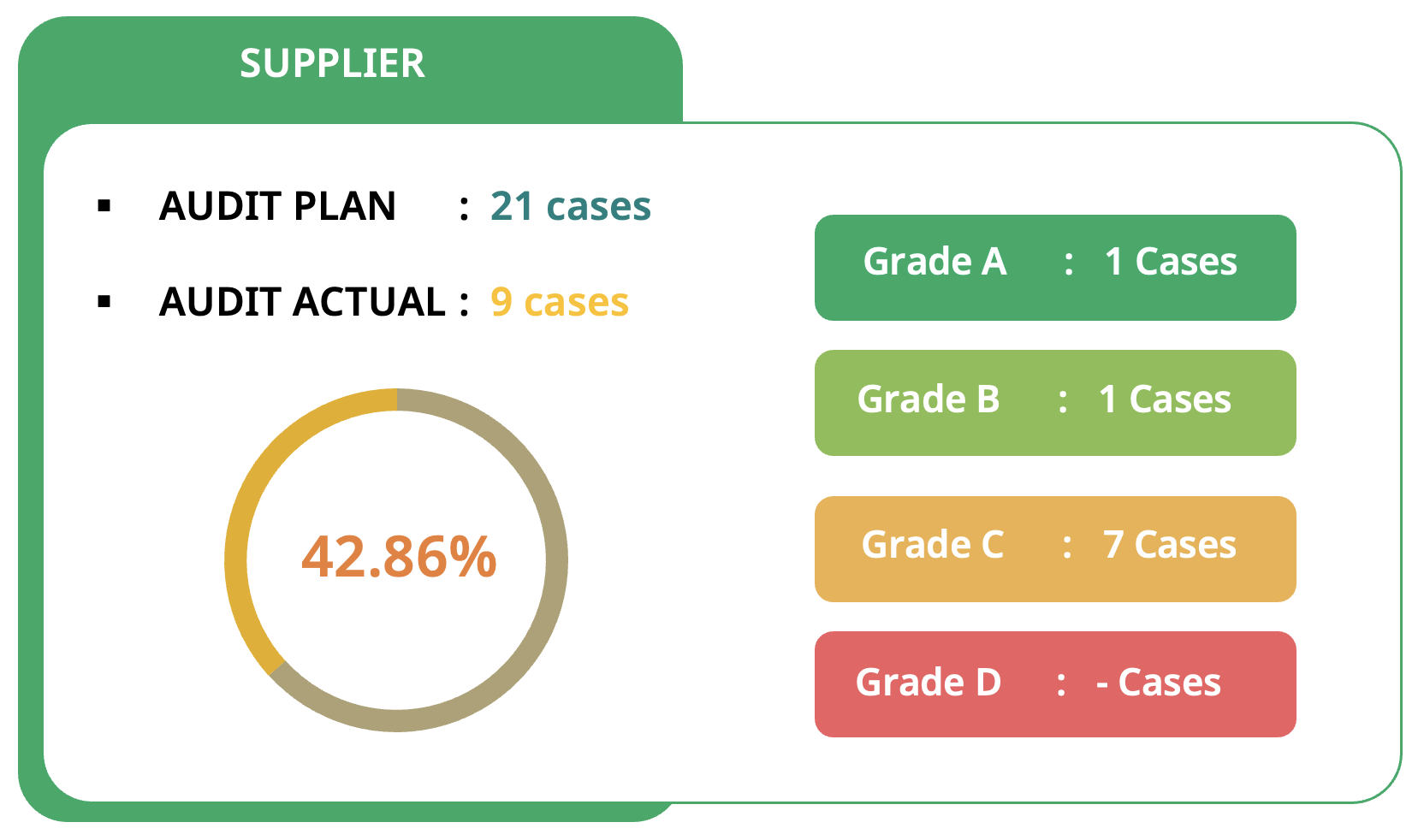
There is a committee to assess compliance with the rules. Commitment to business as a standard and operating guidelines Establish a registry of key business partners (Critical 1Tier Supplier), including set criteria for evaluating business partners and operating standards. After grading the assessment scores Both the self-assessment form and the assessment of the auditor team are as follows:
ASSESSMENT OF IMPORTANT SUPPLIERS
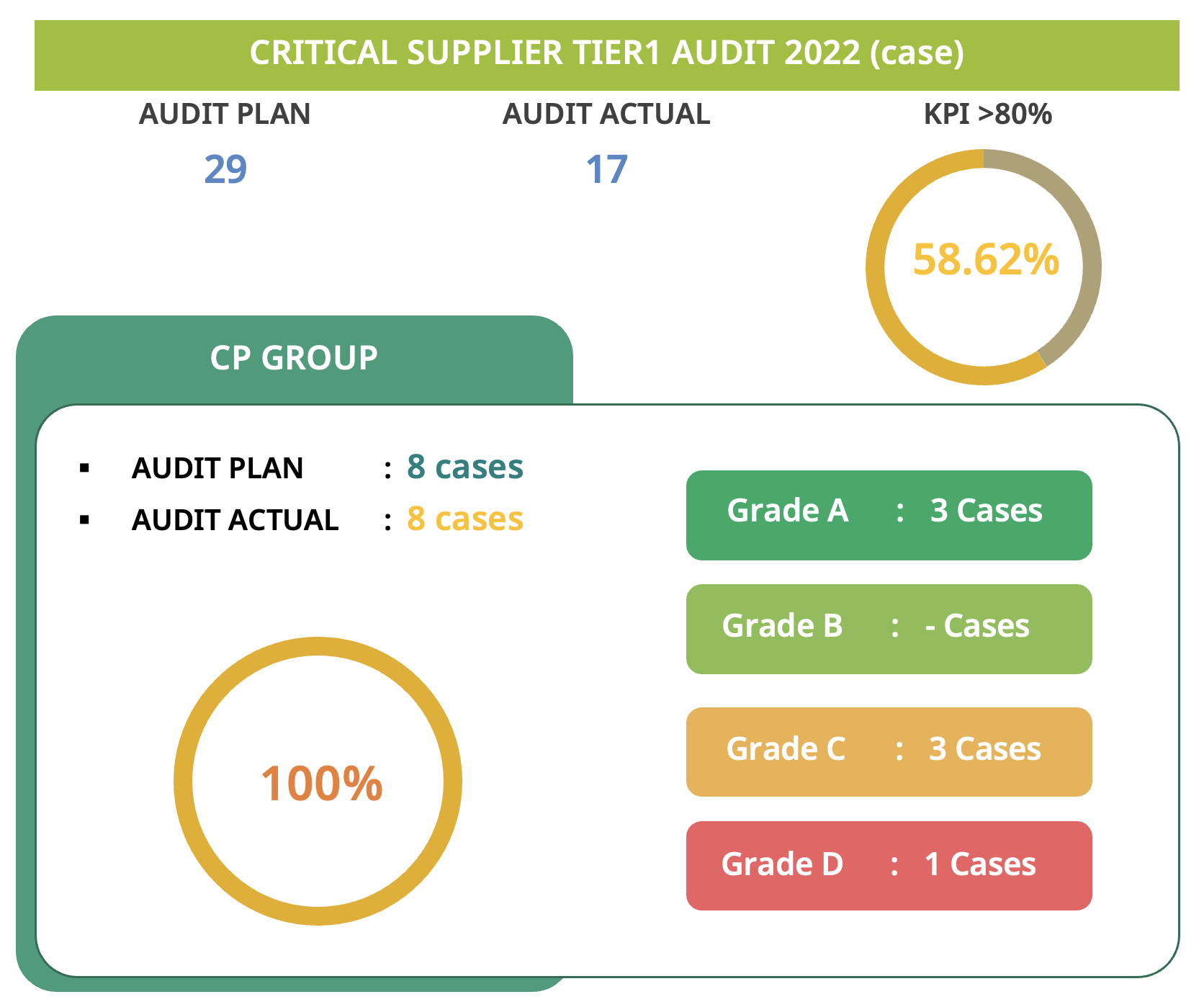
KEY SUPPLIER ASSESSMENT PERFORMANCE
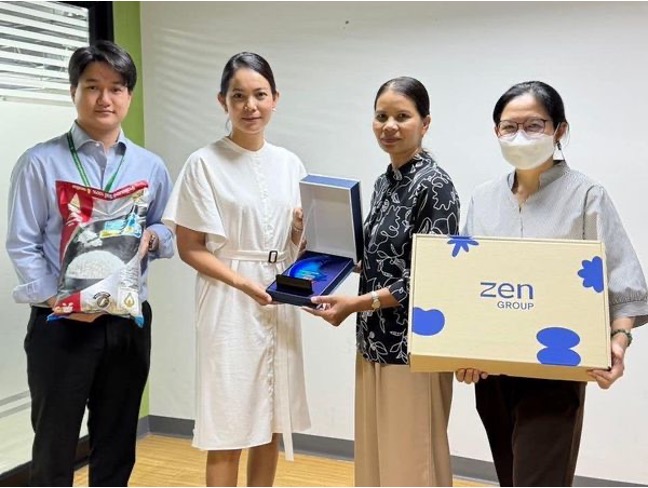
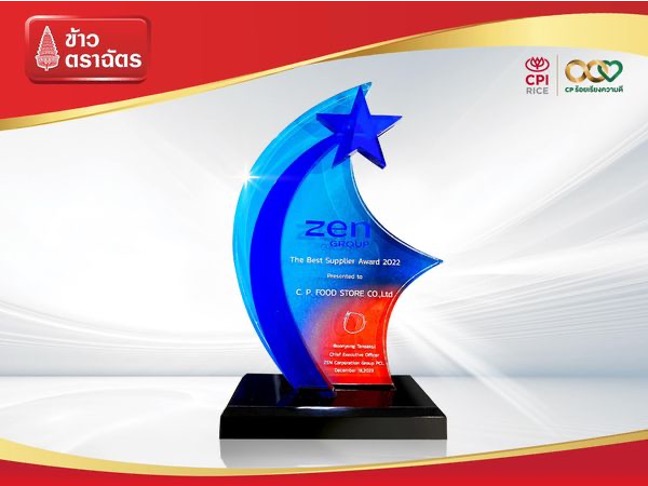
THE BEST SUPPLIER AWARD 2022
Mr. Rinyapat Phattharasakwat Deputy Managing Director of Rice Business on behalf of Tra Chat Rice (CP Food Stores Co., Ltd.) received the award for partners who passed the criteria for product quality, good service, and price standards and quality delivery from Zen Supply Zen Company Limited, reinforcing its position as a producer of quality rice products as a partner for sustainable growth.
More information about